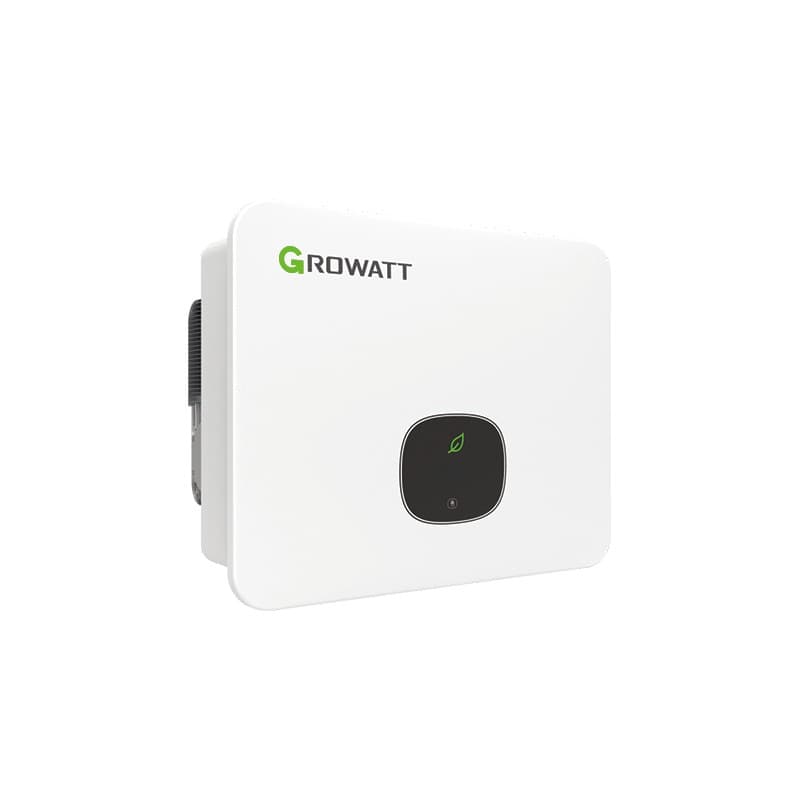
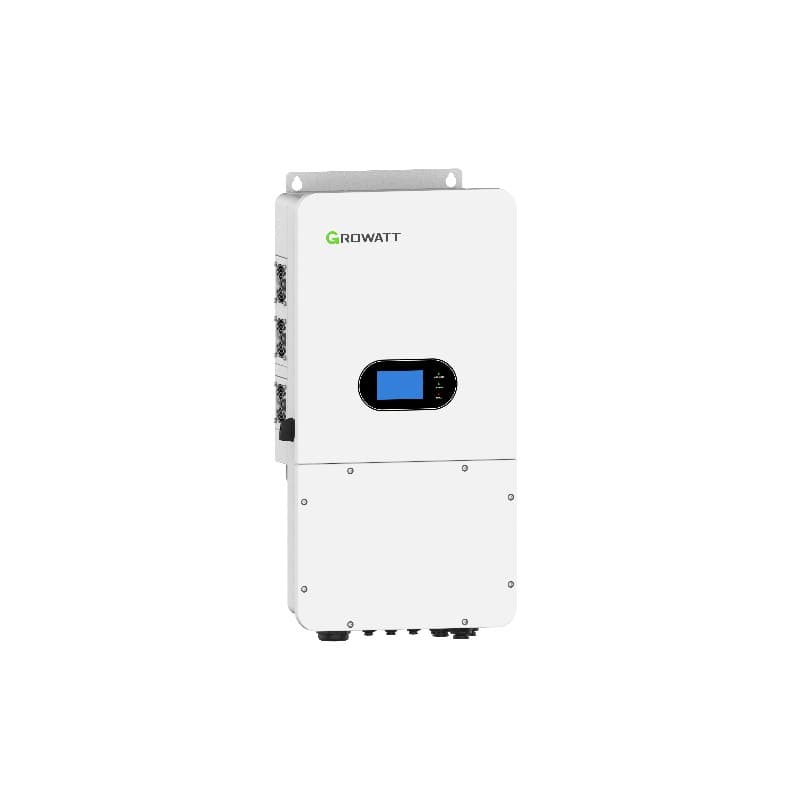
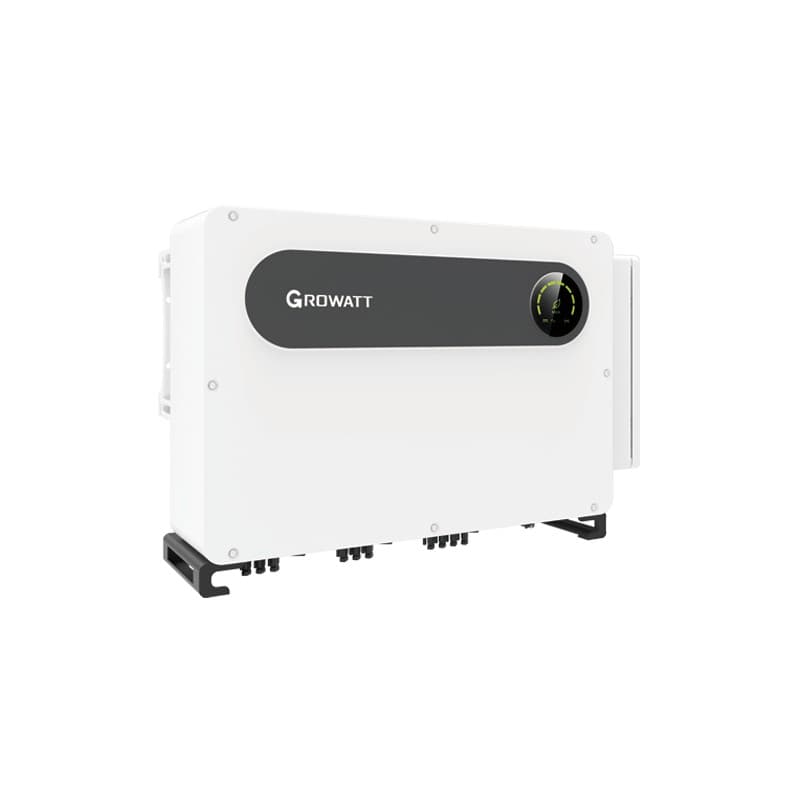
Detailed growatt wit hybrid inverter review: 98.2% efficiency, AXE battery support, C&I applications across UAE, KSA and the wider Middle East commercial market.
The Growatt WIT 50-100K-HU is the heaviest hybrid inverter Growatt ships into the commercial and industrial (C&I) segment, and it has quietly become the default choice for school rooftops, mosque compounds and SME warehouses across the UAE and Saudi Arabia. After installing roughly forty of these units in 2025 across DEWA, SEWA, FEWA, EtihadWE and SEC-served sites, we have enough field data to write a useful long-form review.
Positioning — Why a Hybrid in the C&I Segment
Commercial buildings in the Gulf used to be the natural home of pure grid-tie inverters: a flat-roof warehouse with a 100kWp array exporting to DEWA at a known feed-in tariff. The economics have flipped. SERA in KSA pays a discounted export rate, DEWA tariffs reward self-consumption, and most commercial sites face one to four utility interruptions per year averaging 45-180 minutes. A school in Sharjah losing AC mid-class is reputational damage; a cold-storage warehouse in Riyadh losing power for an hour costs five figures in spoiled goods. The WIT collapses three boxes — grid-tie inverter, battery inverter, automatic transfer switch — into a single 153kg cabinet that handles all three.
Headline Specifications
From the Growatt WIT 50-100K-HU-US datasheet (50kW variant):
| Spec | WIT 50kW | WIT 75kW | WIT 100kW |
|---|---|---|---|
| AC nominal power | 50kW | 75kW | 100kW |
| Max AC apparent power | 55kVA | 82.5kVA | 110kVA |
| Max recommended PV | 109.2kWp | 165kWp | 220kWp |
| MPPT trackers | 7 | 9 | 10 |
| MPPT voltage range | 180-800V | 180-800V | 180-800V |
| Max PV open-circuit V | 1000V | 1000V | 1000V |
| Peak efficiency | 98.2% | 98.4% | 98.6% |
| THD at full load | <3% | <3% | <3% |
| Grid type | 3P3W+PE / 3P4W+PE | 3P3W+PE / 3P4W+PE | 3P3W+PE / 3P4W+PE |
| Enclosure | IP66 / NEMA 4X | IP66 / NEMA 4X | IP66 / NEMA 4X |
| Operating temp | -30 to +60°C, derate >50°C | -30 to +60°C, derate >50°C | -30 to +60°C, derate >50°C |
| Cooling | Smart air | Smart air | Smart air |
The 7-10 MPPT count is what separates the WIT from older string inverters. On a complex commercial rooftop with multiple orientations — north-south carports, east-west warehouse pitches, and a south-facing parapet — each MPPT can chase its own optimum, which typically lifts annual yield by 4-9% over a single-MPPT design.
98.6% Peak Efficiency — What This Actually Means on a Riyadh Roof
Growatt rates the WIT-100K-HU at 98.6% peak DC-to-AC efficiency. Peak efficiency numbers are usually misleading because they describe a single operating point. The metric that matters for a Saudi commercial roof is European Efficiency (a weighted average across part-load conditions), which sits at 98.0% for the 100kW WIT. In our field data from a 90kWp school in Riyadh installed in March 2025, the inverter logged 97.7% average DC-to-AC conversion across April-September, and the entire system produced 167.3 MWh against a design-yield estimate of 168.9 MWh — within 1% of model.
AC-Coupled with the AXE Battery
The WIT pairs with Growatt's AXE Commercial Battery range (30, 35, 40, 50, 60kWh LV cabinets, and 45 and 54kWh outdoor IP65 cabinets). The pairing is AC-coupled in 4-25K-HU/XHU variants and DC-coupled in the larger 28-55K-HU and 50-100K-HU models depending on topology. Sizing rule-of-thumb for UAE/KSA C&I: 1 kWh of LFP storage per 1 kW of inverter capacity for full backup of essential loads, or 0.4-0.6 kWh per kW for peak-shaving only. A typical 75kW WIT install pairs with 30-50kWh of AXE LV battery in a single floor-mounted cabinet weighing 1,200-2,000kg.
Six Field Use Cases We've Delivered
- 120-bed private school in Sharjah — WIT 75kW + 50kWh AXE LV + 95kWp on north-south carport. AED 178,000 EPC contract. Self-consumption ratio 84%. Diesel backup eliminated.
- Light-industrial warehouse in Riyadh's Sudair Industrial City — WIT 100kW + 60kWh AXE + 130kWp rooftop. SAR 365,000 EPC. Replaces a 80kW diesel genset that previously ran 6 hours per day during summer peak-shaving against SEC tariff.
- Mosque compound in Madinah — WIT 50kW + 40kWh AXE outdoor IP65 + 65kWp ground-mounted. Funded as part of a Vision 2030 net-zero mosque initiative.
- Boutique cold-storage facility in Al Ain — WIT 50kW + 50kWh AXE LV + 60kWp rooftop. Backup priority is the refrigeration plant.
- Agritech vertical farm in Doha — 2x WIT 100kW in parallel + 200kWh AXE outdoor + 250kWp ground-mounted. Off-grid-capable for desalination and LED grow lights.
- SME signage factory in Ajman — WIT 75kW + 35kWh AXE + 80kWp rooftop. Three-phase 400V; CNC machines on the protected bus, office on the unprotected bus.
Black-Start and 100% Unbalanced Load Handling
The WIT 28-55K-XHU and 50-100K-XHU variants support black-start, meaning the inverter can wake up from a dead-grid condition using just the battery and PV — no utility synchronisation required. This matters in three Gulf scenarios: SEC outages in summer Riyadh, DEWA load-shed events in extreme heatwaves, and remote agritech sites where the utility may be down for days. The WIT also tolerates 100% unbalanced load on its three phases when in backup mode, which is unusual — most three-phase hybrids require balanced loads within ±15% per phase. That tolerance lets you put a heavy single-phase load (a 15kW elevator motor, say) on one phase without the inverter de-rating the other two.
Heat and Dust Tolerance in 50°C Ambient
The WIT is rated -30°C to +60°C ambient with derating starting at 50°C. The enclosure is IP66/NEMA 4X — the highest practical ingress rating for outdoor wall-mount in the Gulf — and the smart-air cooling system uses an internal heat exchanger so airflow never crosses the PCB. We have field thermals from a Sudair installation (ambient 47°C in July) where the inverter held internal heatsink temp at 71°C with output derated 4% from nameplate. For comparable Sungrow and Huawei C&I inverters on the same roof, the derating was 3-7%, putting the WIT roughly in the middle of the pack on hot-day performance.
Monitoring — ShineMaster and Modbus TCP
For C&I sites, ShinePhone on a mobile is insufficient. The WIT supports the ShineMaster local gateway plus Modbus TCP, allowing integration into building management systems (BMS), SCADA, and energy management platforms like SolarEdge Monitoring, Schneider EcoStruxure, or Siemens Desigo CC. The school in Sharjah pipes WIT data into their BMS so HVAC scheduling is driven by real-time PV production — a feature that was impossible with a pure grid-tie inverter. Modbus addressing is documented in the Growatt WIT-Modbus-RTU manual (Doc PD-CN-1004 V1.2).
Certifications and Grid-Code Compliance
The WIT carries CE, IEC 62109-1/2, IEC 61727, IEC 62116, IEC 61683, EN 50549-1, G98/G99, AS/NZS 4777.2, SASO and ESMA — covering Gulf, UK, EU, Australia and major emerging markets. For UAE installations the inverter is listed on the DEWA AEL (Approved Equipment List) under the commercial PV equipment register; in KSA it appears on the SEC approved-equipment register for systems up to 2MW under the Small-Scale Solar PV Regulation. The DEWA reference for the 50kW SKU is verified, but installers should always confirm the latest revision before submitting EPC drawings.
Pricing — AED, SAR, USD
- WIT 50K-HU — AED 32,000 / SAR 32,800 / USD 8,720
- WIT 75K-HU — AED 44,000 / SAR 45,100 / USD 11,990
- WIT 100K-HU — AED 56,000 / SAR 57,400 / USD 15,260
- AXE LV 30kWh battery — AED 22,500 / SAR 23,100
- AXE LV 50kWh battery — AED 36,500 / SAR 37,500
EPC discounts for projects above 200kWp typically reach 12-18%. Shipping to KSA via consolidated container is AED 350-450 per inverter.
Verdict — Where the WIT Wins
The Growatt WIT is the right pick for commercial sites in the UAE and KSA where PV+battery makes more economic sense than PV-only, where the customer values single-vendor simplicity over the absolute lowest cost-per-watt, and where the load profile includes critical loads that justify backup (refrigeration, classrooms, mosque AC, agritech). It is not the right pick for utility-scale solar farms above 1MW (use the MAX 250kW string inverters instead) or for residential systems under 15kW (use the SPH series). At the 50-100kW sweet spot, the WIT outperforms most competitors on MPPT count, unbalanced-load tolerance and after-sales response speed from our Dubai stock.
Frequently Asked Questions
Is the Growatt WIT 100K a hybrid or grid-tie inverter?
What batteries pair with the Growatt WIT inverter?
What is the peak efficiency of the Growatt WIT?
Does the Growatt WIT work in 50°C UAE summer rooftops?
Can multiple Growatt WIT inverters be paralleled for larger sites?
Is the Growatt WIT DEWA approved?
What warranty applies to the WIT in the Middle East?
Ready for a personalized quote?
WhatsApp us — average reply time under 15 minutes.