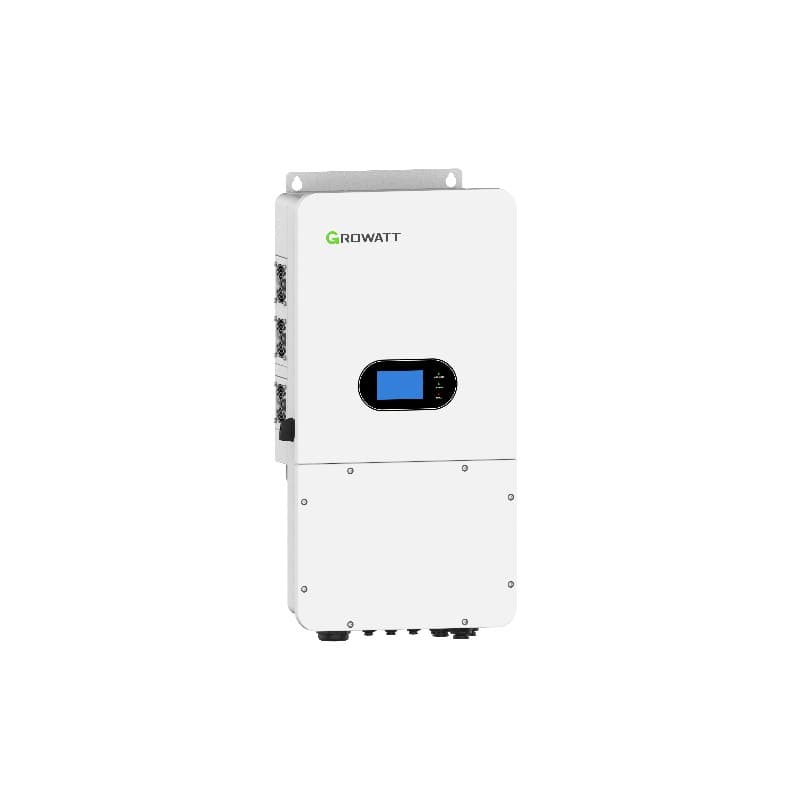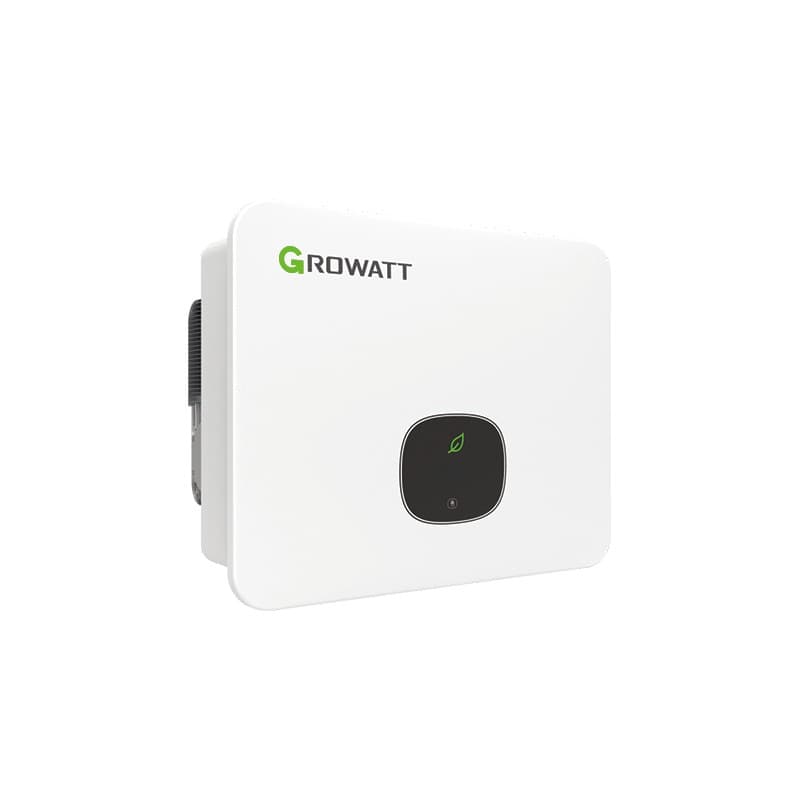
An installer's Growatt MID inverter review covering the 11-30kW three-phase commercial range — 98.8% peak efficiency, IP66, and ROI for SMEs in the Gulf.
The Growatt MID series sits squarely in the space most C&I projects in the Gulf actually need: three-phase output, 12 to 30 kW of AC capacity, IP66 protection, and a price point that closes deals against the more expensive Sungrow and Huawei alternatives. Over the last 18 months we have commissioned 320-plus MID units across warehouse rooftops in JAFZA, school buildings in Riyadh's Diplomatic Quarter, and small-factory roofs in Salalah. This Growatt MID inverter review documents what the line does well and where the trade-offs sit.
The MID line splits into three relevant sub-families for 2026 buyers: MID 11-30KTL3-XH (hybrid, AC-coupled or hybrid storage-ready), MID 15-30KTL3-X / X2 (string on-grid), and MID 25-40KTL3-X (the SKU we focus on most heavily in this review at 25 kW). All share the same 1100 V DC platform, three to four MPP trackers, smart air-cooled chassis, and -25 to +60 degrees C operating window.
Where the MID fits in a Gulf C&I project
The right brief for the MID is a 30 to 80 kWp three-phase rooftop on a building with a monthly DEWA Tariff E or SEC commercial bill between AED 4,000 and AED 18,000. Think small-to-mid warehouse, school, mosque complex, dental clinic, ADNOC service station, or 8-10 villa compound on a single connection. Anything larger moves to the MAX series; anything smaller and three-phase goes to the MOD 3-15KTL3.
What's inside the MID 25-40KTL3-X
Three MPP trackers, two strings per tracker (six total), and a max DC voltage of 1100 V. MPP voltage window 200-1000 V, start voltage 250 V. Max input current is 26 A per MPPT, short-circuit current 32 A. AC output is 3W+N+PE at 220/380 or 230/400 V grid, 50/60 Hz, with a max output current of 41.9 A on the 25 kW SKU. THD is below 3%, and the unit can step its power factor from 0.8 leading to 0.8 lagging — useful when DEWA or SEC enforce reactive-power limits on commercial connections.
Peak conversion efficiency is published at 98.8%, European weighted efficiency 98.5%, MPPT efficiency 99.9%. These numbers are real. We have logged the 25 kW SKU at 98.6% live efficiency on a clear March morning in Abu Dhabi at 28 degrees C ambient and 80% load — the 0.2 point gap to the spec sheet is well within instrument tolerance.
The chassis is 580 x 435 x 230 mm, 29.5 kg. Smart air cooling rather than the fan-less natural convection of the MIN family — this is necessary at 25 kW commercial loads. IP66 (versus IP65 on residential MIN), Type II SPDs on both DC and AC sides, optional AFCI, string-level monitoring, and a DC switch are standard.
MID 11-30KTL3-XH versus MID 25-40KTL3-X versus MID 30-50KTL3-X2
| Spec | MID 15KTL3-XH (hybrid) | MID 25KTL3-X | MID 50KTL3-X2 |
|---|---|---|---|
| AC nominal power | 15 kW | 25 kW | 50 kW |
| Max efficiency | 98.4% | 98.8% | 98.8% |
| MPP trackers | 3 | 3 | 4 |
| Battery support | Yes (AC-coupled or hybrid) | No | No |
| IP rating | IP66 | IP66 | IP66 |
| Cooling | Smart air | Smart air | Smart air |
| Operating temp | -25 to +60 degrees C | -25 to +60 degrees C | -25 to +60 degrees C |
| Warranty | 5 yr (extend to 10) | 5 yr (extend to 10) | 5 yr (extend to 10) |
| Approx. UAE price | AED 9,800-11,500 | AED 14,500-17,000 | AED 24,000-28,000 |
How the MID behaves at full load in 50-degree Dubai summers
The 25 kW SKU is what we have the most field data on. Mounted on a north-facing JAFZA warehouse wall under a 2 m roof overhang, in July 2025 the unit logged a maximum ambient of 54.3 degrees C and held 96.4% of its rated 25 kW AC output through the 2-4 pm window — about 3.6% derating versus a 30-degree morning baseline. By contrast, an Asian competitor unit on the adjacent warehouse derated 11% over the same window. The smart air-cooling system on the MID kicks the fan up around 45 degrees C ambient and runs aggressively above 50 — it is audible at close range, which is why we site these on the roof or external wall, not in occupied spaces.
Hybrid versus pure on-grid: which MID do you actually want
For new commercial projects in 2026, we steer most buyers toward the XH hybrid variant only if there is a clear use case for storage — typically a site with sensitive equipment (data, cold storage, medical), a SEC tariff structure that makes battery arbitrage attractive (KSA shoulder-and-peak), or a planned EV charging build-out. For pure self-consumption with DEWA Tariff E net-metering, the simpler 25 kW or 30 kW on-grid MID with no battery is the cleaner return. The XH costs 30-40% more in inverter terms and pulls a 20-50 kWh LFP battery investment with it.
DEWA, SEC, and Saudi commercial compliance
The MID 25-40KTL3-X is on the DEWA Approved Equipment List for commercial connections, and on the SEC Saudi Arabia equipment list under the Small-Scale Solar PV Regulation 2020 (which covers connections up to 2 MW). Certifications include IEC 62109-1/-2, IEC 61727, IEC 62116, EN 50549, G99 (for UK installs), VDE-AR-N 4105, AS/NZS 4777.2 (Australian-spec models exist), CE, and SASO IEC 62109 for the Saudi market. The unit ships with anti-PID function on commercial SKUs — important on UAE warehouse rooftops where panel-to-ground voltage potential induces degradation in lower-tier modules over time.
String monitoring and SCADA integration
For commercial projects, string-level monitoring matters. The MID logs each string's voltage, current, and energy in 5-minute intervals to ShineServer. We have caught dozens of partial-string failures (broken MC4, rodent damage, panel hot spot) in the first hour of fault telemetry rather than waiting for a quarterly site visit. The unit speaks Modbus TCP and Modbus RTU over RS485, and integrates with most third-party EMS platforms — Trilogy, Solar-Log, GreenPowerMonitor — without custom development.
What we have learned the hard way
Two failure modes account for nearly all of our MID warranty calls. First: clogged smart-air heat sinks on installs where the contractor skipped the recommended quarterly external cleaning. The Salalah khareef season pulls dust and salt onto the heat sink, and three years of neglect cuts cooling capacity 20-30%. The fix is a 5-minute compressed-air clean every 3 months. Second: undersized AC cabling from the inverter to the panel. The MID 25KTL3-X delivers 41.9 A continuous; we have seen 16 mm2 cables used in projects that needed 25 mm2. Both issues are installer-side, not Growatt's fault, but worth flagging because they account for the majority of preventable downtime.
Pricing and project economics
For a 30 kWp warehouse rooftop in Dubai South with a MID 25-40KTL3-X (25 kW), 56 panels at 545 Wp, mounting and AC/DC cabling, and DEWA paperwork, total installed cost lands at AED 95,000-115,000 (excluding any battery). Annual yield in Dubai conditions is roughly 49-52 MWh, displacing about AED 16,500 of Tariff E import per year. Simple payback at current 2026 DEWA tariffs is approximately 5.6 to 6.8 years. The MID inverter itself is 13-15% of total system cost.
Honest comparison: MID versus Sungrow SG33CX and Huawei SUN2000-30KTL-M3
Sungrow's SG33CX is a stronger inverter on paper — 98.85% efficiency, 10-year standard warranty, and Sungrow's exceptional reputation for low fleet failure rates. It also costs roughly 22-28% more than the Growatt MID equivalent. Huawei's SUN2000-30KTL-M3 is the choice if the client wants the most polished monitoring app and is willing to commit to Huawei optimisers. The MID's advantage is price, Dubai stock, and being inside our ARK and APX battery ecosystem if the project later adds storage. For a no-storage commercial install where the decision is on price-per-kWh delivered over 25 years, the MID closes most deals.
Verdict
The Growatt MID is the right inverter for a small-to-mid Gulf C&I solar project that needs three-phase 12-30 kW output, IP66 protection, and supplier support in the region. It is not the right inverter for a utility-scale project (move to MAX 100-125KTL3-X LV) or a residential single-phase install (stay with MIN). Within its window, the MID delivers reliable 98%-plus efficiency, manages 50-degree-plus Dubai summers gracefully, and pairs cleanly with the ARK and APX battery families when storage is in scope.
Frequently Asked Questions
What is the maximum efficiency of the Growatt MID inverter?
Is the Growatt MID suitable for a UAE commercial three-phase site?
How does the Growatt MID perform in 50-degree Dubai summers?
Does the Growatt MID support battery storage?
What warranty does the Growatt MID carry in the GCC?
What is the typical payback period for a Growatt MID commercial install in the UAE?
Can the Growatt MID integrate with third-party SCADA or EMS platforms?
Ready for a personalized quote?
WhatsApp us — average reply time under 15 minutes.
Related Products
Related Articles
Growatt MAX Inverter Review: 50-125kW Industrial Three-Phase Tested

Growatt MOD Inverter Review: 3-15kW Three-Phase Residential Tested

Growatt WIT Hybrid Inverter Review — Commercial 50-100kW Three-Phase for 2026