Cabin, farm, or rural home without reliable grid? We rank the Growatt SPF off-grid inverters and walk through battery bank sizing for 5 to 15 kW remote installs.
If you live or work somewhere with no grid, a flaky grid, or a grid that bills you for a connection that runs four hours a day, the Growatt SPF family is the right answer for most budgets. Unlike the SPH (hybrid grid-tied) line, SPF inverters are purpose-built for battery-first, grid-optional installations — solar charges the battery, the battery powers the loads, and the grid (if present) or a generator is just a topping-up source. This guide names the winning SPF model for each typical off-grid scenario from a 5 kVA cabin up to a 15 kVA rural homestead, then walks through the battery sizing math that most installers get wrong.
Why SPF Beats Generic Off-Grid Inverters
You will see Voltronic-pattern, MUST, and PowMr "5 kVA all-in-one" inverters at half the price of an SPF. They work — until summer hits 50°C and they throttle to 70% rated output, or until your battery bank settles at 49.5 V and the inverter cuts out at the wrong threshold. Growatt SPF inverters are tested at 60°C ambient with no derating below 50°C, have battery-equalisation routines that play nice with lead-acid and lithium, and ship with a real 2-year warranty backed by service centres in Dubai, Riyadh, Lagos, and Nairobi. That matters when you are 200 km from anywhere.
1. Growatt SPF 5000 ES — Best for Cabins and Small Off-Grid Homes (3–5 kVA Load)
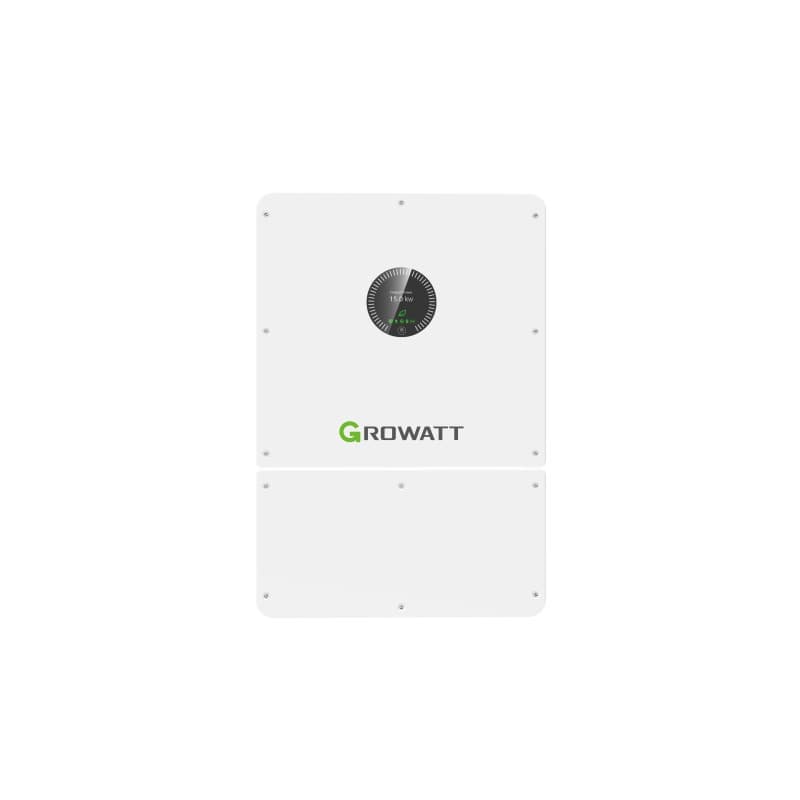
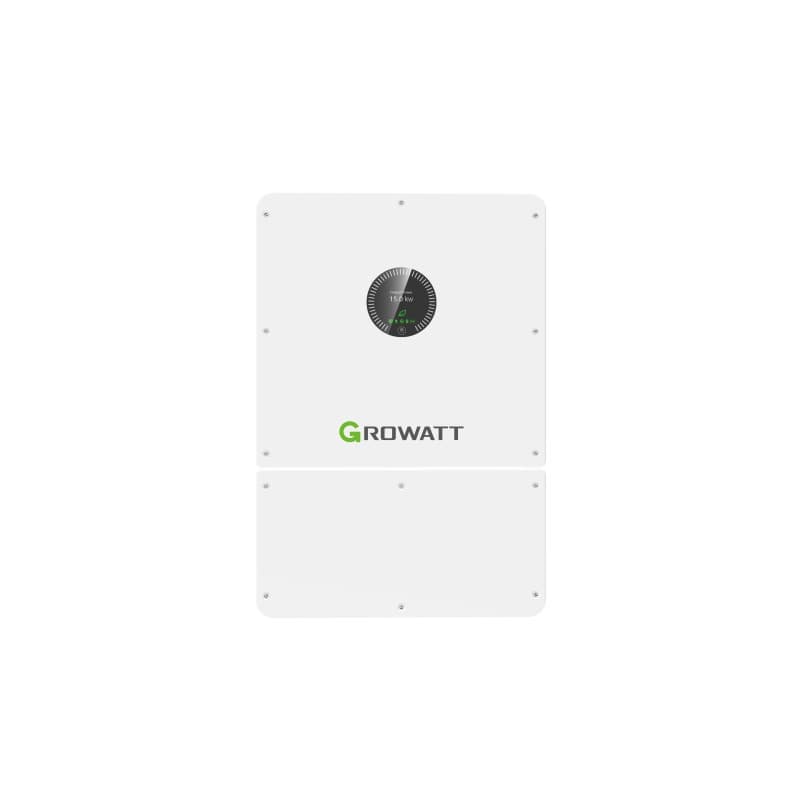
The SPF 5000 ES is the workhorse all-in-one for a 2-bedroom cabin, a remote farmhouse, or a small clinic. It includes a 5 kVA pure sine-wave inverter, an 80 A MPPT charge controller, and an AC charger in one box.
- 5 kVA / 4 kW continuous, 10 kVA surge for 5 seconds
- 48 V battery bank, supports lithium (LiFePO4) or lead-acid AGM/gel/flooded
- Built-in 80 A MPPT, max 145 V PV input, max 5 kW solar input
- Pure sine output, <3% THD
- Operating temp: 0–60°C, no derating below 50°C
- Generator input with 60 A AC charger
- Price: AED 3,200–3,800 in UAE, USD 800–950 ex-Shenzhen
Winner verdict: If your continuous load is under 4 kW (fridge, freezer, lights, one split AC, well pump on schedule), the SPF 5000 ES is the single right answer. Anything cheaper will fail in summer; anything more is overspec.
2. Growatt SPF 6000T DVM-MPV — Best for 3-Phase Small Workshops and Farms
When you have three-phase loads — a 5 kW borehole pump, a welding bench, a small grain mill — you need three-phase off-grid. The SPF 6000T DVM-MPV delivers 6 kW three-phase from a 48 V battery bank, runs in parallel up to 6 units for 36 kW, and has dual MPPTs accepting up to 8 kW of PV.
- 6 kW / 6 kVA three-phase, parallel to 36 kW
- Dual MPPT, 4 kW each, max 450 V Voc
- 48 V LV lithium or 4×12 V lead-acid string
- Built-in AC charger 60 A from generator/grid
- Price: AED 6,800–8,200 per unit
Winner verdict: Buy this if you have 3-phase motors. Do not try to run a 3-phase motor off 3× single-phase 5000 ES — the phase sync is unreliable.
3. Growatt SPF 10000T DVM-MPV — Best for Large Rural Homes (10 kVA)
For 4–5 bedroom rural homes, mid-size farms with cold storage, or telecom sites, the SPF 10000T DVM-MPV three-phase off-grid inverter is the right capacity. 10 kW continuous, 20 kVA surge, parallel-capable to 60 kW.
- 10 kW / 10 kVA three-phase
- Dual MPPT, up to 13.5 kWp PV input
- 48 V battery (HV 96 V option on newer DVM-HPS variant)
- RS485 and CAN bus for lithium BMS integration
- Price: AED 11,500–13,500
Winner verdict: Best capacity-per-dirham for a large rural homestead. If you push past 10 kW continuous, parallel a second unit rather than going to a single 15 kVA — service is faster on parallel pairs.
4. Growatt SPF 12000T DVM-HPS — Best for High-Power Off-Grid (12 kW + HV Battery)
The newest entry, the SPF 12000T DVM-HPS, runs on a high-voltage battery bank (192–384 V) which means thinner battery cables, less I²R loss, and much faster charging. 12 kW three-phase, dual MPPT to 18 kWp.
- 12 kW / 12 kVA, surge 24 kVA
- HV battery 192–384 V — pairs with Growatt APX HV stacks (modular 5–30 kWh)
- Up to 18 kWp PV input across dual MPPT
- Price: AED 14,500–17,000 inverter only
Winner verdict: Skip this for budget projects — the HV battery doubles the storage cost. But if you are building a permanent farm or compound and want 10+ year reliability with minimum cable thickness, HPS is the right move.
Battery Bank Sizing — The Math Most People Skip
Daily energy use (kWh) is the input. Multiply by 1.25 to cover round-trip efficiency and aging, then divide by usable depth of discharge (80% for LiFePO4, 50% for lead-acid). That gives you nominal kWh of bank you need. Convert to amp-hours by dividing by battery bank voltage.
Worked Example — 4 kWh/day Cabin (48 V LiFePO4)
- Daily use: 4 kWh
- × 1.25 efficiency/aging factor = 5 kWh
- ÷ 0.8 DoD = 6.25 kWh nominal
- ÷ 48 V = 130 Ah at 48 V → buy a 51.2 V 100 Ah pack (5.12 kWh, runs 1 day) or a 200 Ah pack (10.24 kWh, runs 2 days autonomy)
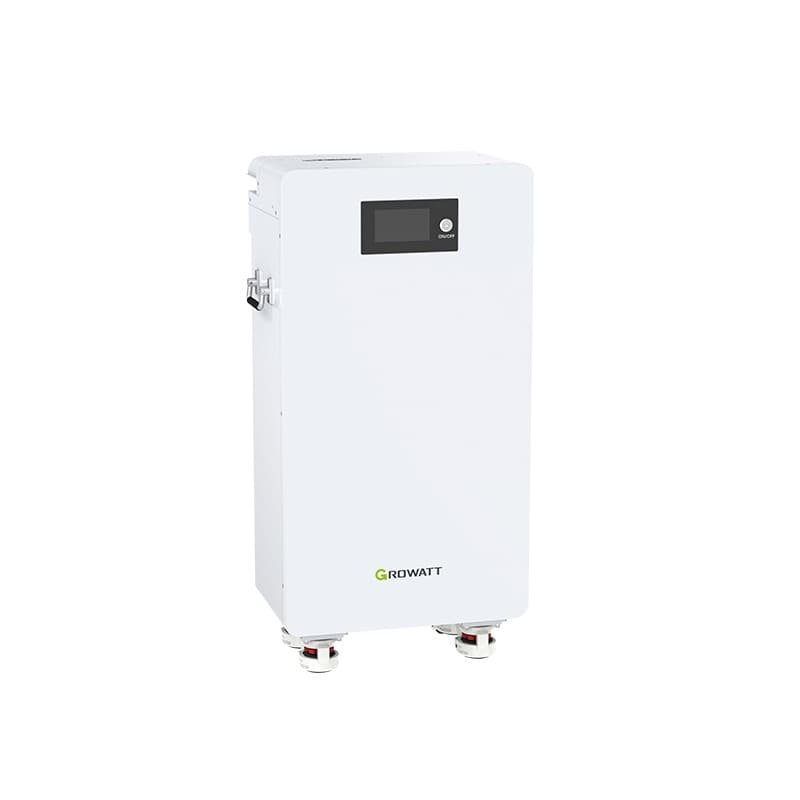
- Recommended: 2 × Growatt ARK 2.5L (2.56 kWh each) = 5.12 kWh, paired with SPF 5000 ES
Worked Example — 25 kWh/day Farmhouse (48 V LiFePO4, 2 Days Autonomy)
- Daily use: 25 kWh
- × 2 days autonomy = 50 kWh
- × 1.25 = 62.5 kWh
- ÷ 0.8 DoD = 78 kWh nominal at battery
- ÷ 48 V = 1,625 Ah at 48 V → 8 × Growatt ARK 10.24 kWh stacks (81.92 kWh) paired with SPF 10000T
Lead-Acid vs Lithium Cost Trade
| Metric | Lead-acid AGM | LiFePO4 |
|---|---|---|
| Usable DoD | 50% | 80–90% |
| Cycles to 80% capacity | 500–1,200 | 4,000–6,000 |
| Cost per usable kWh (UAE 2026) | AED 1,100–1,400 | AED 1,400–1,800 |
| Lifetime cost per kWh delivered | AED 2.20 | AED 0.45 |
| Heat tolerance (Gulf summer) | Cuts cycle life 50% | Minor impact |
For any new off-grid install in the GCC or hot Africa, LiFePO4 is the only sensible answer. Lead-acid only wins on day-one cash if you genuinely cannot stretch the budget by 25%.
Solar Array Sizing for Off-Grid
Off-grid is different from grid-tie: there is no net-metering to absorb excess generation, so you size the array to recharge the battery in worst-case winter days plus run loads. Rule: PV kWp = (daily kWh ÷ 4 sun-hours in winter) × 1.4 oversizing.
For the 25 kWh/day farmhouse: 25 ÷ 4 × 1.4 = 8.75 kWp PV. The SPF 10000T accepts 13.5 kWp so you have room.
Comparison: Which SPF Should You Buy?
| Use Case | SPF Model | Battery Bank | PV Array | UAE Price (Inverter) |
|---|---|---|---|---|
| Weekend cabin, 5 kWh/day | SPF 5000 ES | 5 kWh LiFePO4 48 V | 3 kWp | AED 3,200–3,800 |
| Small farmhouse, 15 kWh/day | SPF 5000 ES | 15 kWh LiFePO4 48 V | 5 kWp | AED 3,200–3,800 |
| 3-phase workshop, 20 kWh/day | SPF 6000T DVM-MPV | 20 kWh 48 V | 7 kWp | AED 6,800–8,200 |
| Rural homestead, 35 kWh/day | SPF 10000T DVM-MPV | 50 kWh 48 V | 12 kWp | AED 11,500–13,500 |
| Compound + EV, 60 kWh/day | SPF 12000T DVM-HPS | 80 kWh HV APX | 18 kWp | AED 14,500–17,000 |
Our Pick for Most Off-Grid Buyers
For 70% of off-grid buyers, the Growatt SPF 5000 ES paired with a 10 kWh LiFePO4 bank and a 5 kWp PV array hits the sweet spot. AED 3,500 for the inverter, AED 12,000–14,000 for the battery, AED 4,500–5,500 for panels and mounting — total system around AED 22,000–25,000 turnkey. That runs a typical 2-bedroom off-grid home with one split AC indefinitely on solar alone.
Common Mistakes to Avoid
- Undersizing the battery to "save money": A bank that cycles below 50% State of Charge daily will fail in 18 months. Size for 2 days autonomy minimum
- Mixing battery brands or ages: The weakest pack defines the bank's behaviour. All packs must be the same chemistry, capacity, and age
- Skipping the generator input: Even with oversized solar, a 3-day overcast spell can drain the bank. A small petrol/diesel generator wired to the inverter's AC input pays for itself
- Buying lead-acid in hot climates: Above 35°C ambient, AGM cycle life drops in half. LiFePO4 keeps 95% of cycle life at 45°C
Frequently Asked Questions
What is the best Growatt off-grid inverter for a cabin?
How big a battery bank do I need for an off-grid Growatt system?
Which Growatt SPF model supports three-phase off-grid?
Can the Growatt SPF 5000 ES use lithium batteries?
How much solar do I need for a 25 kWh/day off-grid home?
Is Growatt SPF better than Voltronic Axpert for off-grid?
Can I add solar later to a Growatt SPF off-grid system?
Ready for a personalized quote?
WhatsApp us — average reply time under 15 minutes.