Choosing a Growatt inverter in Jordan 2026? Practical guide to EMRC net-metering, JS standards, residential and commercial picks in JOD with NEPCO compliance.
Jordan was an early Arab adopter of residential solar net-metering. The Energy and Minerals Regulatory Commission (EMRC, formerly ERC) opened net-metering to residential and commercial rooftops in 2012, and the country now has one of the highest per-capita rooftop solar penetrations in the Middle East. Growatt's MIN, MOD and MID hybrid families have become a default pick for Jordanian installers thanks to their EMRC-compliant grid behaviour, IEC 62109 certification, and tolerance of Jordan's wide temperature range.
This guide is for Jordanian homeowners in Amman, Irbid, Zarqa, Aqaba, and rural Mafraq; small-commercial buyers in Sahab industrial zone; agricultural projects in the Jordan Valley; and EPC installers across the kingdom. It covers EMRC net-metering rules, Jordan Standard (JS) requirements, sizing for typical Jordanian properties, and the Growatt models that actually appear on NEPCO/IDECO/EDCO equipment lists.
The 30-second answer for Jordanian buyers
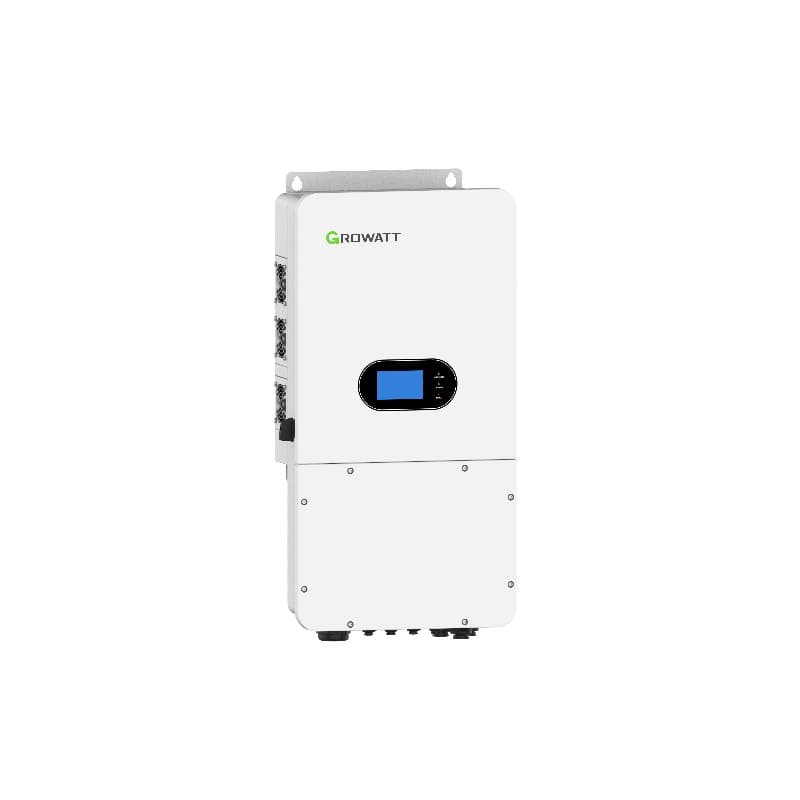
For a typical Amman 3-bedroom villa or apartment with 1-2 split ACs, electric water heating, and a monthly NEPCO/IDECO/EDCO bill above JOD 80-150, the strongest 2026 pick is the Growatt MIN 5000TL-XH single-phase hybrid inverter with 6-7 kWp of bifacial panels. For larger villas with three-phase service or with multiple ACs and an electric heat pump, step up to the MOD 8000TL3-XH.
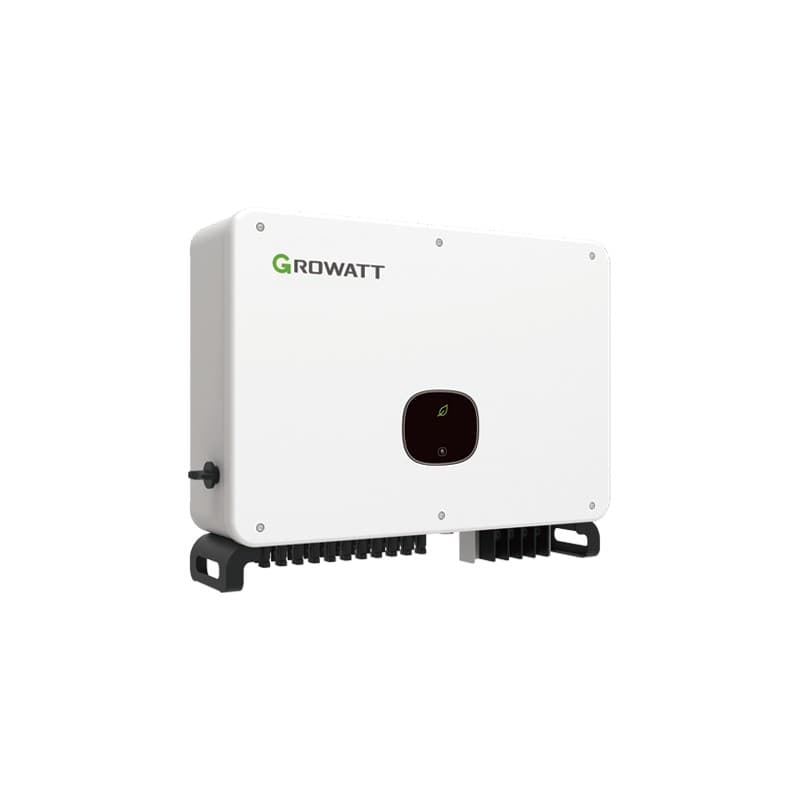
For commercial installations in Sahab, Mafraq, or Zarqa industrial zones, the MID 25-30KTL3-XH or MAX 50KTL3-LV are the workhorses under EMRC's commercial net-metering scheme.
EMRC net-metering: how Jordan's scheme actually works
Jordan's net-metering scheme is one of the more generous in the Arab world. Key parameters in 2026:
- Eligibility: All residential, commercial, industrial, agricultural, and government customers connected to NEPCO (national), IDECO (Irbid District), or EDCO (Electricity Distribution Company - central/southern).
- System size cap: Up to the customer's contracted load. Residential typically capped at 5 kW single-phase or 15 kW three-phase; commercial scaled to consumption history.
- Credit mechanism: True net-metering — exported kWh credit imported kWh at the same retail tariff over a rolling 12-month settlement. Any net credit balance at year-end is paid out at the bulk tariff (lower than retail) or carried forward.
- Wheeling: EMRC allows wheeling — your PV system can be located on a different premises from your consumption point, useful for tenants without roof access.
The economics are excellent. Under current NEPCO residential tariffs, a typical Amman installation pays back in 4-6 years and operates 25+ years with minimal maintenance.
What EMRC and Jordan Standards (JS) require from the inverter
Jordan's PV interconnection technical regulation requires:
- IEC 62109-1 and IEC 62109-2 electrical safety certification.
- IEC 61727 and IEC 62116 grid interconnection and anti-islanding compliance.
- Jordan Standards (JS) conformity — the JSMO (Jordan Standards and Metrology Organisation) lists approved PV equipment.
- Listing on the relevant distribution company's approved equipment list — NEPCO, IDECO, and EDCO each maintain their own approved equipment registers, but these are largely harmonised under the EMRC framework.
- Voltage and frequency ride-through compliant with the Jordanian grid code — 230 V single-phase nominal, 400 V three-phase, 50 Hz with ±0.5 Hz tolerance.
Growatt MIN-XH, MOD-XH, MID-XH and MAX series carry TUV-certified IEC 62109 documentation and have been on JSMO and NEPCO/IDECO/EDCO approved lists since 2019.
Jordan's climate: cooler than the Gulf, with a twist
Jordan is meaningfully cooler than KSA or the UAE. Amman, Irbid and Zarqa see summer rooftop temperatures peaking at 38-42 C ambient. The Jordan Valley (Ghor) and Aqaba reach 45-48 C. Mafraq desert installations can push 47 C in extreme weeks.
But Jordan adds two climate variables not present in the Gulf:
- Cold winters. Amman regularly sees temperatures below 0 C in January-February, with occasional snow. Inverters must be rated to -25 C for reliable startup. All Growatt MIN-XH, MOD-XH and MID-XH models meet this.
- Higher annual irradiation than expected. Jordan averages 5.5-6.0 peak sun hours daily — slightly higher than coastal UAE — making the per-kWp annual yield very attractive.
The combination means Growatt's 60 C upper rating is rarely the binding constraint in Jordan, but the -25 C cold-side rating is critical for Amman, Salt, and the northern hills.
Sizing for Jordanian homes and small commercial
| Property profile | Monthly bill (JOD) | Recommended Growatt | PV array | Battery (optional) |
|---|---|---|---|---|
| Apartment, no electric heating, 1 AC | 40-80 | MIN 3000TL-XH (3 kW) | 3-4 kWp | 0-5 kWh ARK |
| 3-bed villa/apartment, 1-2 ACs, electric heating | 80-150 | MIN 5000TL-XH (5 kW) | 5-7 kWp | 5-10 kWh ARK |
| 4-5 bed villa, 2-3 ACs, electric heat pump | 150-300 | MOD 8000TL3-XH (8 kW three-phase) | 9-12 kWp | 10-15 kWh ARK XH |
| Large villa / family compound | 300-600 | MOD 10000TL3-XH or MID 15KTL3-XH | 13-18 kWp | 15-25 kWh |
| Small commercial / shop / restaurant | 400-1,500 | MID 25KTL3-XH | 25-35 kWp | optional |
| Industrial / warehouse / factory | 2,000+ | MAX 50-100KTL3-X LV | 50-150 kWp | not required |
Real 2026 pricing in Jordanian dinars
Turnkey installed pricing for EMRC-approved Growatt systems in May 2026:
| System | Approx. cost (JOD) | Typical payback |
|---|---|---|
| 3 kW MIN-XH grid-tie (no battery) | 1,800 – 2,500 | 4-6 years |
| 5 kW MIN-XH + 5 kWh ARK | 4,200 – 5,500 | 5-7 years |
| 8 kW MOD-XH + 10 kWh ARK | 6,500 – 8,500 | 5-6 years |
| 15 kW MID-XH commercial three-phase | 10,500 – 13,500 | 4-5 years |
| 30 kW MID-XH or MAX 50KTL3 | 20,000 – 27,000 | 3.5-5 years |
Inverter-only retail in Jordan: Growatt MIN 5000TL-XH lands at JOD 950-1,250; MOD 8000TL3-XH at JOD 1,600-2,100; MID 25KTL3-XH at JOD 4,200-5,400. Prices indicative — confirm with the authorised Jordanian distributor.
Top Growatt picks by Jordanian use case
1. Amman / Irbid 3-bed villa: MIN 5000TL-XH
The most common Jordanian residential pick in 2026. 5 kW single-phase hybrid, dual MPPT, IP65, -25 C to +60 C temperature range, EMRC-compliant grid behaviour, JSMO listed. ShinePhone monitoring with Arabic interface. Pairs natively with ARK 2.5L-A1 lithium for evening electric heating and AC operation.
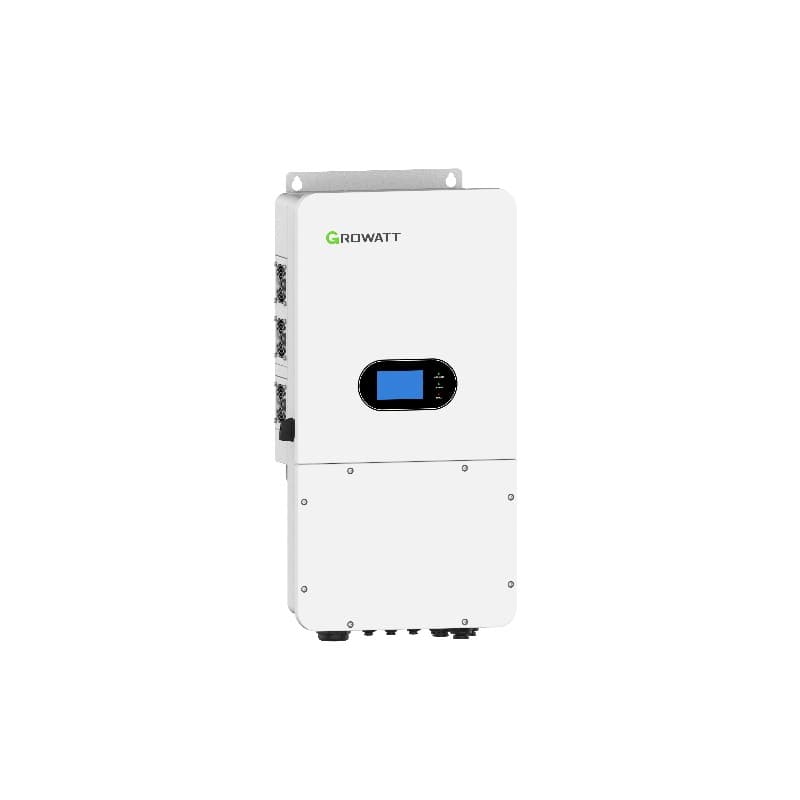
2. Larger villa or three-phase service: MOD 8000TL3-XH
For villas with electric heat pumps (becoming common in newer Jordanian homes for combined heating/cooling), or three-phase service, the MOD 8000TL3-XH delivers 8 kW balanced output with EPS backup for essential loads during NEPCO grid events.
3. Sahab/Zarqa industrial commercial: MID 25-30KTL3-XH
For light-industrial workshops, warehouses, and commercial premises in Sahab, Zarqa, or the Aqaba Special Economic Zone, the MID-XH range delivers 25-30 kW three-phase with up to 6-unit parallel operation. Touch-screen LCD, Modbus/RS485 for SCADA, full EMRC commercial scheme compliance.
4. Industrial rooftop: MAX 100-150KTL3-X LV
For factories in Mafraq, Sahab, or Karak with 100+ kWp roof areas, the MAX series delivers high-yield string conversion with 12 MPPTs and 1500V DC architecture for the lowest LCOE under Jordan's commercial net-metering.
Pricing in JOD: how Jordan compares regionally
Jordanian solar pricing tends to be 5-15% lower than KSA and UAE for the same equipment because:
- Lower import duties on solar equipment under the EMRC framework (effectively zero for many categories).
- A more mature and competitive EPC market with hundreds of licensed installers.
- Higher penetration means scale efficiencies in distribution and installation.
The trade-off: Jordan's currency-stable JOD means pricing is predictable, but freight from China is the same as for the Gulf, so the equipment-cost portion is similar. Where Jordan wins is on labour and overhead.
Where Growatt wins in Jordan
- Strong NEPCO/IDECO/EDCO compliance track record — installers don't get pushback on Growatt equipment approval.
- Wide temperature range (-25 C to +60 C) covers both Amman winter and Jordan Valley summer.
- Authorised Jordanian distributor with stock in Amman and Aqaba, replacement units typically within 5-7 days.
- Price point fits the Jordanian market — JOD-denominated pricing competitive with no-name imports while delivering Tier-1 reliability.
Where Growatt isn't the first pick
- If you want a 10-year standard inverter warranty out of the box, Sungrow leads.
- If you want module-level optimisers, Huawei FusionSolar's ecosystem is more developed.
- For pure off-grid applications in remote desert sites (e.g., Wadi Rum tourism camps without grid), the Growatt SPF series works but Felicity and Voltronic offer more low-frequency off-grid options.
Mistakes to avoid in a Jordanian Growatt installation
- Buying from outside the authorised channel. Warranty service requires the unit to be sold by the official Jordanian distributor.
- Skipping the bidirectional meter step. NEPCO, IDECO and EDCO each require a utility-installed bidirectional meter before net-metering credits begin.
- Not sizing for winter heating loads. Many Jordanian homes use electric heating in January-February. Size the system for combined summer cooling + winter heating consumption, not just summer.
- Ignoring snow risk. Amman, Salt and Jerash see occasional snow. Panel mounting must account for 50 kg/m2 snow load.
- Skipping the EMRC approval letter. Without the formal EMRC/NEPCO approval, your installation isn't net-metering-eligible and won't earn credit.
The bottom line for Jordanian buyers
For most Jordanian homeowners in 2026, the Growatt MIN-XH (single-phase) and MOD-XH (three-phase) hybrid families are the best price-performance choice — IEC 62109 certified, JSMO listed, on NEPCO/IDECO/EDCO equipment registers, rated for the full -25 C to +60 C Jordanian climate, and backed by an authorised Amman distributor. Pair with ARK lithium for combined cooling/heating year-round operation, and pay back in 4-6 years under EMRC's strong net-metering scheme.
Frequently Asked Questions
Which Growatt inverter is best for an Amman villa in 2026?
Are Growatt inverters approved under EMRC net-metering in Jordan?
How much does a 5 kW Growatt solar system cost in Jordan?
What is the typical payback for solar in Jordan?
Can Growatt inverters handle Amman cold winters?
What is EMRC's net-metering cap in Jordan?
What warranty does Growatt offer in Jordan?
Ready for a personalized quote?
WhatsApp us — average reply time under 15 minutes.
Related Products
Related Articles
Growatt Inverter Morocco 2026: The ONEE Net Metering Buyer's Guide
Best Growatt Inverter for the UAE 2026: DEWA, ADDC & Sharjah Buyer's Guide
Best Growatt Inverter for Saudi Arabia 2026: Villa & Commercial Buyer's Guide