The five sums behind a solar panel and battery calculation, worked on three real loads with Growatt units, and the calculator that does them for you.
Sizing a solar system is arithmetic, not guesswork, and it is short arithmetic: five sums, each one line long. This article does them by hand on three real loads so that nothing is hidden, then points at the tool that does them in a second. Every Growatt figure quoted below is read from the product's own record in our catalogue.
Products mentioned in this article
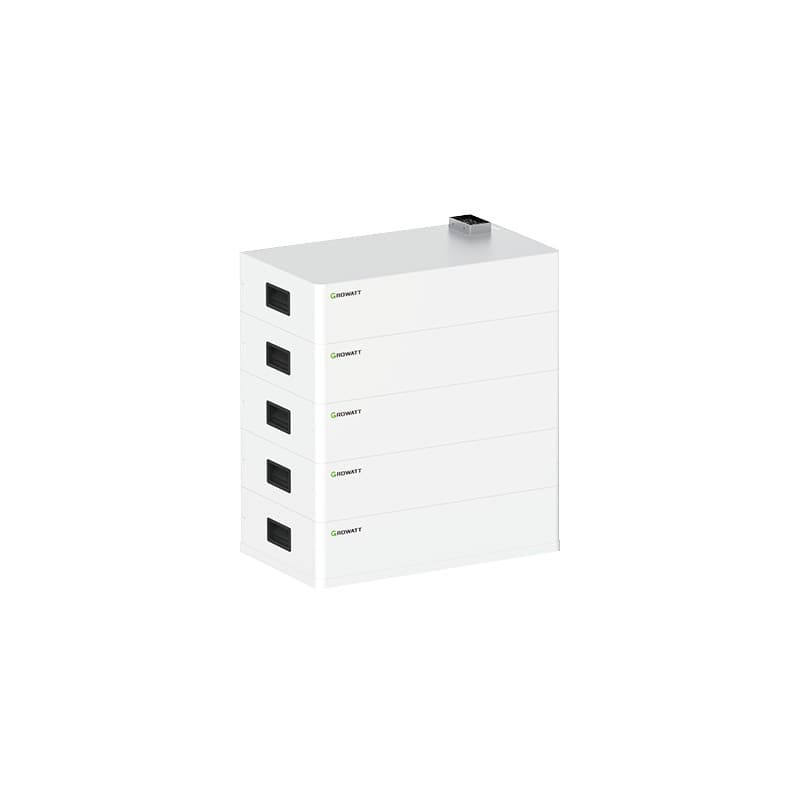
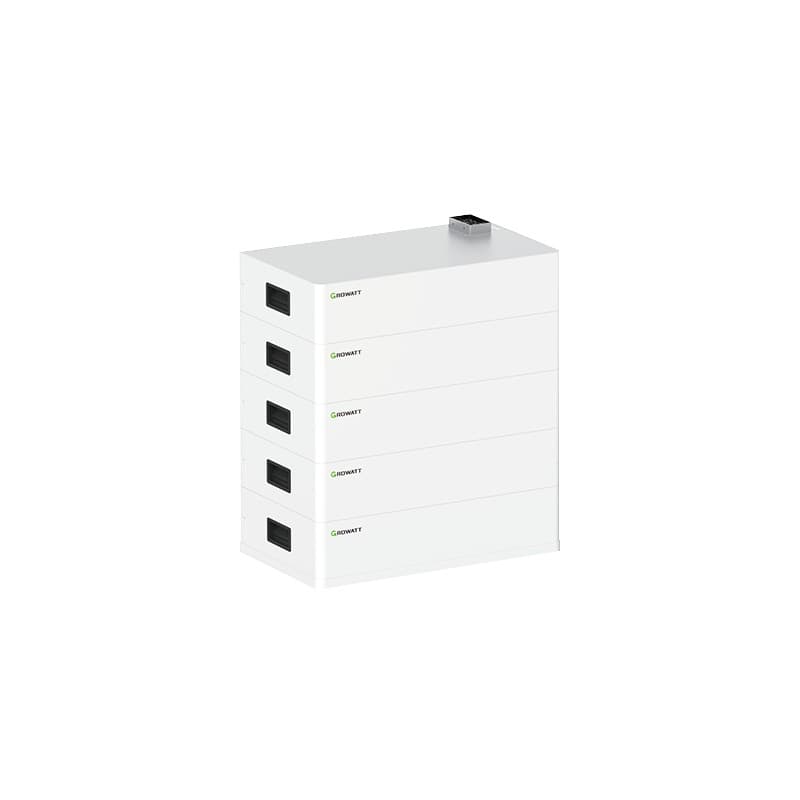
Growatt 5 kWh 51.2 V Lithium Solar Battery ALP5.0L-E2
- Nominal Energy:5kWh
- Nominal Voltage:51.2V
The five sums
- Daily energy (kWh). For each appliance: watts × how many × hours a day. Add them up.
- Peak load (W). Add the running watts of everything, then replace the one appliance with the heaviest start by its starting power — a compressor counts about three times, a water pump three and a half.
- Solar array (kWp). Daily energy ÷ (peak sun hours × performance ratio). The calculator uses 5.7 sun hours, the figure for the UAE, and a ratio of 0.8 — 0.75 for an off-grid system.
- Battery (kWh). For backup: daily energy × hours of backup ÷ 24. For off-grid: one full day of energy.
- Inverter (W). Its rated output must cover the peak load from sum 2, and its record must state a battery voltage range that holds the battery from sum 4.
Worked example 1: an apartment, four hours of backup
One air conditioner (1,200 W, 8 h), a fridge (150 W, 8 h), lights and Wi-Fi (200 W, 8 h), a television (100 W, 6 h), a washing machine (800 W, 1 h).
- Daily energy: 9.6 + 1.2 + 1.6 + 0.6 + 0.8 = 13.8 kWh.
- Peak: 2,450 W running; the air conditioner starts at 3,600 W, so 2,450 − 1,200 + 3,600 = 4,850 W.
- Array: 13.8 ÷ (5.7 × 0.8) = 3.03 kWp → six 550 W panels, about 16 m².
- Battery: 13.8 × 4 ÷ 24 = 2.3 kWh.
- Inverter: at least 4,850 W.
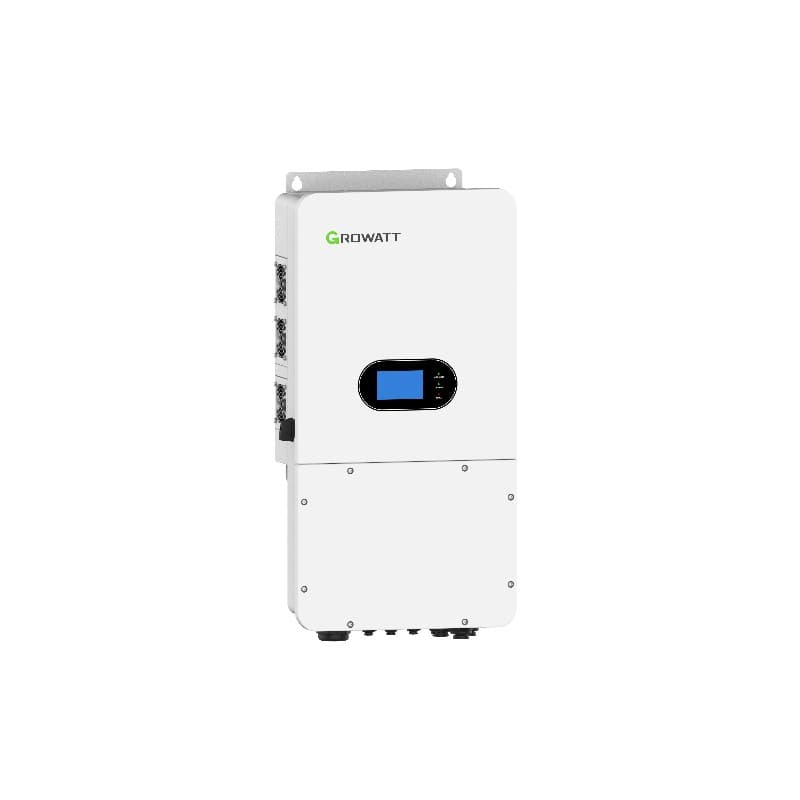
In the catalogue that lands on the SPH 10000TL-HU and one ALP5.0L-E2. The battery's record gives two energy figures — nominal energy 5 kWh and rated energy 4.6 kWh — and a depth of discharge of 92%; the calculator counts 90% of the nominal figure as usable, 4.5 kWh, which covers the 2.3 kWh with room to spare. This is the apartment evening-backup kit exactly.
Worked example 2: a house, eight hours of backup
Two air conditioners, a fridge, lights, a television, a washing machine and a kitchen (2,000 W, 1 h).
- Daily energy: 19.2 + 1.2 + 1.6 + 0.6 + 0.8 + 2.0 = 25.4 kWh.
- Peak: 5,650 − 1,200 + 3,600 = 8,050 W.
- Array: 25.4 ÷ 4.56 = 5.57 kWp → eleven 550 W panels, about 29 m².
- Battery: 25.4 × 8 ÷ 24 = 8.5 kWh.
The inverter is again the SPH 10000TL-HU: 10,000 W of nominal AC power against an 8,050 W peak, a recommended PV power of up to 15,000 W against a 5.57 kWp array, and a 40–60 V battery input. For the battery the calculator takes the largest single unit that is no more than twice the need, so a second night of clouds is not a crisis: the ARK 17.9L, 17.92 kWh at 51.2 V with a stated depth of discharge of 90%. The house overnight-backup kit shows the same three lines.
Worked example 3: a farm with no grid
Two water pumps (750 W, 1.5 h each), a fridge, a freezer (200 W, 8 h) and lights.
- Daily energy: 2.25 + 1.2 + 1.6 + 1.6 = 6.65 kWh.
- Peak: 2,050 W running; one pump starts at 2,625 W, so 2,050 − 750 + 2,625 = 3,925 W.
- Array, off-grid ratio: 6.65 ÷ (5.7 × 0.75) = 1.56 kWp → three 550 W panels.
- Battery: one full day, 6.65 kWh.
The inverter is the SPF 4000T DVM: 4 kW rated, a 12 kW surge rating, a maximum PV array power of 5,000 W and a 48 VDC battery input for lithium or lead-acid. The battery is the ARK 12.8L, 12.8 kWh. See it assembled on the farm off-grid kit.
If your sun is not the UAE's
Sum 3 is the one that changes with the country. The sizing engine's table holds 5.8 peak sun hours for Saudi Arabia, 5.4 for Iraq and 3.7 for France; the calculator on this site uses 5.7. To redo the array for another country, keep the daily energy and change the divisor: the house in France is 25.4 ÷ (3.7 × 0.8) = 8.58 kWp, sixteen 550 W panels instead of eleven. The battery and the inverter do not move — they depend on your appliances, not on your sky.
A note on the panel line
We distribute Growatt, and Growatt's range in our catalogue is inverters, batteries and EV chargers. The array is therefore a count of 550 W modules, not a product you can add to the cart here. If your panels are 450 W or 600 W, divide the kWp from sum 3 by your own module's watts and round up.
Let the calculator do it
The solar sizing calculator runs these five sums on your own list: pick appliances room by room, change the wattage of any of them, add a device of your own, choose on-grid, backup or off-grid and the hours of backup — or type the kWh a month from your bill. It answers with a named Growatt inverter and battery whose records fit each other. If you would rather start from a finished answer, the ready-made systems are these sums already done for twenty properties, and the Growatt hybrid inverters page lists the hybrid units it draws on for a backup system. The price on each product page is the price you pay; orders are collected from our stores in Dubai and Riyadh.
Frequently Asked Questions
How many solar panels does a house using 25 kWh a day need?
How do I work out the battery size for four hours of backup?
Why is the inverter sized on peak load and not on daily energy?
Does the calculator on this site work from an electricity bill?
Ready to order?
Every unit in the catalogue carries its price — add it to the cart and order online, then collect it from our store in Dubai or Riyadh.