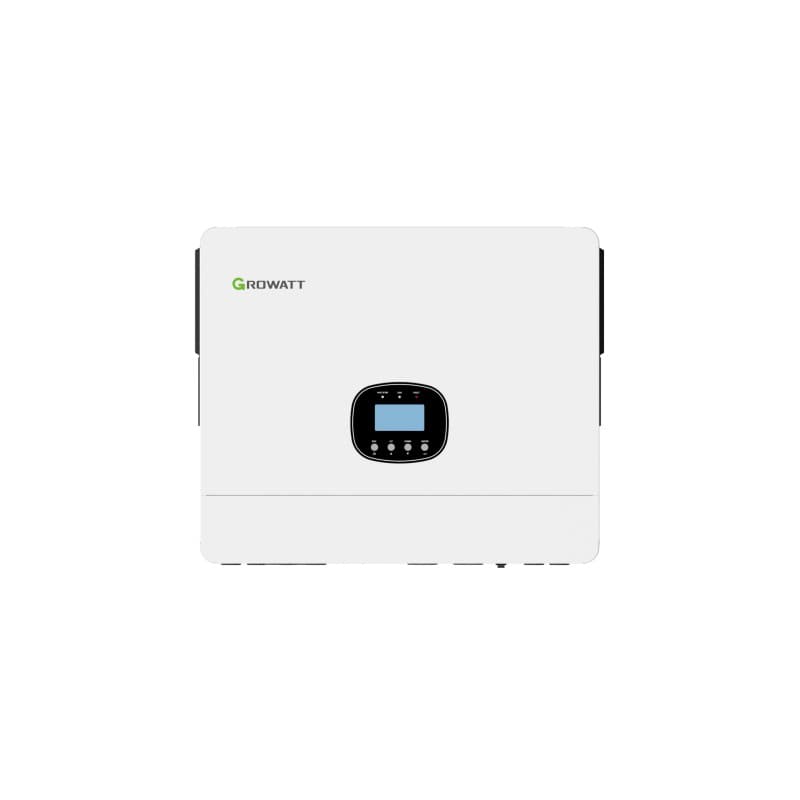
Step-by-step sizing for Growatt hybrid inverters — daily kWh formula, peak surge load, battery autonomy, DC/AC oversizing ratio, with a full worked example for a 4-bedroom UAE villa.
Sizing a Growatt hybrid inverter correctly is the difference between a system that quietly clears your DEWA bill and one that trips on the third AC compressor start of every August afternoon. Oversize the unit and you waste 30% of the budget on capacity that never gets used. Undersize it and the inverter goes into protection during the worst possible peak — when it is 47 °C outside and four splits are pulling current at the same time.
This guide walks through the actual sizing math we use at the Growatt MJS engineering desk, then runs a worked example for a typical 4-bedroom Dubai villa using a Growatt SPH 10000TL-BL-UP and ARK 2.5L-A1 battery stack. By the end you will be able to size your own system, or sanity-check the quote your installer just sent.
Want the short version? Send your last 12 months of DEWA bills on WhatsApp to +971 4 255 0887 and we'll come back with a sized Growatt configuration plus battery autonomy hours within one business day.
The four numbers that drive every sizing decision
Before you look at a single Growatt datasheet, you need four numbers from your home or building:
- Average daily kWh consumption. Pull twelve months of utility bills and divide total kWh by 365. The summer-to-winter swing in the UAE is roughly 3:1 — sizing on the winter average will leave you short in July.
- Peak simultaneous AC load (kW). The biggest combined draw you can plausibly run at once. For a UAE villa this is typically all splits plus the pool pump plus the cooking load.
- Battery autonomy target (hours). How many hours of essential loads you want to run from battery during a grid outage or after sunset. Two to six hours is typical residential.
- PV array DC capacity (kWp). Either what you already have on the roof or what you can fit. UAE residential roofs typically yield 1.55-1.75 kWh per kWp per day annualised.
The Growatt hybrid sizing formula
The formula we use is layered. Each step solves for a different constraint, and the highest result wins.
Step 1: AC continuous rating from average daily kWh
The inverter needs to handle your average daytime AC throughput without ever running flat-out. The rule of thumb:
Inverter AC rating (kW) >= (Average daily kWh / 5 hours of useful sun) x 1.15 safety margin
The 5-hour figure approximates UAE peak-sun hours after losses. The 1.15 multiplier gives you headroom for high-load afternoons.
Step 2: AC rating from peak simultaneous load
The inverter must also handle the biggest plausible coincident load with a margin for inductive surge from AC compressors and pool pumps:
Inverter AC rating (kW) >= Peak simultaneous load (kW) x 1.25
The Growatt SPH and MOD series carry a 2× short-term surge for 10 seconds, which absorbs single-compressor starts, but the continuous rating must still cover the steady-state load.
Step 3: PV DC oversizing ratio
Growatt hybrid inverters explicitly support PV oversizing, also called DC/AC ratio. A 10 kW SPH 10000TL-BL-UP accepts up to 15 kWp of PV (DC/AC ratio of 1.5). The reason: in the UAE, mid-day clipping losses from a 1.3-1.5 ratio are well under 3% annualised, while morning and afternoon production is significantly improved.
Recommended PV array (kWp) = Inverter AC rating x 1.2 to 1.4
Push closer to 1.4 on west-facing roofs in Dubai and Abu Dhabi where late-afternoon production matters more for self-consumption.
Step 4: Battery capacity from autonomy target
Battery capacity (kWh) = Essential load (kW) x Autonomy (h) / Depth of discharge (0.9 for ARK LFP)
The Growatt ARK 2.5L-A1 modules stack from 5 kWh up to 25.6 kWh per tower, so battery sizing tends to come out in increments of 2.56 kWh.
Worked example: 4-bedroom Dubai villa
Let's run this on a real-shaped home. Profile:
- Four-bedroom villa in Al Barsha South, single-storey + roof access.
- Average monthly DEWA bill: AED 2,400 across the year.
- Annual consumption from 12 months of bills: 32,500 kWh, daily average 89 kWh.
- July daily average: 142 kWh. December daily average: 47 kWh.
- Loads: 4 splits (1.5, 1.5, 2.0, 2.5 ton), induction hob, oven, pool pump 1.1 kW, two fridges, water heater, lighting and small power.
- Roof area available after parapet and shadow exclusion: 92 m², approx 22 panels at 550 W = 12.1 kWp.
- Outage autonomy target: 4 hours of essential loads.
Applying the formula
Step 1 (average kWh): 89 / 5 × 1.15 = 20.5 kW AC continuous needed for July peaks. But sizing for the year-round average instead gives 89 / 5 × 1.15 = same. We use the higher of the two; in this case the same.
Counter-intuitively, the sizing target is not the worst day, but a day at roughly the 75th percentile. Sizing on the absolute July peak (142 kWh / 5 × 1.15 = 32.7 kW) wastes capital — the seasonal grid-export tariff under DEWA Shams will pay the rest.
Step 2 (peak simultaneous): All four splits running (4.8 kW), pool pump (1.1 kW), induction (2.0 kW), small power (1.0 kW) = 8.9 kW. ×1.25 safety = 11.1 kW AC continuous needed.
Step 3 (PV oversizing): If we pick a 10 kW inverter, PV array target = 10 × 1.2 to 1.4 = 12.0 to 14.0 kWp. Our available 12.1 kWp lands cleanly inside this band.
Step 4 (battery): Essential loads during an outage (2 splits + fridge + lighting + comms) ≈ 3.5 kW. Autonomy 4 hours / DoD 0.9 = 15.6 kWh battery needed.
Final configuration
| Component | Selection | Why |
|---|---|---|
| Inverter | Growatt SPH 10000TL-BL-UP (single-phase hybrid 10 kW) | Meets steps 1 and 2; clean fit for residential single-phase DEWA service |
| PV array | 22 × 550 W mono PERC = 12.1 kWp | DC/AC ratio 1.21, inside Growatt's 1.5 hard cap |
| Battery | 6 × ARK 2.5L-A1 = 15.36 kWh | 4 h essential-load autonomy at 90% DoD |
| EMS / smart meter | Growatt SDM630 + ShineWifi-X | Anti-export to grid + real-time monitoring |
If the same villa had a three-phase DEWA supply, the equivalent build would be a Growatt MOD 10KTL3-XH with the same PV array and battery stack.
Common sizing mistakes we see in UAE quotes
- Sizing the inverter to peak July consumption. Adds 40-60% to inverter cost for capacity that is only used 30 days a year.
- Sizing PV at exactly 1:1 with the inverter AC rating. Leaves 25-35% of available DC capacity on the table.
- Choosing a single-phase 6 kW SPH on a three-phase service. Causes load imbalance; you have to either upgrade to MOD or split loads with a load-balancing relay.
- Buying too much battery. Beyond 6-8 hours of essential-load autonomy, additional battery is rarely used and adds 5-7 years to payback.
- Ignoring derating. Growatt rates SPH and MOD to 60 °C ambient but the AC rating derates above 45 °C. For rooftop installations exposed to direct sun, plan around the effective derated rating, not the nameplate.
How DC/AC oversizing actually works on Growatt hybrids
The DC/AC ratio (sometimes called the inverter loading ratio) is the kWp of installed PV divided by the kW AC nameplate of the inverter. Growatt's published limits in 2026:
| Series | Max DC input voltage | Max DC/AC ratio (manufacturer guideline) |
|---|---|---|
| MIN 3000-6000TL-X | 550 V | 1.50 |
| MOD 5-15KTL3-XH | 1000 V | 1.50 |
| SPH 3000-10000TL-BL-UP | 550 V | 1.50 |
| SPA 4000-10000TL3 BH-UP | 1000 V | 1.50 |
| MAX 50-125KTL3-X | 1100 V | 1.55 |
Clipping is when the PV array produces more DC power than the inverter's AC output can deliver, so the surplus is curtailed. At a 1.3 ratio in the UAE, modelled annual clipping loss is 1.8-2.6%, against a 12-15% gain in morning and afternoon production. The arithmetic almost always favours oversizing.
Sizing for outage backup vs daily self-consumption
If your priority is self-consumption (offset DEWA bill, minimise export), size battery to cover the evening peak only — typically 2-4 hours of essential loads. Smaller, cheaper, faster payback.
If your priority is outage backup (the villa runs through grid loss for hours), size battery to cover essential loads for the worst plausible outage — 6-12 hours. Larger, more expensive, longer payback but qualitatively different reliability.
Most UAE installs are hybrid in design but self-consumption first by tariff economics. Outage backup is usually a secondary feature, not the primary driver.
Quick-reference sizing table for UAE villas
| Home profile | Annual kWh | Inverter | PV (kWp) | Battery (kWh) |
|---|---|---|---|---|
| 2-bed apartment | 9,000 - 12,000 | Growatt MIN 5000TL-X | 6.0 - 7.5 | 5 - 7.5 |
| 3-bed villa | 18,000 - 24,000 | Growatt SPH 6000TL-BL-UP | 7.5 - 9.5 | 7.5 - 10 |
| 4-bed villa | 28,000 - 36,000 | Growatt SPH 10000TL-BL-UP or MOD 10KTL3-XH | 11 - 14 | 12.5 - 17.5 |
| 5-bed villa + pool | 40,000 - 55,000 | Growatt MOD 15KTL3-XH | 17 - 20 | 17.5 - 25 |
| Compound / villa cluster | 80,000 - 120,000 | 2 × MAC 30-50KTL3-X parallel | 40 - 70 | 30 - 50 |
Next steps
Want a sized Growatt configuration for your specific roof, bill, and DEWA service phase? WhatsApp +971 4 255 0887 or email sales@growatinverter.com. Free sizing report including DC/AC ratio, battery autonomy modelling, and 25-year payback projection.
Frequently Asked Questions
What size Growatt hybrid inverter do I need for a 4-bedroom UAE villa?
How do I calculate the right Growatt inverter for my home?
What is DC/AC oversizing on a Growatt inverter?
How much battery do I need with a Growatt hybrid inverter?
Can I install a Growatt SPH on a three-phase DEWA supply?
What is the maximum PV input for a Growatt SPH 10000TL-BL-UP?
Should I oversize my Growatt inverter for future expansion?
Ready for a personalized quote?
WhatsApp us — average reply time under 15 minutes.
Related Products
Related Articles
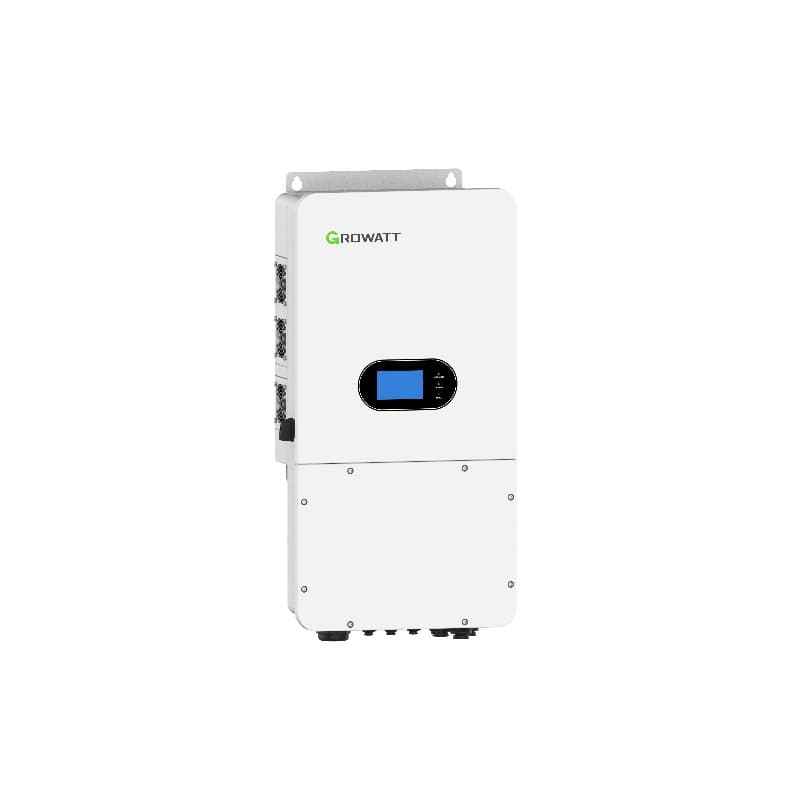
Hybrid vs String Inverter Growatt — MOD or SPH? The 2026 Decision Guide
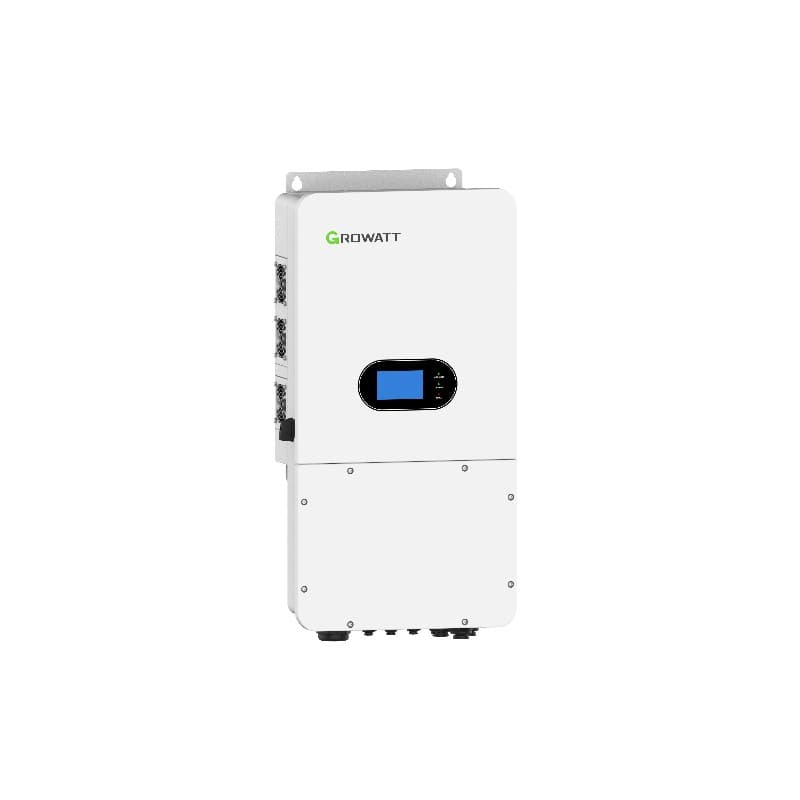
Growatt SPH vs SPA Inverter: Single-Phase Hybrid vs Three-Phase Storage
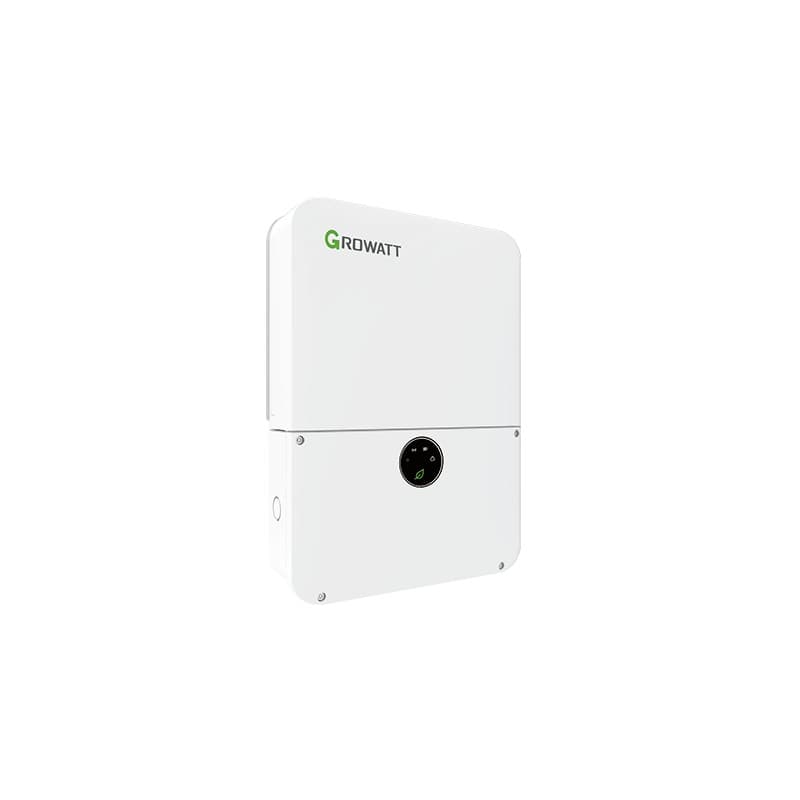
Growatt Inverter Installation Cost in UAE 2026: Full AED Breakdown