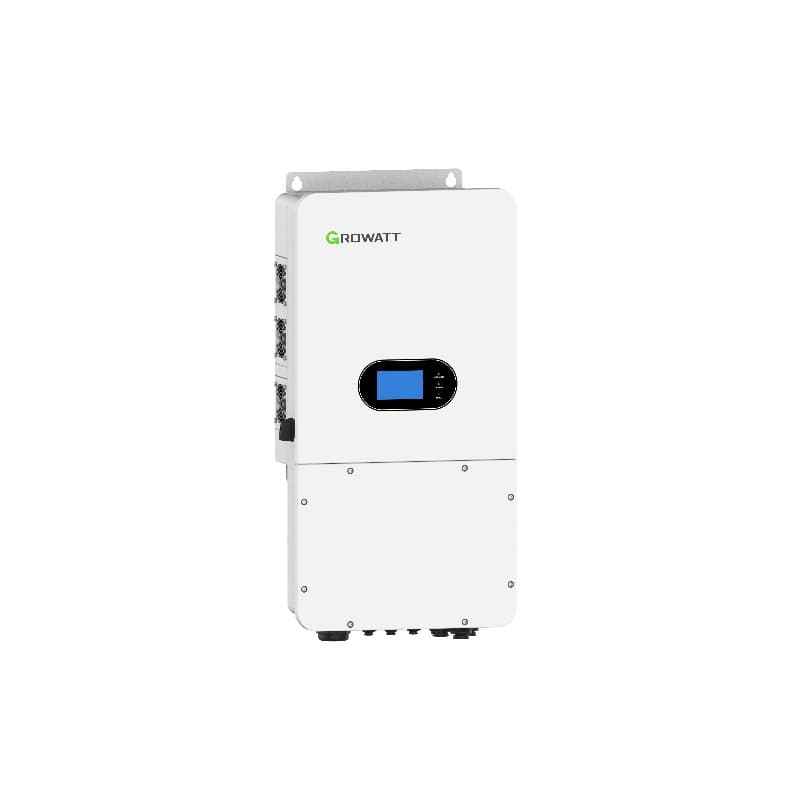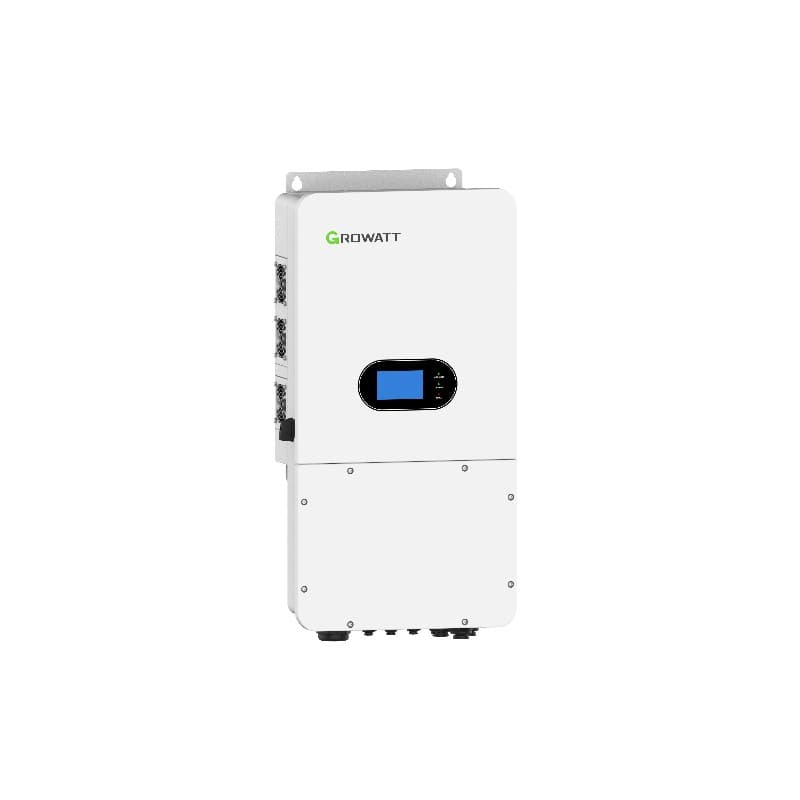
Twenty ready-made Growatt solar system kits, read line by line: the inverter, the battery and the panel count each one names, and the load it is sized for.
A solar system is three decisions made together: which inverter, how much battery, how many panels. People search for it as one thing — a kit, a "5 kW solar system", a complete system for a house — because nobody wants to make those decisions separately and discover afterwards that the battery does not suit the inverter. Our ready-made Growatt systems page makes them together, twenty times, for twenty typical properties. This article opens those kits and reads what is inside, so you know what you are looking at before you pick one.
Products mentioned in this article
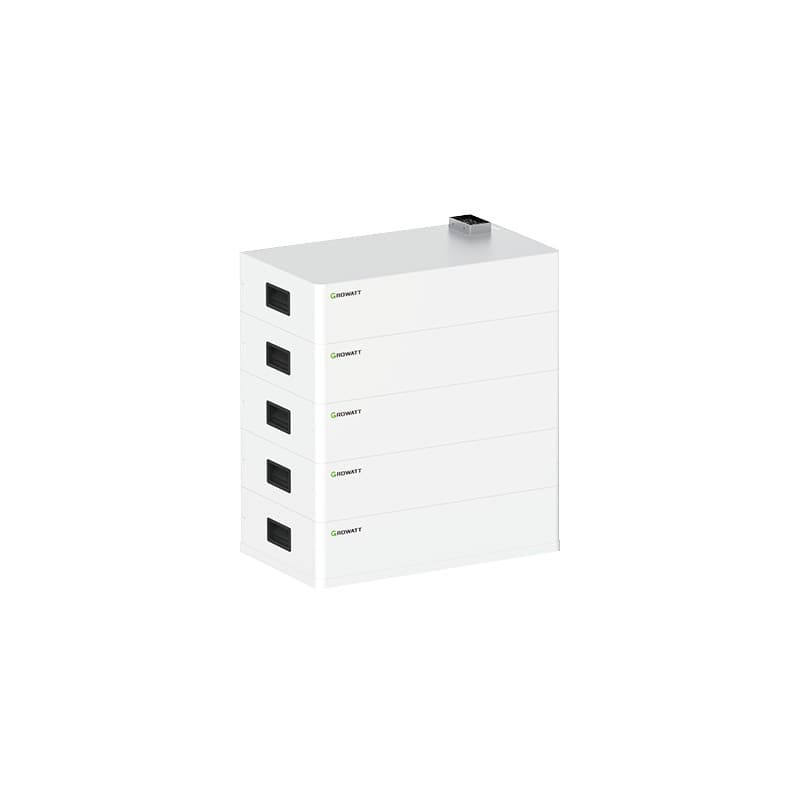
Growatt 5 kWh 51.2 V Lithium Solar Battery ALP5.0L-E2
- Nominal Energy:5kWh
- Nominal Voltage:51.2V
Growatt 10 kWh 51.2 V Lithium Solar Battery ALP10.0L-E2
- Nominal Energy:10kWh
- Nominal Voltage:51.2V
What a kit is on this site
Every kit has the same three lines. The first is one Growatt inverter, chosen from the catalogue because its rated output covers the property's peak load. The second, on backup and off-grid kits only, is a Growatt battery whose stated voltage lies inside the battery window the inverter's own record states. The third is the solar array.
That third line needs one honest sentence. We are a Growatt distributor and the catalogue holds Growatt inverters, batteries and EV chargers — no solar panels. So the array is printed as a count of 550 W modules with the kWp it adds up to and the roof it covers, and you buy the panels wherever you buy panels. The inverter and battery lines are real products with their own pages and their own prices.
How the load behind each kit is counted
A kit is not sized from a slogan like "5 kW". It is sized from a list of appliances. Take the apartment: one air conditioner at 1,200 W for 8 hours, a fridge at 150 W for 8 hours, lights and Wi-Fi at 200 W for 8 hours, a television at 100 W for 6 hours and a washing machine at 800 W for 1 hour.
- Daily energy: 9.6 + 1.2 + 1.6 + 0.6 + 0.8 = 13.8 kWh.
- Peak load: everything running is 2,450 W, but a compressor starting draws about three times its running power, so the air conditioner counts as 3,600 W: 2,450 − 1,200 + 3,600 = 4,850 W.
- Array: 13.8 kWh ÷ (5.7 sun hours × 0.8) = 3.03 kWp, which is six 550 W panels and about 16 m² of roof.
The house adds a second air conditioner and a kitchen and comes to 25.4 kWh a day with an 8,050 W peak. The villa — four air conditioners, a freezer, a pump — comes to 49.53 kWh and 11,700 W.
The kits, line by line
| Kit | Sized for | Inverter | Battery | Panels |
|---|---|---|---|---|
| Apartment, evening backup | 13.8 kWh a day, 4,850 W peak | SPH 10000TL-HU | 1 × ALP5.0L-E2 | 6 × 550 W |
| Apartment, overnight backup | same load, 8 hours of backup | SPH 10000TL-HU | 1 × ALP10.0L-E2 | 6 × 550 W |
| House, evening backup | 25.4 kWh a day, 8,050 W peak | SPH 10000TL-HU | 1 × ARK 7.6L | 11 × 550 W |
| House, overnight backup | same load, 8 hours of backup | SPH 10000TL-HU | 1 × ARK 17.9L | 11 × 550 W |
| House, on-grid | 25.4 kWh a day | MIN 9000TL-X2 | none | 11 × 550 W |
| Villa, evening backup | 49.53 kWh a day, 11,700 W peak | SPF 12000T DVM | 1 × ARK 17.9L | 20 × 550 W |
| Office, evening backup | 40.4 kWh a day, 9,200 W peak | SPH 10000TL-HU | 1 × ARK 12.8L | 17 × 550 W |
| Farm, off-grid | 6.65 kWh a day, 3,925 W peak | SPF 4000T DVM | 1 × ARK 12.8L | 3 × 550 W |
The shop kits follow the house (25.2 kWh a day) and every property also has an off-grid version, where the battery has to hold a whole day: the house off-grid kit names one AXE 50.0L, the villa two.
Why one inverter appears so often
The SPH 10000TL-HU is in the apartment, house, shop and office kits for a reason you can read in its record. It is a single-phase hybrid with 10,000 W of nominal AC power, three MPP trackers, and a battery input that states a 40–60 V range at up to 200 A — a window that holds every 51.2 V battery in the catalogue. The ALP5.0L-E2 states a 46.4–57.6 V range, and the ARK 7.6L 47.2–56.8 V; both sit inside it. That is the check a kit performs for you.
The farm kits use the SPF 4000T DVM, a 4 kW unit with a 12 kW surge rating for the two water pumps that farm is sized around. One note on the villa backup kits: they name the SPF 12000T DVM, whose record describes a low-frequency inverter with 120/240 Vac split-phase output and a nominal output selectable up to 240 VAC. Read that row against your own supply before you order it.
Evening backup or overnight backup
The two backup kits for one property share the inverter and the array and differ in one line. Evening backup covers four hours of the property's daily use, overnight covers eight. For the house that is 25.4 × 4 ÷ 24 = 4.2 kWh against 8.5 kWh, which is why the first names an ARK 7.6L and the second an ARK 17.9L. With panels on the roof, a cut that outlasts the night is answered by the sunrise, so the question is how many dark hours you want to ride through.
When no kit fits
Twenty kits cannot describe every roof. If your property has three air conditioners, a bigger pump, or you know your monthly bill better than your appliance list, use the sizing calculator: it starts from the same appliance list, lets you change every count, and prints your own three lines. To weigh two inverters or two batteries against each other first, the comparison tool puts their records side by side. The price on each product page is the price you pay, and orders are collected from our stores in Dubai and Riyadh.
Frequently Asked Questions
What does a Growatt solar system kit on this site include?
Which Growatt kit suits a two-bedroom apartment with one air conditioner?
Is there a Growatt kit with no battery at all?
Can I change a ready-made kit before ordering it?
Ready to order?
Every unit in the catalogue carries its price — add it to the cart and order online, then collect it from our store in Dubai or Riyadh.