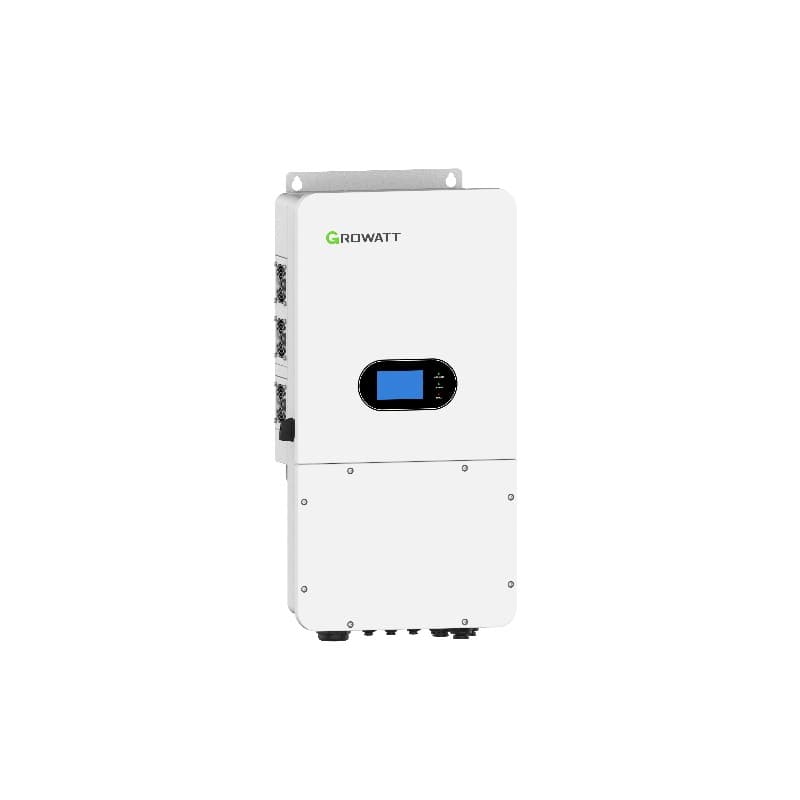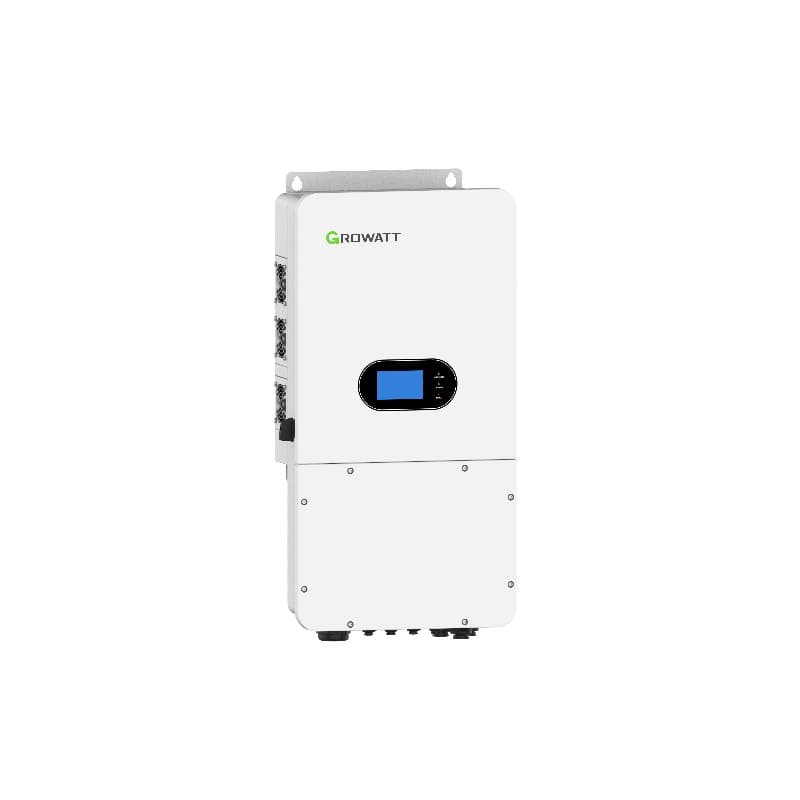
Growatt time of use solar net metering: program SPH inverters via ShinePhone for DEWA Shams Dubai TOU and SEC peak/off-peak tariffs. Sample schedules and AED savings.
The two biggest savings levers on any Growatt hybrid installation are not the panels or the inverter — they are time-of-use (TOU) battery scheduling and net metering export optimisation. Together they can shift another AED 100-300 per month onto your savings line above what the solar array alone delivers. The catch is that you have to program them correctly, and the programming logic differs between DEWA Shams Dubai, SEC Saudi Arabia, EWA Bahrain, KAHRAMAA Qatar, EtihadWE, FEWA Sharjah, and the European DSOs we also serve from Dubai.
This guide walks through TOU and net metering programming for Growatt SPH, WIT, and SPH-SPA inverters across the major Middle Eastern utility regimes, using the ShinePhone app and the ShineServer cloud. We include sample TOU schedules with actual peak/off-peak hours and AED/kWh tariff bands for DEWA, SEC, and EWA, plus the export schedule logic for net-metering customers.
What "Time of Use" Actually Means in 2026 UAE
Strictly speaking, DEWA does not publish a residential TOU tariff with explicit peak/off-peak AED/kWh tiers the way Pacific Gas & Electric does in California. But a TOU benefit emerges naturally from two sources:
- Solar generation timing: Your PV array produces 7 am to 5 pm. Your highest household demand (AC compressors, cooking, lighting) is 5 pm to 11 pm. There is a six-hour mismatch every day. Without a battery, you export cheap mid-day solar to the grid at the net-metering rate and re-import expensive evening grid power. With a battery and proper TOU programming, you store the mid-day surplus and discharge it through the evening, avoiding the import entirely.
- Slab tariff thresholds: DEWA residential tariffs step from AED 0.23/kWh (0-2000 kWh/month) to AED 0.28/kWh (2001-4000) to AED 0.32/kWh (4001-6000) to AED 0.38/kWh (6000+). The marginal kWh in a high-consumption summer month costs more than the average kWh. TOU battery discharge during the highest-slab hours captures the marginal-rate savings.
Saudi Arabia's SEC, by contrast, does publish explicit residential TOU pricing in 2026, with a 1.25× peak multiplier between 1 pm and 5 pm in summer months. This makes TOU programming on a Growatt SPH in KSA genuinely impactful — the peak multiplier means battery discharge during those hours saves significantly more per kWh than off-peak hours.
Sample TOU Tariff Bands We Optimise Against
| Utility | Peak Hours | Peak Rate | Off-Peak Hours | Off-Peak Rate |
|---|---|---|---|---|
| DEWA Shams Dubai (residential) | No explicit TOU; slab-based | AED 0.23-0.38/kWh marginal | — | — |
| SEC KSA (residential, summer) | 13:00-17:00 | SAR 0.30/kWh | 23:00-06:00 | SAR 0.16/kWh |
| SEC KSA (residential, winter) | 17:00-22:00 | SAR 0.24/kWh | 23:00-06:00 | SAR 0.16/kWh |
| EWA Bahrain (residential) | No formal TOU | BHD 0.029-0.190/kWh slab | — | — |
| KAHRAMAA Qatar (residential) | No formal TOU | QAR 0.080-0.140/kWh slab | — | — |
| FEWA UAE (residential) | No formal TOU | AED 0.07-0.33/kWh slab | — | — |
The Optimal Growatt SPH Schedule for UAE Villas (No Formal TOU)
For DEWA, FEWA, EtihadWE, and other UAE utilities without explicit TOU pricing, the optimal SPH schedule maximises self-consumption — keep solar energy on your side of the meter instead of exporting it at the lower net-metering rate.
| Time Window | SPH Mode | Battery Action | Why |
|---|---|---|---|
| 06:00-08:00 | Self-consumption | Idle (still discharging if needed) | Solar not yet meaningful, residual battery covers breakfast loads |
| 08:00-12:00 | Self-consumption | Charge from PV surplus | Capture morning solar above household demand |
| 12:00-16:00 | Self-consumption | Full / export surplus | Battery topped up; excess solar exports to DEWA for net-metering credits |
| 16:00-18:00 | Self-consumption | Hold (cover any solar deficit) | Solar drops; battery covers transition until evening |
| 18:00-23:00 | Time of Use | Discharge to home | Peak demand window; battery covers AC, cooking, lighting |
| 23:00-06:00 | Time of Use | Hold (≥20% reserve) | Preserve battery for next-day backup, low overnight demand on grid |
The Optimal SPH Schedule for SEC KSA (Formal Summer TOU)
SEC's 13:00-17:00 summer peak window changes the optimisation. You want to time battery discharge to land during the 1.25× peak rate, even if it means importing slightly more at off-peak rates afterwards. Net-metering surplus exports should also be timed to peak hours when SEC pays the higher feed-in equivalent.
| Time Window | SPH Mode | Battery Action | Tariff Logic |
|---|---|---|---|
| 05:00-09:00 | Self-consumption | Idle | Off-peak — let solar take over when it ramps |
| 09:00-13:00 | Self-consumption | Charge aggressively from PV | Off-peak; build battery for the 13:00 peak hour transition |
| 13:00-17:00 | Time of Use (Force discharge) | Discharge to home + grid export if surplus | PEAK at SAR 0.30/kWh — every battery kWh saves 1.25× off-peak rate |
| 17:00-21:00 | Self-consumption | Charge from any remaining PV | Returning to off-peak; replenish for evening loads |
| 21:00-05:00 | Self-consumption | Hold (≥20% reserve) | Off-peak imports cheap; do not deplete battery further |
The 13:00-17:00 forced discharge is the key insight. A 10 kWh ARK-XH stack discharged across those four hours during a summer SEC peak saves 10 × (0.30 − 0.16) = SAR 1.40 per day extra above what self-consumption alone would deliver. Over the 4-month KSA summer (122 days), that is SAR 170 of additional TOU savings annually — on top of the solar yield.
How to Program TOU on a Growatt SPH via ShinePhone
- Open the ShinePhone Smart app and tap your plant on the home screen.
- Tap the inverter icon (SPH/WIT) to enter the device dashboard.
- Tap Settings in the top-right.
- Tap Working Mode — you should see three options: Load First (self-consumption), Battery First, and Grid First.
- Select Battery First or Grid First to expose the time-band editor.
- Configure up to 6 time bands. For each band set: Start time, End time, Start SOC, Stop SOC, and Action (charge / discharge / hold).
- Save the configuration and verify the SPH applies it within the next minute. The inverter LCD will show the active mode for the current time window.
Important: the SPH stores up to 6 distinct time bands. You can sequence them across the day to mimic the table schedules above. Set Stop SOC to 20% in the final off-peak window to protect backup reserve. Set Start SOC to 95% during PV charge windows to avoid over-stressing cells.
Net Metering Export Optimisation
DEWA Shams Dubai pays net-metering customers the prevailing residential tariff (no separate FIT) for surplus exports, with bill credits carrying forward indefinitely up to 12 months. SEC offers a similar net-metering scheme. The key optimisation here is to maximise export volume during the highest tariff slab:
- If your monthly consumption exceeds 4,001 kWh (highest DEWA slab at AED 0.38/kWh marginal), every exported kWh credits at the marginal rate — making solar export disproportionately valuable
- If your monthly consumption stays below 2,000 kWh (lowest slab AED 0.23/kWh), export credits hit at a lower rate — battery storage and self-consumption become more important than exporting
For DEWA villas using more than 4,000 kWh/month in summer, we recommend configuring the SPH to export aggressively during 10 am-2 pm when PV output is highest, and hold battery discharge for evening loads only. This squeezes maximum marginal-rate credits onto the bill.
The SPH-SPA Hub-AUB Special Case
The Growatt SPH-SPA 3000-6000TL Hub-AUB family (3.0, 3.68, 4.0, 4.6, 5.0, 5.5, 6.0 kW) is the AC-coupled hybrid retrofit — added downstream of an existing string inverter to add battery storage without replacing the original PV inverter. TOU programming on the SPA Hub-AUB is functionally identical to the SPH BL-UP, accessed through the same ShinePhone interface. The schedule logic above applies unchanged.
Three-Phase WIT TOU Programming
For larger sites using the WIT 4-25K-HU or WIT 28-55K-HU, TOU programming adds two additional capabilities: per-phase load balancing (the inverter can discharge harder on the phase carrying the heaviest evening load) and grid-forming export limits (if your utility caps export at a specific kW per phase, the WIT enforces it during forced discharge). These settings live under Settings → Working Mode → Advanced in ShinePhone.
What Not to Do
- Do not discharge to 0%. Always leave at least 15-20% SOC as a backup reserve. The LFP chemistry tolerates deeper cycles than NMC but life still extends with shallower DoD.
- Do not charge battery from grid during PV hours. Some installers configure "Grid First" with a charge window during the day — this defeats self-consumption and wastes the solar generation.
- Do not ignore seasonal adjustment. UAE summer solar peaks at 1 pm; winter at 12 pm. Shift your TOU bands forward 30-45 minutes between October and April. SEC summer/winter TOU schedules already require this shift.
- Do not configure 12+ hour discharge bands. Forcing the battery to discharge across the entire night drains the reserve before morning solar resumes. Cap discharge bands at 5-6 hours.
Expected Savings From Proper TOU Programming
For a representative UAE villa consuming 4,500 kWh/month with an 8 kW SPH + 10 kWh ARK-XH stack:
- Baseline (no battery, no TOU): AED 1,710/month at DEWA marginal rates
- Solar without battery: AED 1,150/month (33% reduction)
- Solar + battery without TOU programming: AED 920/month (46% reduction)
- Solar + battery + optimised TOU schedule: AED 760/month (56% reduction)
The optimised TOU schedule captures an additional AED 160/month — roughly AED 1,920/year — versus a battery system left on default Load First mode. Over 10 years that is AED 19,200 in compounded savings, on a programming change that takes 15 minutes in ShinePhone.
Verdict
Time of Use programming and net metering optimisation are the two most under-utilised levers on every Growatt hybrid installation we touch. The ShinePhone app makes the configuration accessible in 6 time bands with charge / discharge / hold actions per band. For UAE installations, target self-consumption maximisation and avoid the highest DEWA slab. For KSA, force-discharge during the 13:00-17:00 SEC summer peak to capture the 1.25× rate multiplier. The annual savings range from AED 1,200 to AED 3,600 depending on system size and tariff slab, all from a single programming session that pays for itself many times over.
Frequently Asked Questions
How do I set up time of use on a Growatt SPH inverter?
Does DEWA have time-of-use tariffs for residential solar?
What is the optimal Growatt SPH schedule for SEC Saudi Arabia summer TOU?
How much can I save with optimised Growatt time-of-use programming?
Can I export to DEWA during peak hours to maximise net-metering credits?
What minimum battery SOC reserve should I keep for UAE outages?
Does the WIT inverter support the same TOU programming as the SPH?
Ready for a personalized quote?
WhatsApp us — average reply time under 15 minutes.
Related Products
Related Articles
Hybrid vs String Inverter Growatt — MOD or SPH? The 2026 Decision Guide

Growatt WIT EU vs CI Comparison — Which Variant Fits Your Grid Code?
Growatt High Voltage Battery System — Why ARK-XH Beats LV by 4% Round-Trip