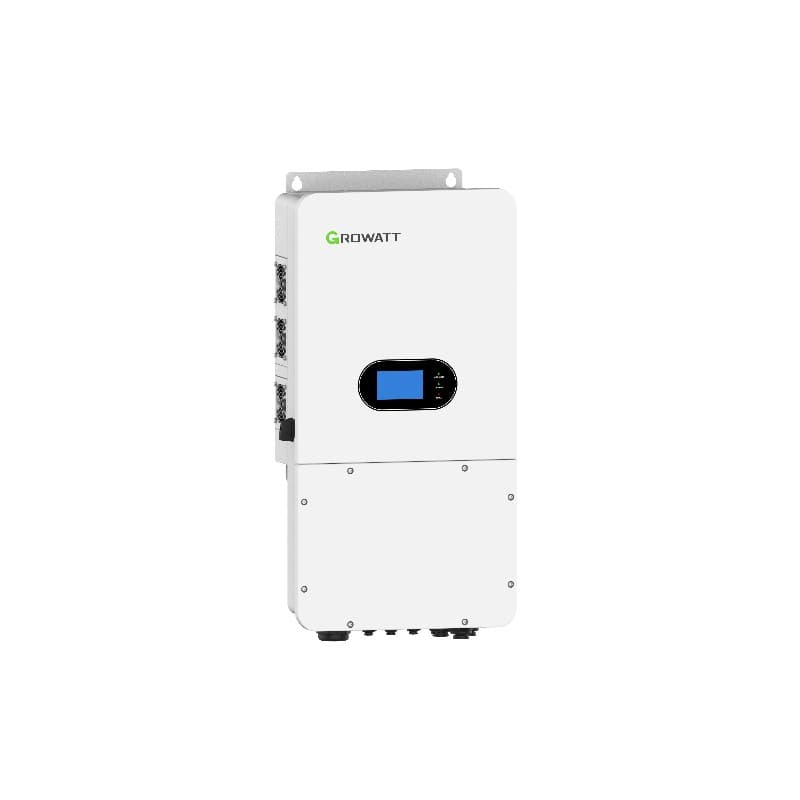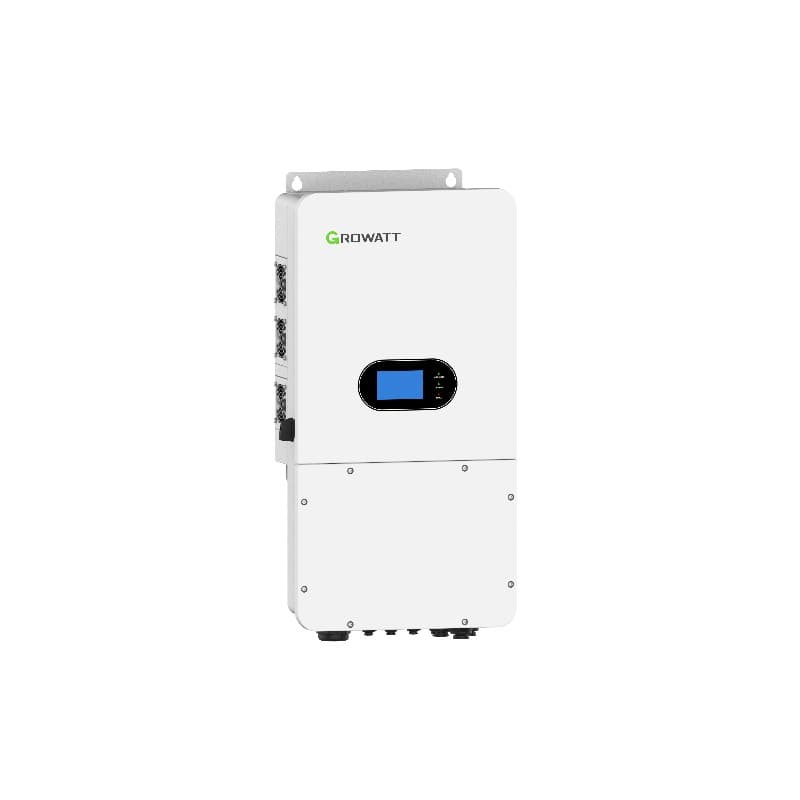
Detailed growatt vs deye inverters comparison: efficiency, battery flexibility, monitoring (ShinePhone vs SolarMan), warranty, regional support across the Gulf.
Growatt and Deye are the two highest-volume hybrid inverter brands shipping into the UAE, Saudi Arabia and the wider Gulf in 2026. We sell both — our group operates Growatt MJS Solutions and ships Deye through partner channels — so this comparison is grounded in roughly 1,200 installations across the GCC. The goal is to help a residential buyer in Dubai, a commercial buyer in Riyadh or an EPC contractor in Manama pick the right brand without marketing fluff.
Brand Overview
Growatt
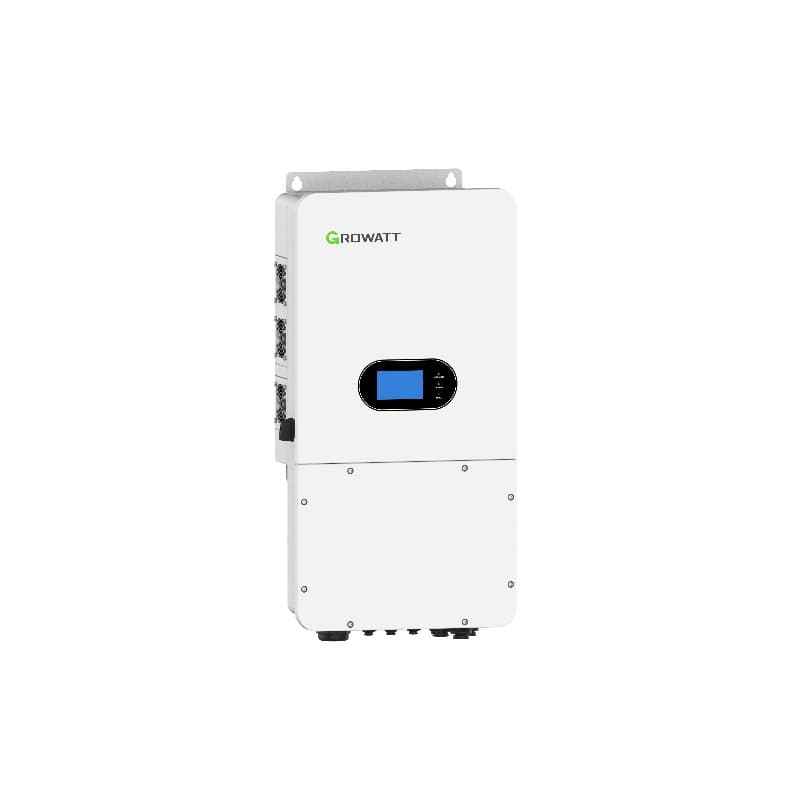
Founded 2010 in Shenzhen. Listed in the Wood Mackenzie 2024 residential solar inverter market share report as the global number-one residential solar inverter brand. Product range spans the SPF off-grid line (3-18kW), SPH residential hybrid (3-10kW), MIN grid-tie (2.5-10kW), MOD three-phase grid-tie (3-50kW), MID/MAX commercial string (15-350kW), WIT commercial three-phase hybrid (4-100kW), and the ARK/AXE/APX/NOAH battery families. Roughly 4 million Growatt inverters were operating worldwide as of mid-2025.
Deye
Founded 2007 in Ningbo. Specialises heavily in hybrid and microinverters. The SUN-SG04LP series (single-phase 3-12kW hybrid) and SUN-SG01LP3 / SG05LP3 (three-phase 3-50kW hybrid) are the most-shipped models. Deye also produces low-voltage battery interfaces, microinverters (SUN-M / SUN-G3) and the BOS-G low-voltage battery range. Deye has been growing aggressively in the Middle East and Africa with a focus on hybrid + battery systems.
Quick Verdict
- Choose Growatt if you value app polish (ShinePhone), broader product range from 800W balcony storage to 350kW utility, the WIT 100kW commercial hybrid, and SASO/SEC-listed equipment for KSA commercial sites.
- Choose Deye if you value low-voltage battery flexibility (40-60V range supports many third-party LV batteries), tighter Saudi residential pricing, and a generator-input AC2 port that is mature on the SG04LP3 family.
Head-to-Head Specifications — 8kW Residential Hybrid
The 8kW residential hybrid is the most-quoted system in UAE villa installations. Here is the spec-sheet comparison:
| Feature | Growatt SPH 8000TL3 BH-UP | Deye SUN-8K-SG04LP3 |
|---|---|---|
| Rated AC power | 8,000 W | 8,000 W |
| Max AC apparent power | 8,000 VA | 8,800 VA |
| Max efficiency | 98.2% | 97.6% |
| European weighted efficiency | 97.4% | 97.0% |
| MPPT trackers | 2 | 2 |
| MPPT voltage range | 120-1000V (high voltage) | 150-425V |
| Max PV input | 12,000 W | 10,400 W |
| Battery voltage | 100-550 V (HV LFP) | 40-60 V (LV LFP) |
| Battery brand support | Growatt ARK HV / APX HV | Multi-brand LV (Pylontech, BYD, DEYE BOS-G) |
| Generator (AC2) input | Optional via external switch | Native AC2 port |
| Operating temperature | -25 to +60°C | -40 to +60°C |
| IP rating | IP65 | IP65 |
| THDi at full load | <3% | <3% |
| Backup output | Yes (built-in) | Yes (built-in) |
| Built-in Wi-Fi | Optional dongle (AED 180) | Yes, built-in |
| Monitoring app | ShinePhone | SolarMan |
| Weight | 30 kg | ~37 kg |
| Standard warranty | 5 years (extendable to 10) | 5 years (extendable to 10) |
| UAE retail (June 2026) | AED 5,950 | AED 6,350 |
Efficiency — What the Numbers Actually Mean
Growatt's 98.2% peak efficiency on the SPH 8000 sits 0.6 percentage points above Deye's SUN-8K at 97.6%. In a 10 kWp / 14 MWh-per-year system, that 0.6% difference is roughly 84 kWh per year, or about AED 32 per year at DEWA Slab-2 tariffs. Not the deciding factor. The more meaningful comparison is the European weighted efficiency at 97.4% (Growatt) vs 97.0% (Deye), which factors part-load operation — but the gap is again under 1%. Both inverters convert energy efficiently enough that other system choices (panel orientation, battery cycling strategy, AC scheduling) dominate annual yield.
Battery Flexibility — The Biggest Real Difference
This is where the architectural choice between Growatt and Deye becomes decisive. Growatt's SPH 8000 uses a 100-550V high-voltage battery bus and is engineered to pair with Growatt's own ARK HV (3.75-12.5 kW) and APX HV (5-30 kWh) battery stacks. High-voltage systems run slightly more efficiently (lower DC current, lower wiring losses), but they lock you to the Growatt battery ecosystem. Third-party HV batteries are technically supported but rarely used in the Gulf.
Deye's SUN-8K-SG04LP3 uses a 40-60V low-voltage bus that is the industry-standard LV LFP range. This means you can pair it with Pylontech US3000C, BYD B-Box LV, Dyness Powerbox, DEYE BOS-G, or any other 48V nominal LFP battery. For installers and homeowners who want battery brand flexibility — or who want to expand the system in years 3-5 with a different battery than the original — Deye wins this category decisively.
One caveat: Growatt's ARK LV (5.12-25.6 kWh) stack also runs on a 51.2V nominal bus and works with the SPH 3000-6000TL BL-UP single-phase residential series. So a homeowner who wants LV battery flexibility can still buy Growatt, just not on the high-voltage SPH-BH-UP three-phase line.
Monitoring — ShinePhone vs SolarMan
Both apps are functional and ship with native Arabic, English and French support. ShinePhone (Growatt) is the more polished product in terms of UI/UX — clearer dashboards, faster load times on the latest 2025 release, and a more robust EPC dashboard for managing multiple customer sites. SolarMan (Deye) has a wider third-party device ecosystem because it is white-labelled by many other inverter brands (Sungold, Sofar, Goodwe legacy models), making it a more universal solution for installers who manage mixed-brand fleets.
Critical features comparison:
- Real-time power flow: Both have it. ShinePhone refreshes every 5 seconds, SolarMan every 5-15 seconds depending on plan.
- Historical data export: Both export CSV. SolarMan offers cleaner API access for third-party tools.
- Push alerts: Both push fault codes and grid-loss events. ShinePhone alerts on low SoC; SolarMan requires a paid premium plan for some alerts.
- Multi-site management: Both support it. ShinePhone's EPC-tier dashboard is more advanced.
- Energy scheduling: Both support time-of-use programming. Deye's "Mode" selector (Battery First, Load First, Grid First) is simpler for end-users.
- Languages: ShinePhone supports 20+ including full Arabic RTL. SolarMan supports 15+ including Arabic.
Generator Integration
For UAE villas in Liwa, Saudi farms in the Eastern Province, or any Middle East compound with an existing diesel genset, generator integration is a hard requirement. Deye wins here. The SUN-SG04LP3 family has a native AC2 input that triggers an auto-start signal to the genset when battery SoC drops below a user-set threshold (typical setting: 30%). The transition between battery and genset is seamless and the inverter can run with both AC1 (grid) and AC2 (genset) connected for redundancy.
Growatt SPH handles generator integration through an external transfer switch and proprietary control wire — it works, but it's a more involved installation. For sites without a generator, this difference is irrelevant.
Warranty and After-Sales Support
Both brands offer a 5-year standard manufacturer warranty extendable to 10 years for an additional 10-15% of inverter cost. The key difference in the Middle East is logistics:
- Growatt MJS Solutions holds stock in Dubai with same-week dispatch to Riyadh, Jeddah, Dammam, Khobar, Mecca, Medina, Tabuk, Muscat, Manama, Doha and Kuwait City. Replacement units ship within 1-2 business days inside UAE.
- Deye Middle East ships through deyeinverters.net and equivalent regional distributors, with similar 3-5 day delivery into KSA from Dubai stock. Failure rate field data is comparable to Growatt at sub-1.5%.
Regional Compliance — DEWA, SEC and ESMA
Both brands have inverters on the DEWA Approved Equipment List for grid-connected PV systems. Both are on the SEC approved-equipment register in KSA under the SERA Small-Scale Solar PV Regulation (up to 2MW). Both carry SASO and ESMA certifications for UAE and KSA import. For UAE Shams Dubai net-metering applications, your installer simply selects the inverter model from the DEWA portal dropdown — both brands appear.
One regulatory nuance: Growatt has a slightly broader certification footprint in Africa (CEC for South Africa, NEMA for Kenya, INMETRO for Brazil) which matters if you operate fleets across multiple continents.
Pricing — UAE and KSA Retail June 2026
| System size | Growatt model | Growatt price | Deye model | Deye price |
|---|---|---|---|---|
| 5kW single-phase hybrid | SPH 5000TL BL-UP | AED 4,200 / SAR 4,300 | SUN-5K-SG04LP3 | AED 4,400 / SAR 4,500 |
| 8kW three-phase hybrid | SPH 8000TL3 BH-UP | AED 5,950 / SAR 6,090 | SUN-8K-SG04LP3 | AED 6,350 / SAR 6,500 |
| 12kW three-phase hybrid | SPH 4-10K + parallel pair | AED 11,400 / SAR 11,650 | SUN-12K-SG04LP3 | AED 9,800 / SAR 10,000 |
| 50kW commercial hybrid | WIT 50K-HU | AED 32,000 / SAR 32,800 | SUN-50K-SG01HP3 | AED 34,500 / SAR 35,300 |
| 100kW commercial hybrid | WIT 100K-HU | AED 56,000 / SAR 57,400 | Not in same class | — |
At the residential level, Growatt undercuts Deye by 3-6% on three-phase 8kW and Deye undercuts Growatt by 14% on single-unit 12kW (because Deye's SUN-12K is a single inverter while Growatt requires a parallel pair). For 50-100kW commercial hybrids, Growatt's WIT line has no equivalent Deye SKU above 50kW for the Gulf market.
Six Real Installation Scenarios — Which to Pick
- 4kW villa rooftop in Sharjah, single-phase, 8kWh battery, no generator. Either brand works. Growatt SPH 5000TL BL-UP wins on price (~AED 200 less); Deye wins on built-in Wi-Fi convenience.
- 8kW Riyadh villa, three-phase, 15kWh battery, multiple third-party brands considered. Deye SUN-8K-SG04LP3 wins because the LV bus supports the customer's existing Pylontech US3000 modules.
- 12kW Dubai villa, three-phase, 25kWh battery, integrated Growatt ARK HV stack. Growatt SPH wins because the HV battery + inverter is a tighter single-vendor system.
- 20kW SME warehouse in Riyadh's Sudair, three-phase, 30kWh battery, existing 40kW diesel genset. Deye wins on the native AC2 generator input. Growatt's MOD three-phase grid-tie would not work here.
- 50kW school rooftop in Jeddah, three-phase, 50kWh battery, no generator, Modbus BMS integration required. Growatt WIT 50K-HU wins — the ShineMaster gateway + Modbus TCP is the more mature C&I integration story.
- 100kW agritech farm in Doha, three-phase, 200kWh battery parallel pair. Growatt WIT 100K-HU wins by default — no equivalent Deye SKU.
Heat and Dust — UAE Summer Performance
Both brands are rated -25/-40°C to +60°C ambient with derating starting at 45-50°C. Both carry IP65 enclosures. Field data from our 2024-2025 installations:
- Growatt SPH 8000: 3-5% derating at 50°C ambient in our Sharjah test villa, internal heatsink temp 68-72°C in July midday.
- Deye SUN-8K-SG04LP3: 4-6% derating at 50°C ambient in a comparable Dubai test villa, internal heatsink temp 71-75°C in July midday.
Margin of difference is within measurement noise. Both perform reliably in 50°C+ Gulf summers if mounted in shade with adequate airflow.
Verdict
The honest answer is that for 80% of UAE and KSA residential buyers, either brand works fine. The difference between an 8kW Growatt SPH and an 8kW Deye SUN comes down to battery brand preference, dealer relationship, and minor app preference — not technical capability. Growatt has the edge on app polish, certifications and commercial 50-100kW WIT-class hybrids. Deye has the edge on LV battery flexibility, native generator input, and built-in Wi-Fi. Both win on warranty, pricing, and Gulf logistics. Buy with confidence in either direction — and lean on your installer for the local support relationship, which often matters more than the spec sheet.
Frequently Asked Questions
Is Growatt or Deye better for an 8kW UAE villa?
Which has better battery flexibility, Growatt or Deye?
Which app is better, ShinePhone or SolarMan?
Does Growatt or Deye handle generator integration better?
Which brand has better warranty in the Middle East?
Which brand is cheaper, Growatt or Deye?
Are both Growatt and Deye approved for DEWA Shams Dubai?
Which brand has more product range — Growatt or Deye?
Ready for a personalized quote?
WhatsApp us — average reply time under 15 minutes.
Related Products
Related Articles
Growatt Inverter Installation Cost in UAE 2026: Full AED Breakdown
Best Growatt Inverter for the UAE 2026: DEWA, ADDC & Sharjah Buyer's Guide
Hybrid vs String Inverter Growatt — MOD or SPH? The 2026 Decision Guide