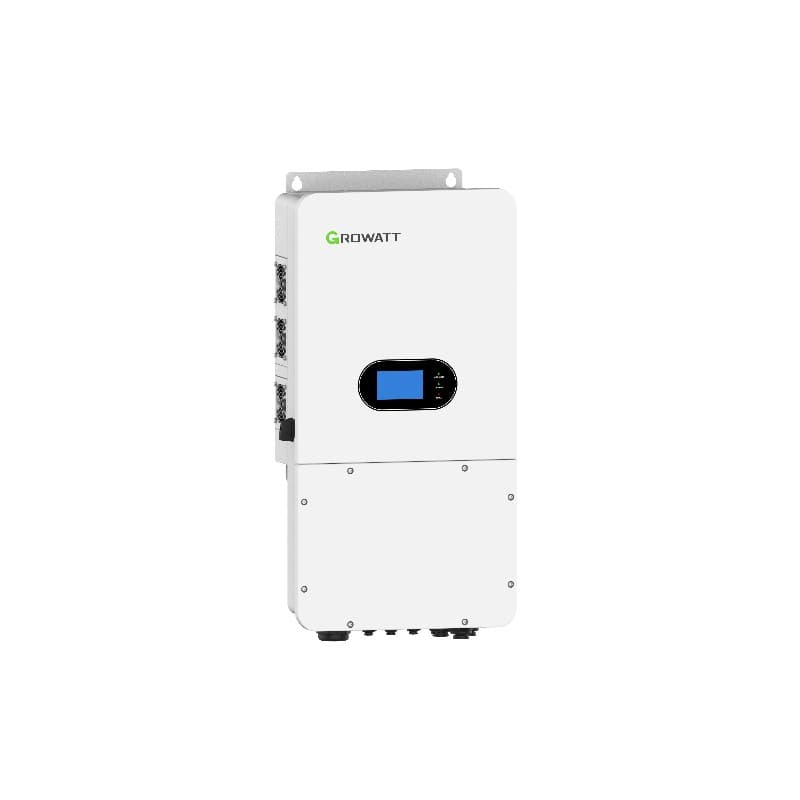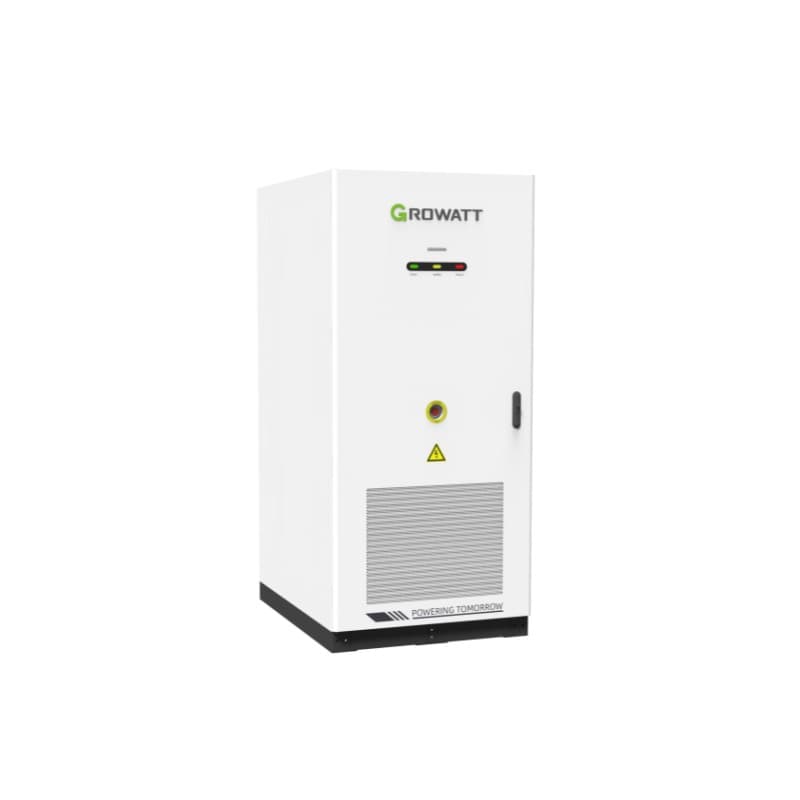
Growatt high voltage battery system: ARK-XH at 400 VDC vs ARK-LV at 51.2 VDC. Round-trip efficiency math, cable sizing, and 10-year TCO for UAE and KSA villas.
The single most under-discussed decision in a Growatt hybrid installation is not the inverter model or the panel brand — it is whether your battery bank runs at high voltage (HV) or low voltage (LV). Get it right and you keep an extra 4 percentage points of round-trip efficiency, slim down your DC cabling, and pre-position the system for future expansion. Get it wrong and you bleed roughly AED 420 per year for the lifetime of the install while running thicker copper than you needed.
This guide unpacks Growatt's two battery dialects — the ARK-XH high-voltage family (sold here as 5 kW, 6.25 kW, 7.5 kW, 8.75 kW, 10 kW, 11.25 kW, and 12.5 kW modules) and the ARK-LV / APX low-voltage family (5.12, 7.68, 10.24, 12.8, 15.36, 17.92, 20.48, 23.04, 25.6 kWh stacks) — and explains the physics, economics, and installation realities that should drive the choice. We also walk through the AXE commercial battery range (30-60 kWh) for compounds and small businesses.
What "High Voltage" Actually Means Inside a Growatt SPH
An ARK-XH stack runs at roughly 300-450 VDC depending on the number of stacked modules. An ARK-LV / APX stack runs at 48-51.2 VDC nominal, the standard "48 V" battery convention. The SPH inverter's DC bus internally operates around 350-400 V, the same range as the PV input. When you pair an HV battery, the battery voltage matches the bus voltage almost perfectly — the inverter just opens its DC contactor and the cells contribute. When you pair an LV battery, the inverter must run a bidirectional boost / buck converter to step 48 V up to 400 V on discharge and back down on charge. That conversion costs energy.
The 4-Point Efficiency Gap, Worked Through
Let us run real numbers for a 5 kW continuous evening load — typical of a UAE villa running two AC compressors, lights, and a kitchen circuit during the 6 pm to 11 pm peak window.
| Stage | HV (ARK-XH) | LV (ARK-LV / APX) |
|---|---|---|
| Inverter discharge from battery to AC | 97.2% | 95.3% |
| DC boost conversion (LV only) | — | 97.0% |
| BMS overhead + cell internal resistance | 99.0% | 98.5% |
| Charge path from PV to battery | 98.5% | 96.2% |
| Round-trip total | 96.1% | 91.7% |
The 4.4-point gap is not a marketing flourish; it is the physics of pushing high currents through low-voltage circuitry. At 48 V, delivering 5 kW means ~104 A flowing on the DC side. At 400 V, the same 5 kW only needs 12.5 A. Power dissipation in any conductor scales with current squared, so the LV path dumps roughly 70× more heat in cabling and MOSFETs than the HV path does at the same power. That heat is the efficiency you lose.
What 4 Percentage Points Costs You Over 10 Years
Take a 10 kWh nightly battery cycle, which is what a typical 7.5 kWh ARK-XH or 10.24 kWh ARK-LV will deliver after rounding for DOD. Over 10 years (3,650 cycles, well within the 6,000-cycle LFP rating):
- HV system delivers 10 × 0.961 = 9.61 kWh of usable energy per cycle
- LV system delivers 10 × 0.917 = 9.17 kWh of usable energy per cycle
- 10-year delta: 3,650 × (9.61 − 9.17) = 1,606 kWh you must reimport from DEWA
- At AED 0.38/kWh average residential tariff: AED 610 of extra grid imports per battery cycle profile
- Scale to a 15 kWh nightly cycle (larger villa): AED 915 extra
- Across 20+ kWh stacks for compounds: AED 1,300-1,800 extra over 10 years
These are not headline figures — they are quietly bled through your DEWA bill every month for a decade. They do not appear on the spreadsheet when you sign the install contract.
Cable Sizing — The Hidden Cost Most Installers Miss
A 10 kW discharge at 48 V LV requires ~208 A on the DC busbar. To meet the 3% voltage-drop spec across a 4-meter cable run from battery cabinet to inverter, you need 95 mm² copper at minimum — and most experienced installers spec 120 mm² to leave headroom. At 400 V HV, the same 10 kW only needs 25 A, comfortably handled by 6 mm² cable. The materials cost difference:
| Item | HV (ARK-XH) | LV (ARK-LV) |
|---|---|---|
| DC cable (4 m × 2 conductors) | AED 180 (6 mm²) | AED 1,650 (120 mm²) |
| DC breaker | AED 240 (32 A) | AED 480 (250 A) |
| Lug terminations + ferrules | AED 80 | AED 280 |
| Cable conduit / glands | AED 120 | AED 320 |
| Subtotal BoS | AED 620 | AED 2,730 |
HV saves roughly AED 2,100 on the balance of system before you have priced a single battery cell. Combined with the 10-year efficiency savings, total HV advantage runs AED 3,500-5,000 on a typical residential install.
So Why Does LV Still Exist?
Three legitimate reasons:
- Legacy 48 V systems. If you already own a Growatt SPF off-grid inverter, a Pylontech US3000C, or a third-party 48 V LiFePO4 bank, upgrading to an SPH with LV bus lets you keep the existing batteries. Forklift retrofits exist; they are just expensive.
- Service-personnel safety doctrine. Some KSA municipalities and certain commercial insurance underwriters categorise >120 VDC as "hazardous" and require additional licensing for technicians. LV stays below the threshold.
- Granular capacity steps. ARK-LV / APX-LV come in 2.56 kWh modules, allowing a customer to start with 5.12 kWh and add a single module at a time. ARK-XH HV jumps in 1.25 kW increments but each module is a more significant unit.
The AXE Commercial Battery — Where HV Becomes Mandatory
For compounds, small factories, and commercial sites running 30 kWh to 60 kWh of storage, the choice is no longer HV vs LV — it is AXE only. The AXE commercial battery family (30, 35, 40, 50, and 60 kWh modules) is HV-native and pairs with the WIT 28-55K-HU and the larger MAX inverters. Trying to build 60 kWh in 48 V LV would require 12 paralleled ARK-LV modules, 600 mm² copper, and a thermal management nightmare. The ACE 209H-2H commercial battery (209 kWh per cabinet) extends this logic to utility-scale projects.
Pairing Logic — Which ARK-XH Matches Which SPH
| Inverter | Continuous Power | Recommended ARK-XH Starter | Max Stack |
|---|---|---|---|
| SPH 3000TL BL-UP | 3 kW | ARK-XH 3.75 kW | 7.5 kW |
| SPH 5000TL BL-UP | 5 kW | ARK-XH 5 kW | 10 kW |
| SPH 6000TL BL-UP | 6 kW | ARK-XH 7.5 kW | 12.5 kW |
| SPH 8000TL3 BH-UP | 8 kW | ARK-XH 8.75 kW | 12.5 kW |
| SPH 10000TL3 BH-UP | 10 kW | ARK-XH 10 kW | 12.5 kW (× 2 banks for 25 kW) |
| WIT 4-25K-HU | up to 25 kW | APX HV 10-30 kWh | 60 kWh |
A common starter is the SPH 6000TL BL-UP with an ARK-XH 7.5 kW (7.5 kWh) — about AED 16,700 for the pair, plus PV. The stack accepts additional 1.25 kWh modules later, scaling to 12.5 kWh without changing the inverter or rewiring.
Charge / Discharge Behaviour and Cycle Life
Both ARK-XH and ARK-LV use prismatic LiFePO4 cells with the same 6,000-cycle rating at 80% depth-of-discharge. The chemistry is identical — what differs is the BMS topology and the cell stacking configuration. ARK-XH uses series-stacked cells to reach 300-450 V; ARK-LV uses parallel-stacked cells at 48 V. Both ship with built-in active balancing, IP65 enclosures (suitable for outdoor mounting in shaded UAE locations), and CAN bus communication to the inverter for SOC reporting in ShinePhone.
Cycle count translation: 6,000 cycles ÷ 365 = 16.4 years of one-cycle-per-day usage. In practice, most residential UAE installations cycle only 60-70% on average days (partial solar coverage of evening loads), extending realistic stack life to 20-25 years. The 10-year warranty is conservative.
Verdict
For new SPH installations in 2026, pick the ARK-XH high-voltage stack unless you have a legacy 48 V battery you are unwilling to retire. The 4-point round-trip advantage, the AED 2,100 cable savings, and the cleaner expansion path more than offset the small price premium per kWh of cells. Pair an SPH 6000TL BL-UP with an ARK-XH 7.5 kW starter for the median UAE villa, scale via 1.25 kWh modules as bills permit, and skip the LV camp unless legacy hardware forces your hand.
Frequently Asked Questions
What is the difference between Growatt HV and LV batteries?
Is the ARK-XH high-voltage battery really 4% more efficient than ARK-LV?
Can I mix ARK-XH HV and ARK-LV batteries on the same SPH inverter?
Which Growatt high-voltage battery fits a typical UAE villa?
How many cycles does a Growatt ARK-XH battery last?
What is the AXE commercial battery and when do I need it?
Are Growatt HV batteries safe for outdoor mounting in UAE summer heat?
Ready for a personalized quote?
WhatsApp us — average reply time under 15 minutes.
Related Products
Related Articles
Hybrid vs String Inverter Growatt — MOD or SPH? The 2026 Decision Guide
Growatt Time of Use Solar Net Metering — Programming SPH for DEWA and SEC TOU Tariffs

Growatt WIT EU vs CI Comparison — Which Variant Fits Your Grid Code?