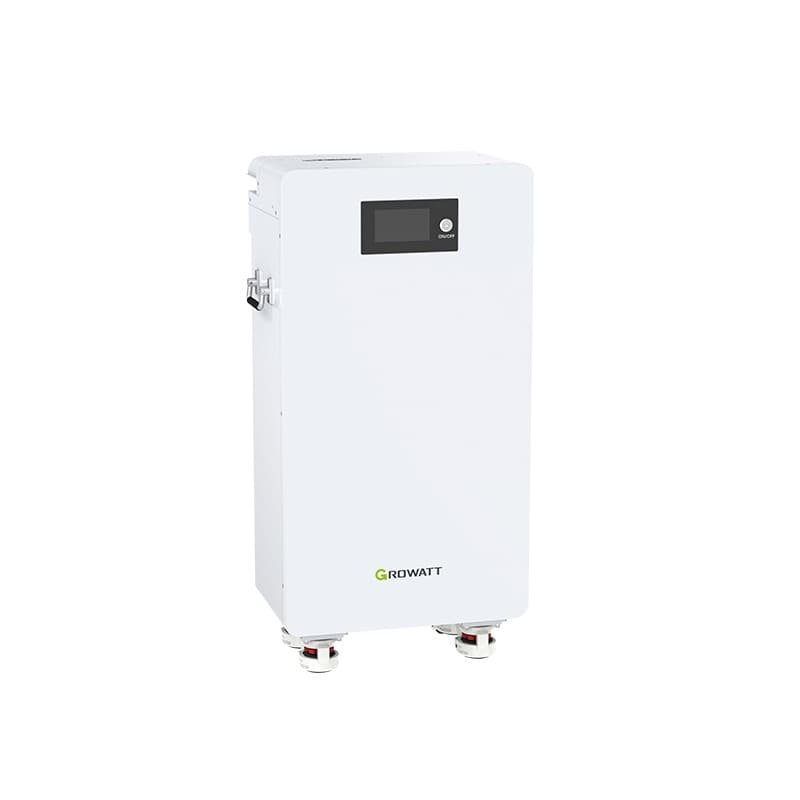
Growatt WIT EU vs CI comparison: grid-code certification, neutral handling, anti-islanding behaviour, and which flavour to specify for European, GCC, and African projects.
The Growatt WIT range — covering the WIT 4-25K-HU residential hybrid, WIT 28-55K-HU-AU-US-L2 light-commercial hybrid, WIT 29.9-50K-XHU and 4-25K-XHU pure-export string variants, and the WIT 50-100K-HU-AU-US three-phase commercial — sits at the intersection of residential, commercial, and industrial solar. What confuses procurement teams is the suffix: EU models target European grid codes, while CI (Commercial & Industrial) flavours target the GCC, Africa, and other regions with looser grid-code regimes. The same chassis, the same DC topology, and the same ShinePhone monitoring sit underneath — but the firmware, certifications, and behaviour at the grid interface differ in ways that matter for permits, exports, and warranty claims.
This guide breaks down what changes between EU and CI variants, when to specify each, and how the choice affects your Bill of Materials, lead time, and approval workflow with utilities like DEWA Shams Dubai, SEC Saudi Arabia, EWA Bahrain, KAHRAMAA Qatar, and the various European DSOs.
The Underlying Chassis — What is Shared
Every WIT inverter in the residential-commercial range ships with:
- Three-phase output (3W+N for L2 variants, 3W for non-L2)
- Dual or quad MPPT trackers depending on power class
- HV battery compatibility on HU suffix (residential-light commercial), DC-coupled string on XHU (pure export)
- IP66 enclosure with fanless natural convection up to 50 kW, forced air above
- Built-in DC switch, AC switch on most models, and integrated AFCI
- ShineWiFi-X or built-in WiFi for ShinePhone / ShineServer monitoring
- RS485, CAN, and dry-contact I/O for SCADA / EMS integration
- Peak efficiency 98.4-98.8% depending on power class
Mechanically and electrically, an EU-spec WIT 25K-HU is indistinguishable from a CI-spec WIT 25K-HU. Open both up and you find the same PCB. The differences live in firmware tables, the labelled certification sheet, and the protection thresholds that the inverter enforces at the grid interface.
EU Variant — VDE-AR-N 4105, EN 50549, G99
WIT EU firmware ships pre-loaded with grid-code tables for the German VDE-AR-N 4105, the broader European EN 50549 (residential under 30 kW), and where required the UK G99 (G98 for under 16 A). These codes enforce specific behaviours:
- Frequency-Watt droop: Output power must reduce linearly when grid frequency exceeds 50.2 Hz, all the way to 0 W at 51.5 Hz
- Volt-VAr support: The inverter actively injects or absorbs reactive power based on grid voltage to support local voltage profile
- Anti-islanding: Active detection via Sandia frequency-shift method, with mandatory 0.2-second disconnect on island formation
- LVRT / HVRT: Low-voltage and high-voltage ride-through curves that keep the inverter online during transient grid faults
- Cos φ control: Configurable power factor profile, often set to 0.95 lagging at full output
- Certified test reports: TÜV, VDE, and DEKRA certificates with country-specific suffix sheets
The EU certification adds roughly 6-9% to the inverter cost compared to a CI-spec unit of the same power class. It also extends lead time by 2-4 weeks because the firmware variant is built to order for the destination country.
CI Variant — IEC 61727, IEC 62116, Local Utility Specs
The CI (Commercial & Industrial) firmware targets the more relaxed grid-code regime common across the GCC, North Africa, and emerging markets. The certification basket typically includes:
- IEC 61727: Photovoltaic systems - characteristics of the utility interface
- IEC 62116: Anti-islanding test procedure (passive detection acceptable)
- IEC 62109-1/2: Safety of power converters
- DEWA Shams Dubai approved equipment list
- SEC Saudi Arabia interconnect rules
- SASO / GSO regional certifications
The CI flavour relaxes the European requirements as follows: no mandatory LVRT/HVRT below 60 kW, simpler passive anti-islanding, no mandatory Volt-VAr support (configurable but not enforced), and no mandatory frequency-watt droop curve. This makes the CI variant cheaper, faster to ship, and easier to integrate in markets where the DSO does not run the European grid-code playbook.
The Side-by-Side Comparison
| Attribute | WIT EU | WIT CI |
|---|---|---|
| Target market | Germany, France, Spain, Italy, UK, EU-27 | UAE, KSA, Oman, Qatar, Bahrain, Kuwait, Egypt, Africa |
| Grid code | VDE-AR-N 4105, EN 50549, G99 | IEC 61727, IEC 62116, local utility |
| Anti-islanding | Active (Sandia) | Passive (rate of change of frequency) |
| LVRT / HVRT | Mandatory full curves | Not mandatory under 60 kW |
| Volt-VAr support | Mandatory | Optional |
| Frequency-Watt droop | Mandatory above 50.2 Hz | Configurable, often disabled |
| Certification cost premium | +6-9% | baseline |
| Lead time uplift | +2-4 weeks | standard |
| ShinePhone integration | Identical | Identical |
| HV battery compatibility | Identical (ARK-XH, APX HV) | Identical (ARK-XH, APX HV) |
| Warranty | 10 years | 10 years |
When You Need the EU Variant
Specify the WIT EU variant when:
- The site is in a European Union country and the local DSO requires VDE / EN 50549 certification on the inverter nameplate
- The project will export to the grid under a net-metering or feed-in-tariff scheme that requires Volt-VAr support
- The utility tender specifies LVRT compliance (often the case for >30 kW installs in Germany and France)
- You are submitting to a green-bond or ESG-rated finance package that mandates IEC and EU certification chains
When the CI Variant is the Right Call
Specify the WIT CI variant when:
- The site is in the UAE, KSA, Oman, Qatar, Bahrain, Kuwait, Egypt, Morocco, Jordan, Lebanon, Iraq, or any of the markets we serve from Dubai
- The local utility (DEWA, SEC, EWA, etc.) does not require EU-spec grid code compliance
- You want to optimise cost and lead time without sacrificing the underlying hardware quality
- The customer will not export to a regulated FIT regime that requires Volt-VAr support
The 28-55K-HU-AU-US-L2 Special Case
The WIT 28-55K-HU-AU-US-L2 deserves a separate paragraph. This SKU is the multi-region commercial hybrid: AU (Australia), US (United States), and L2 (split-phase 240 V North American service) firmware all share the same chassis. It is the inverter we recommend when a UAE-based contractor exports a turnkey solar package to a North American or Australian client, or when a Saudi commercial site wants firmware-level compatibility with Australian solar standards (AS/NZS 4777.2). The L2 variant is the only WIT that supports North American split-phase service.
The 50-100K-HU-AU-US Three-Phase Powerhouse
For commercial sites between 50 kW and 100 kW (warehouses, hotels, mid-size factories), the WIT 50-100K-HU-AU-US is the largest hybrid in the WIT range. Available in 50, 63, 75, and 100 kW power classes. Pairs with the APX HV commercial battery (10-30 kWh modules) and the AXE 30-60 kWh commercial battery. This is the threshold where most GCC commercial sites step up from residential SPH to true three-phase hybrid topology, and the choice of EU vs CI firmware here can change project economics by AED 8,000-15,000 on the inverter alone.
The XHU Pure-Export Variants
The WIT 29.9-50K-XHU and 4-25K-XHU drop the HU battery interface and become pure three-phase string inverters. They suit sites that want maximum AC yield per dollar without any storage. They share the EU vs CI firmware split. At 29.9 kW (sized to stay under the German residential limit of 30 kW) or 50 kW, they offer 98.8% peak efficiency and are commonly used for pure-export commercial rooftops where battery payback does not pencil out.
Procurement and Approval Workflow
If you are an EPC submitting to DEWA Shams Dubai, the CI variant is standard — Growatt MJS Solutions supplies the DEWA-stamped certificate of inclusion on request. For SEC commercial interconnects, the CI variant is also standard, plus a SASO conformity statement. For European projects, the EU variant must be ordered with the destination country in the purchase order so that the firmware build matches the DSO's grid-code requirements. We carry both variants in stock for residential power classes and source EU variants for commercial classes within 4 weeks.
Verdict
For any installation in the GCC, the wider Middle East, North Africa, or any of the every market we serve Growatt MJS Solutions covers from Dubai, specify the WIT CI variant. You save the certification premium, you ship faster, and you get identical hardware. Reserve the WIT EU variant for European sites where the local DSO explicitly requires VDE / EN 50549 compliance — or where ESG-rated finance demands the EU certification chain. The cheat sheet: GCC = CI, EU = EU, and the chassis underneath does not care.
Frequently Asked Questions
What is the difference between Growatt WIT EU and CI variants?
Which WIT variant do I need for a DEWA Shams Dubai installation?
Can I use a WIT EU inverter in the UAE if I already have one shipped from Europe?
What is the lead time difference between WIT EU and CI?
Does the WIT 28-55K-HU-AU-US-L2 work with North American split-phase service?
Which WIT model fits a 60 kW commercial rooftop with battery storage in KSA?
Is the WIT XHU just an HU with the battery port disabled?
Ready for a personalized quote?
WhatsApp us — average reply time under 15 minutes.
Related Articles
Growatt Time of Use Solar Net Metering — Programming SPH for DEWA and SEC TOU Tariffs
Hybrid vs String Inverter Growatt — MOD or SPH? The 2026 Decision Guide
Best Growatt Commercial Inverter in 2026 — MID, MAX & WIT for 50–500 kW