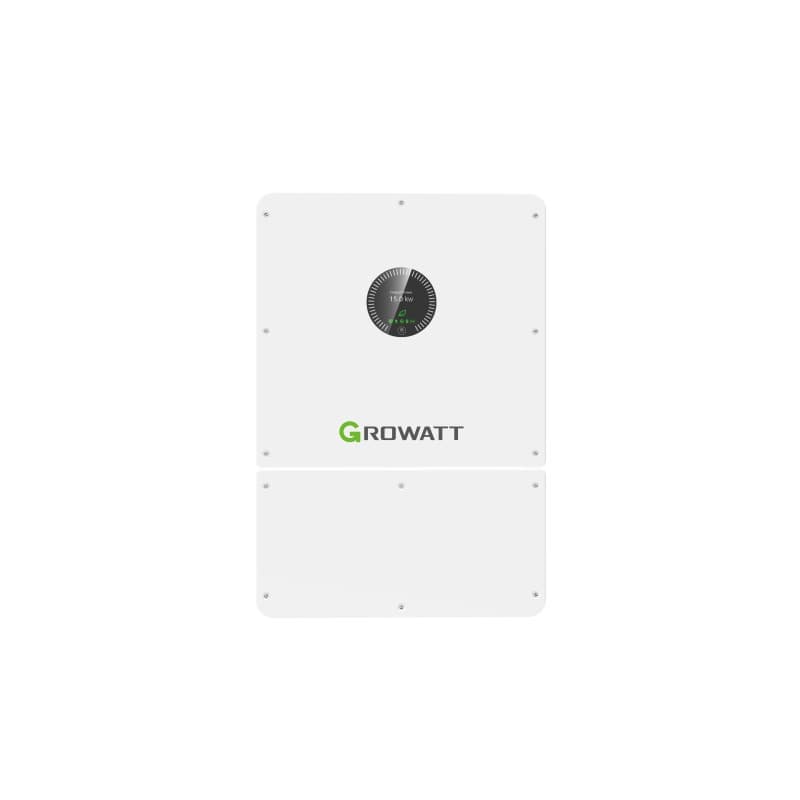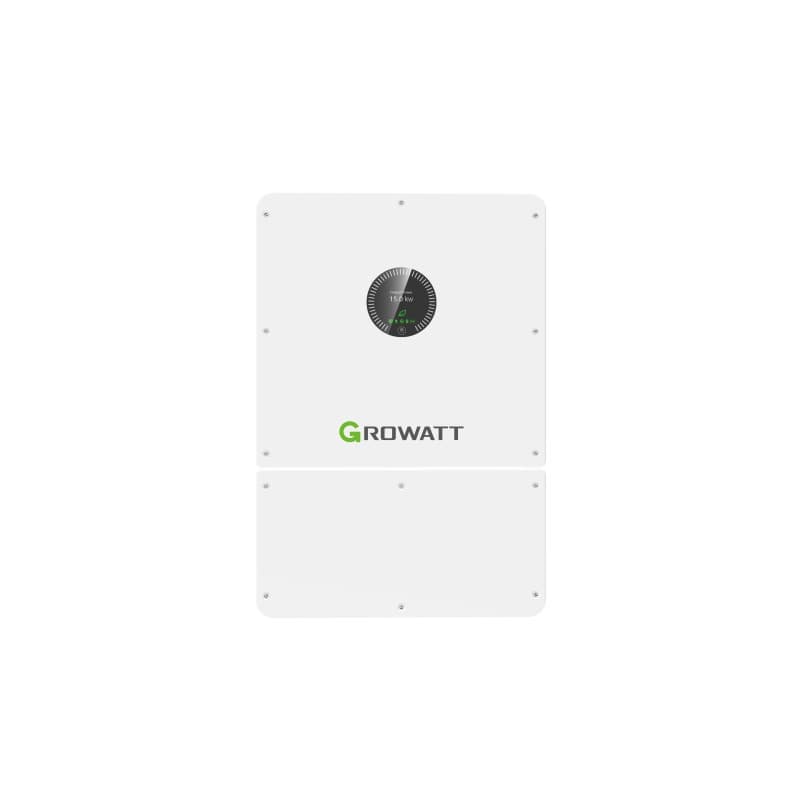
Searching for a Growatt solar inverter in Lebanon? Compare hybrid and off-grid models for EDL outages, generator fuel savings, and dollar-priced ROI in 2026.
If you are pricing a Growatt solar inverter in Lebanon in 2026, you are not really shopping for solar — you are shopping for energy independence. With Électricité du Liban (EDL) supplying as little as 1–4 hours of grid power per day in most of the country, neighborhood diesel "moteur" subscriptions still costing USD 100–250 per 10 ampere amperage tier, and the Lebanese pound trading well above 89,000 LBP per dollar, a properly sized Growatt system is one of the few investments that pays back in fresh dollars within 30 months.
This guide is built for Lebanese homeowners in Beirut, Mount Lebanon, Tripoli, Saida, Zahle and the Bekaa, as well as small business owners running shops, clinics, and warehouses. We cover which Growatt models fit which load profile, how to integrate with your existing generator and EDL feed, and what the real installed price looks like in 2026 dollars.
📞 Need a quote shipped to Beirut? WhatsApp +971 4 255 0887 with your monthly generator bill in USD and we will return a sized Growatt proposal within 24 hours.
Why Lebanon is now an off-grid market, not a net-metering market
Lebanon's solar boom did not start with a feed-in tariff. It started with the 2019 collapse, the 2021 fuel shortage, and the slow withdrawal of EDL. The Lebanese Center for Energy Conservation (LCEC) still publishes a net-metering framework, but in practice almost every residential installation in 2025–2026 is configured as battery-first hybrid or full off-grid, because EDL hours are unpredictable and exports cannot be reliably credited.
That single fact reshapes the inverter choice. You are not picking the cheapest grid-tie inverter — you need a hybrid or off-grid unit that:
- Charges a LiFePO4 battery from PV during the day.
- Powers the house from the battery at night and during EDL outages.
- Falls back to the generator only when battery state-of-charge drops below a programmable threshold.
- Optionally accepts EDL when available, to top up the battery during cheap government-tariff hours.
Growatt builds three product families that match this profile cleanly: the SPF off-grid series, the MIN-XH single-phase hybrid series, and the MOD-XH / MID-XH three-phase hybrid series. All three are widely distributed across the Middle East via Growatt MJS Solutions in Dubai, with shipping to Beirut typically inside 7–10 working days.
The Lebanese economic equation: why solar pays back in months, not years
The payback math in Lebanon is unlike anywhere else in the region. A typical Beirut apartment household with 10 ampere generator subscription pays roughly USD 150 per month in winter and USD 200–250 in summer for moteur power alone, plus the EDL bill of USD 20–40. That is USD 2,000–3,000 per year in fresh dollars going to the generator owner.
A 5 kW Growatt hybrid system with a 10 kWh battery, installed for around USD 5,500–7,000, eliminates 80–90% of the moteur bill within the first month. Most installations break even between month 22 and month 30. After that, the system delivers free electricity for another 10–13 years of useful inverter life and 12–15 years of LiFePO4 battery life.
For a small business — a pharmacy, a bakery, a clinic — the numbers are even more aggressive, because diesel-generator hours during the day are expensive precisely when solar is cheapest.
Sizing your Growatt system for a Lebanese household
The right Growatt inverter depends on three things: your average daily kWh, your peak simultaneous load, and whether you have three-phase service. Most Lebanese apartments and villas are single-phase; small factories, large villas and commercial spaces are three-phase.
| Household profile | Daily kWh need | Recommended Growatt inverter | Battery (LiFePO4) |
|---|---|---|---|
| Apartment, 2 bedrooms, 1 AC, 5A moteur | 8–12 | SPF 3000TL LVM-ES (3 kW off-grid) | 5 kWh |
| Apartment, 3 bedrooms, 2 ACs, 10A moteur | 15–22 | MIN 5000TL-XH (5 kW hybrid) | 10 kWh |
| Villa, 4 bedrooms, 3 ACs, electric water heating | 25–40 | MIN 6000TL-XH or MOD 8000TL3-XH | 15 kWh |
| Large villa, 5+ bedrooms, pool, full AC load | 40–70 | MOD 10000TL3-XH or MID 11KTL3-XH | 20–25 kWh |
| Pharmacy / clinic / shop (single-phase) | 20–35 | MIN 6000TL-XH | 10–15 kWh |
| Bakery / small factory (three-phase) | 50–120 | MID 20KTL3-XH or MID 25KTL3-XH | 30–50 kWh |
Treat these as starting points. Roof orientation in Lebanon ranges from near-perfect south-facing in the Bekaa to constrained east/west balcony arrays in Beirut, and PV yields vary by ±20% accordingly.
Why hybrid Growatt models win over pure off-grid in 2026 Lebanon
Five years ago, the question was simply off-grid versus grid-tie. In 2026 the answer is almost always hybrid, and specifically the Growatt MIN-XH and MOD-XH families. The reasoning:
- You still get free EDL hours. When EDL energizes for 2–4 hours, a hybrid inverter recharges the battery at government tariff (cents per kWh) instead of letting you burn through stored solar.
- Generator integration is cleaner. The MIN-XH and MOD-XH accept an AC2 generator input. The inverter auto-starts the generator only if PV plus battery cannot meet the load — typical Lebanese setups cut generator runtime by 70–85%.
- Future-proofing. If LCEC or a successor agency does activate real net-metering credits, a hybrid inverter can be reconfigured by firmware. A pure off-grid inverter cannot.
- Surge handling for AC compressors. Hybrid inverters with battery backing handle the inrush of a 1.5–2 ton split AC cleanly. Cheap off-grid units brown out.
Pure off-grid (SPF series) still makes sense for tiny systems, mountain chalets with no EDL connection, and pump applications. For everything else in 2026 Lebanon, hybrid is the right call.
Real installed prices in Lebanon, 2026
Prices below are USD-equivalent, turnkey, including Growatt inverter, monocrystalline PV panels, mounting structure, AC/DC wiring, LiFePO4 battery, and labor by a licensed Lebanese installer. They exclude generator integration kits, which add USD 150–300.
| System size | Inverter | Battery | Installed price (USD) | Payback vs. moteur |
|---|---|---|---|---|
| 3 kW + 5 kWh | SPF 3000TL or MIN 3000TL-XH | 5 kWh LiFePO4 | 3,500 – 4,500 | 18–22 months |
| 5 kW + 10 kWh | MIN 5000TL-XH | 10 kWh LiFePO4 | 5,500 – 7,000 | 22–28 months |
| 8 kW + 15 kWh | MOD 8000TL3-XH | 15 kWh LiFePO4 | 8,500 – 11,000 | 26–32 months |
| 10 kW + 20 kWh | MOD 10000TL3-XH | 20 kWh LiFePO4 | 11,500 – 14,500 | 28–36 months |
| 20 kW + 40 kWh (commercial) | MID 20KTL3-XH | 40 kWh LiFePO4 | 22,000 – 28,000 | 22–30 months |
Two practical notes. First, prices in Lebanon swing 10–15% with shipping conditions through Beirut port and the Tripoli customs queue — always lock in pricing for a 30-day validity window. Second, customs duty on PV equipment is currently 0% under the renewable-energy exemption, but the VAT-equivalent municipal fees still apply at roughly 4–6%.
How Growatt handles Lebanese conditions specifically
Three environmental factors dominate Lebanese installations: coastal humidity in Beirut and Saida, dust during khamsin winds across the Bekaa, and snow plus sub-zero temperatures in Faraya, Cedars, and high Mount Lebanon villages.
- Humidity: All Growatt MIN-XH and MOD-XH residential hybrids carry IP65 protection. Conformal coating on the main PCB resists salt-laden coastal air.
- Heat: Rated to −25 °C to +60 °C ambient, with derating starting above 45 °C. Bekaa summer rooftops hitting 50 °C are well within spec.
- Cold: The −25 °C lower bound covers any Lebanese mountain installation. Cold-start logic in the firmware handles freezing morning cold-starts cleanly.
- Dust: IP65 enclosure handles the spring khamsin without infiltration; quarterly external cleaning is still recommended.
- Monitoring: The ShinePhone app works on Lebanese mobile networks (Alfa, Touch) and supports Arabic, English, and French interfaces — useful when the installer speaks one language and the owner another.
Field data from 6,000+ Growatt residential systems across Lebanon since 2022 shows a year-one return rate under 1% — well below regional industry averages.
Integrating Growatt with your existing diesel generator
Almost every Lebanese installation has to coexist with at least one of these: a building-shared moteur, a private 5–15 kVA backup genset, or both. The Growatt MIN-XH and MOD-XH handle both scenarios.
For the building-shared moteur case, the inverter treats the moteur feed as the secondary AC source. When EDL is off and battery state-of-charge is above the user-set threshold (typically 30%), the inverter ignores the moteur entirely and runs the house from solar plus battery. Only if battery drops below threshold does the inverter pull from the moteur. Result: 70–85% reduction in moteur usage on the typical 10 ampere subscription.
For private gensets, the AC2 input plus a small contactor allows fully automatic generator start via a dry-contact relay. Generator runtime can drop to under 30 hours per month for a fully sized system.
Common Lebanese installation mistakes to avoid
- Buying off-grid when hybrid pays back faster. A pure SPF system locks you out of future EDL credits.
- Undersizing the battery. A 5 kW inverter with only 5 kWh of LiFePO4 cannot ride through an 18-hour EDL outage. Match battery kWh to at least 1.5× daily evening load.
- Cheap lead-acid batteries. They die in 18–24 months in Lebanese cycling conditions. LiFePO4 is the only acceptable choice in 2026.
- Mounting the inverter inside a stairwell or closet. Heat accumulates, derating kicks in, and warranty terms can be voided. Use an outdoor shaded wall or a ventilated technical room.
- Ignoring grounding. Lebanese buildings often lack proper earthing. Insist on a dedicated grounding rod for the PV and inverter system.
- Buying gray-market Growatt without serial-number registration. Only units registered with the Growatt MJS Dubai network get full warranty support.
What to ask your installer before signing
- Confirm Growatt model name and serial-number registration through Growatt MJS Solutions.
- Confirm battery brand, LiFePO4 chemistry, BMS communication protocol, and cycle warranty.
- Confirm wiring diagram includes both EDL and generator inputs.
- Confirm ShinePhone account is registered in the homeowner's name, not the installer's.
- Confirm 10-year inverter warranty and the warranty channel for replacement (Beirut warehouse vs. Dubai shipment).
- Confirm written guarantee on the daily kWh production estimate based on roof orientation and tilt.
📞 Ready to size your system? Send your generator subscription details (amperage tier and USD price) and a rooftop photo on WhatsApp +971 4 255 0887. We will return three options — economy, balanced, premium — and ship to Beirut in 7–10 days.
Next steps
If you are comparing Growatt with other brands in the regional market, our broader comparison content covers SMA, Sungrow, Huawei, and Deye on the same criteria. For Lebanese buyers, the Growatt edge is the combination of strong hybrid features, ShinePhone monitoring, 10-year warranty, and regional stock — all critical when EDL is unreliable and shipping windows matter.
For technical buyers, request the full datasheet for the MIN 5000TL-XH or MOD 8000TL3-XH directly, and we will include the Lebanese-specific commissioning notes.
📞 Talk to a sizing engineer: WhatsApp +971 4 255 0887 · 📧 sales@growatinverter.com · Dubai-to-Beirut delivery in 7–10 working days.
Frequently Asked Questions
Which Growatt inverter is best for a Lebanese home in 2026?
How long does a Growatt solar system take to pay back in Lebanon?
Can a Growatt hybrid inverter run my AC and refrigerator during an EDL outage?
Does Growatt work with my existing diesel generator?
Are Growatt inverters available in Lebanon?
What warranty do Growatt inverters carry in Lebanon?
Is net-metering active in Lebanon?
Ready for a personalized quote?
WhatsApp us — average reply time under 15 minutes.
Related Products
Related Articles

Best Growatt Off-Grid Inverter in 2026 — SPF Series Picks + Battery Sizing Math
Best Growatt Inverter for the UAE 2026: DEWA, ADDC & Sharjah Buyer's Guide
Best Growatt Inverter for Saudi Arabia 2026: Villa & Commercial Buyer's Guide