Comprehensive growatt noah balcony storage review covering the 2kWh LiFePO4 NOAH 2000, 5-minute install, IP66 outdoor design, and use in EU and Gulf apartments.
The Growatt NOAH 2000 has done something the energy-storage industry has been promising for a decade: it has turned battery storage into an Ikea-grade plug-and-play product. No wall-mount inverter, no dedicated MCB tray, no electrician, no permit forms. A renter in Berlin, a leaseholder in Marseille or an apartment owner in Dubai Marina can unbox a NOAH 2000, snap it to a balcony rail, plug the included Schuko cable into a wall outlet, and start storing self-generated solar energy in under five minutes. This review unpacks how it works and whether the 2026 hype matches the spec.
What Exactly Is a Balcony Battery
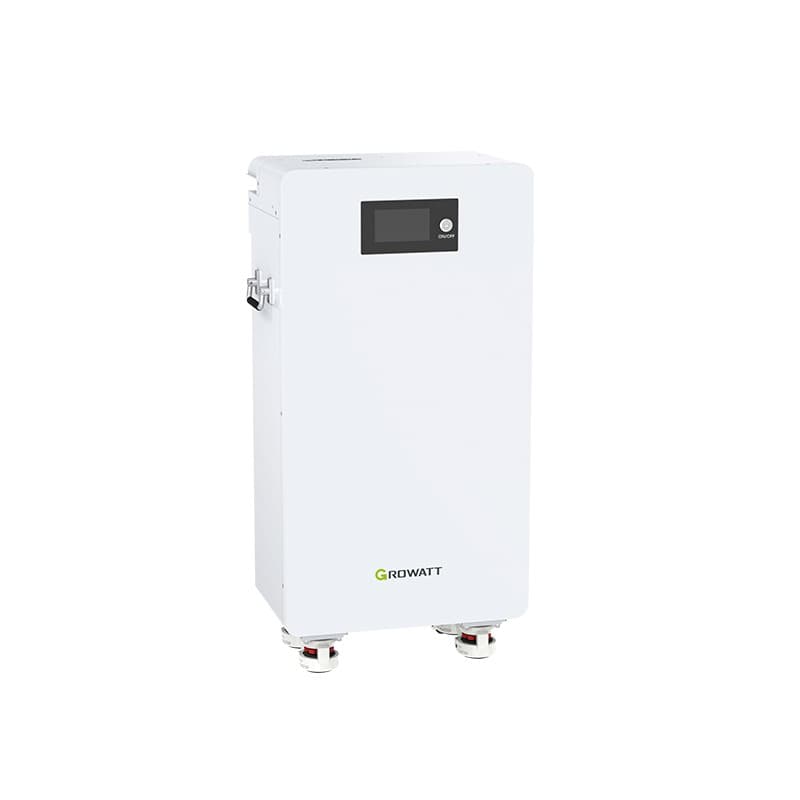
The category was created in Germany under the Steckersolar (balcony solar) regulation, which permits up to 800W of grid-injected solar from plug-in modules without any utility paperwork. The challenge with Steckersolar is that midday surplus disappears: with no battery, anything above the apartment's instantaneous baseload gets exported for free or wasted. The NOAH 2000 closes that gap by storing the surplus in a 2.048 kWh LiFePO4 pack and dispatching it back to the apartment during evening peak hours. The whole system is DC-coupled — PV modules connect directly to the NOAH unit, which then injects regulated AC into the building through a standard 800W microinverter or the included direct-AC output.
Specifications That Define the Product
| Specification | NOAH 2000 |
|---|---|
| Battery chemistry | LiFePO4 (cobalt-free) |
| Battery capacity | 2.048 kWh |
| Maximum expansion | 8.192 kWh (4 stacked units) |
| Nominal voltage | 51.2 V |
| Recommended PV input | up to 2,900W |
| MPPT voltage range | 16-60V |
| MPPT channels | 2 independent |
| Max input current | 26A per channel |
| Max output power | 800W (EU Steckersolar cap) |
| Max charging power | 1,500W |
| MPPT efficiency | 99% |
| Output efficiency | 98% |
| Charging temperature | -10 to +55°C |
| Discharging temperature | -20 to +40°C |
| Cold start | -30°C |
| Dimensions (WxHxD) | 496 x 235 x 270 mm |
| Weight | 21 kg |
| IP rating | IP66 (full outdoor) |
| Connectivity | Wi-Fi + Bluetooth, ShinePhone app |
| Warranty | 10 years |
| Certifications | CE, RoHS, REACH, WEEE |
The 5-Minute Install Claim — Tested
Growatt markets a 5-minute installation. In practice, with two people and an existing balcony-rail PV pair, the timeline from unboxing to first kWh stored looks like this: 1 min to unscrew the back-plate, 1 min to hook the unit onto the supplied wall/rail bracket, 1 min to plug in the two MC4 PV connectors, 30 seconds to plug in the Schuko AC output, 1 min to pair via Bluetooth in the ShinePhone app, and 30 seconds to confirm SoC and start charging. Total: roughly 4 minutes. That assumes the PV modules and microinverter are already mounted; the modules themselves still take 20-40 minutes on a balcony railing.
Why Balcony Solar Is Booming in Europe
Germany registered over 400,000 Steckersolar systems in 2023 and more than 700,000 in 2024 according to Bundesnetzagentur data. France and Belgium have followed with similar plug-in regulations. The combination of high electricity prices (EUR 0.32-0.42 / kWh in Germany), a strong DIY culture and Berlin/Munich/Hamburg apartment density made a 2 kWh battery the missing piece. The NOAH 2000 currently ships in over a dozen EU countries and Growatt sold north of 80,000 NOAH units across the EU between launch and end-2025, making it one of the fastest-selling residential storage products in Growatt's portfolio.
Gulf and MENA Use Cases — Niche but Growing
The Gulf does not have a Steckersolar regulation; UAE and KSA installations all require a licensed contractor and DEWA/SEC permits. However, the NOAH 2000 still finds three growing use cases in the Middle East market we serve:
- UAE apartment owners in The Greens, JLT or Sharjah Al Khan with south- or east-facing balconies who want a discreet storage retrofit without permit overhead. The unit is technically a battery, not a grid-injecting device, and runs as a UPS for a single shaded sub-circuit (router, lighting, fridge) inside the apartment.
- Egyptian and Lebanese apartment dwellers facing rolling 4-8 hour utility cuts. The NOAH 2000 plus two 450W bifacial modules on a Cairo or Beirut balcony delivers a 1.6-2.0 kWh evening top-up that keeps a fridge, router and LED lighting running through any single load-shed cycle.
- Tenants in expat-heavy compounds in Doha, Manama and Muscat who cannot drill into the building structure. The NOAH 2000 hangs off a balcony rail with zero structural penetration — important for compound lease compliance.
Stack-to-8kWh Expansion
The NOAH 2000 is designed to be stacked: up to four units in a vertical stack deliver 8.192 kWh of storage, all controlled through a single ShinePhone account. The stacking interface uses Growatt's proprietary CAN-Bus link, and the modules auto-discover each other on power-up. This is a meaningful spec because it lets a renter start with one NOAH 2000 at EUR 690 and incrementally expand to a full 8 kWh as their PV array grows, without replacing the inverter or changing the AC injection profile. The Schuko-connected output remains capped at 800W per German VDE-AR-N 4105 regardless of how many batteries you stack — the storage capacity goes up but the export power does not.
Cold-Start at -30°C and Hot-Climate Tolerance
The IP66 rating and -30°C cold-start spec are the headline outdoor numbers. For our Gulf use case the hot end matters more: the NOAH 2000 charges between -10°C and +55°C and discharges between -20°C and +40°C. The 40°C discharge upper limit is the constraint in Dubai and Riyadh — direct sun on a south-facing balcony in July can hit 48-52°C surface temperature, putting the cell stack outside spec. We recommend always mounting the NOAH 2000 in shade (covered balcony, north-facing wall, or with a small sun-shield) in the Gulf. Inside that constraint the unit performs flawlessly.
ShinePhone App Integration
The NOAH 2000 pairs over Bluetooth for initial commissioning and runs on Wi-Fi for ongoing monitoring. The app shows real-time PV power, battery state of charge, charge/discharge rate, daily/weekly/monthly energy graphs, and a clean self-consumption ratio chart. Push notifications cover low-SoC, fault events and firmware updates. Multi-unit homes can view all NOAH stacks from a single account. Firmware OTA updates have been frequent — Growatt pushed three feature updates in 2025 alone, including an "AC-charging in winter" mode that helps Northern European users top up from cheap night-time grid electricity.
Pricing and Channels
EU retail pricing as of June 2026:
- NOAH 2000 single unit — EUR 690-750 (varies by country VAT)
- NOAH 2000 + 2x 450W modules + Hoymiles HMS-800W-2T microinverter (full kit) — EUR 1,150-1,300
- 4x NOAH stack (8.192 kWh) — EUR 2,650-2,900
Gulf pricing through Growatt MJS Solutions Dubai:
- NOAH 2000 single unit — AED 3,200 / SAR 3,290 / USD 870
- NOAH 2000 + 2x bifacial 540W + microinverter — AED 5,400 / SAR 5,550 / USD 1,470
Limitations You Should Know Before Buying
- The 800W output cap is real — this is balcony storage, not whole-home backup. If you want to back up a 3kW air conditioner, you need a SPH or SPF series inverter instead.
- The unit injects AC into the building's circuit; it does not provide a separate UPS output (no AC2 backup port like the SPH series). In a utility outage, the NOAH stops exporting.
- Discharge spec stops at +40°C. Gulf users must shade-mount the unit. Direct south-facing summer sun in Riyadh will throttle output.
- Pure DC-coupling means the included PV inputs are intended for small balcony panels. Connecting a large grid-tie array (over 3kW) is not supported.
Verdict — Best-in-Class for Its Category
The Growatt NOAH 2000 is the strongest plug-and-play storage product on the global market in 2026. For European Steckersolar users it is essentially the default choice — Anker SOLIX Solarbank 2 is the only meaningful competitor, and it lacks the 4-unit stacking and IP66 outdoor rating. For Gulf customers the NOAH is a niche but useful product: ideal for renters and compound dwellers who want measurable solar self-consumption without contractor overhead. At AED 3,200 it pays back in 5-7 years against DEWA Slab-2 tariffs (AED 0.38/kWh) assuming 5 hours of solar input per day on a south-east balcony.
Frequently Asked Questions
What is the Growatt NOAH 2000 and how does it work?
Can I stack multiple Growatt NOAH 2000 units?
Is the Growatt NOAH 2000 suitable for UAE apartments?
What warranty comes with the Growatt NOAH 2000?
How much does the Growatt NOAH 2000 cost?
Does the Growatt NOAH 2000 work during a power outage?
Is the Growatt NOAH 2000 certified for Europe?
Ready for a personalized quote?
WhatsApp us — average reply time under 15 minutes.
Related Products
Related Articles
Growatt NOAH 2000 vs EcoFlow, Anker SOLIX, Zendure — Best Balcony Storage in 2026
Growatt Noah Balcony Installation — Plug-and-Play Solar for Apartments
Growatt SPH Hybrid Inverter Review (2026): SPH 4-10kW Tested
