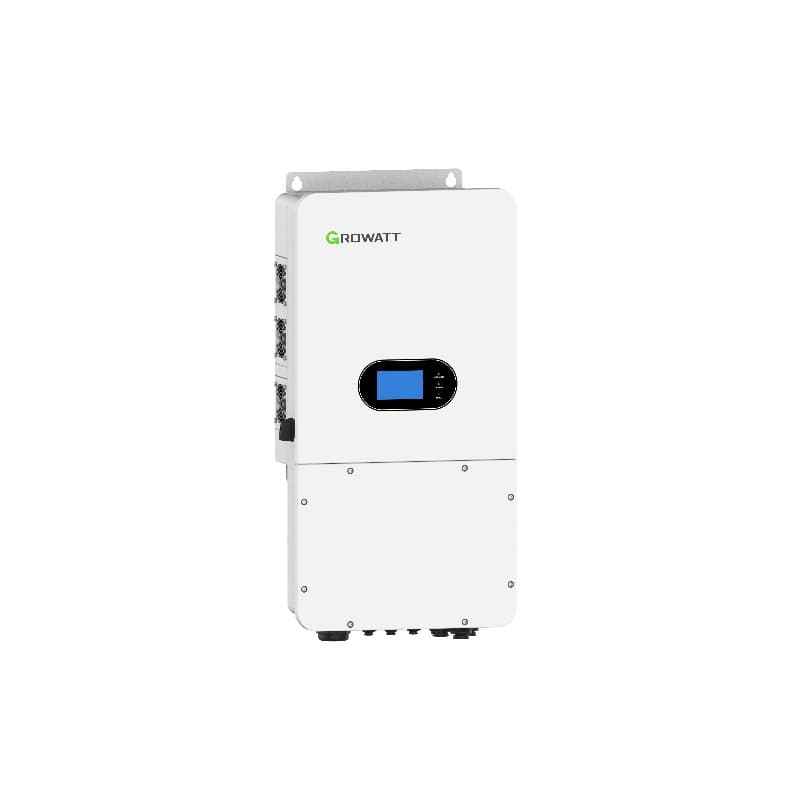
Stuck between Growatt and Deye for your solar inverter? This decision-tree guide walks you to a clear answer based on budget, system size, region, and battery choice.
Growatt and Deye are the two most-cross-shopped inverter brands in 2026 for residential and small commercial solar in the Middle East, Africa, South Asia, and increasingly Europe. They occupy nearly identical price points, both ship globally, both have mature mobile apps, and both lead in shipments year-over-year. So which one is better for you? The honest answer is: it depends — but not on vibes or brand loyalty. It depends on six concrete things that this guide turns into a decision tree with named winners at every fork.
Quick Verdict First
If you skim only one paragraph, here it is: Buy Growatt if you want the lowest installed price, a mature retail channel, and a single-brand battery ecosystem (APX). Buy Deye if you want the best battery flexibility (mix any LiFePO4 brand), the highest peak surge handling, and slightly better firmware feature velocity. For 60% of buyers the cost gap is what decides; for 25% the battery flexibility is what decides; the remaining 15% have a specific compliance or supply constraint that picks the winner for them.
Side-by-Side Snapshot
| Dimension | Growatt | Deye |
|---|---|---|
| Founded | 2010, Shenzhen | 2007, Ningbo |
| Global shipment rank (2026) | Top 3 | Top 4 |
| Residential range | 3–15 kW (MIN, MOD, SPH) | 3–16 kW (SUN-G series) |
| C&I range | 25–225 kW (MID, MAX, WIT) | 30–110 kW (SG-MX series) |
| Battery ecosystem | APX (LV/HV) — single brand | Open — Pylontech, BYD, Hubble, Dyness, any RS485/CAN LiFePO4 |
| Max efficiency (10 kW class) | 97.7% (SPH-BH) | 97.6% (SUN-10K-SG04LP3) |
| Surge capacity | 1.5× rated 5s | 2× rated 10s |
| Mobile app | ShinePhone | SolarMan |
| UAE price 10 kW hybrid | AED 8,500–10,500 | AED 8,800–10,800 |
| Warranty (standard) | 5 years (10 with registration) | 5 years (10 with registration) |
| UAE service centres | Dubai, Sharjah, Riyadh, Lagos, Nairobi, Karachi | Dubai, Riyadh, Lagos, Cairo, Karachi |
The Decision Tree — Six Questions, Six Forks
Fork 1: What is Your Total System Budget?
- Under USD 6,000 (AED 22,000): Winner is Growatt. The MIN/MOD line is 10–15% cheaper than Deye SUN-G at the same kW. On a tight budget you will save AED 600–1,200 on the inverter alone, which buys you another 1 kW of panels.
- USD 6,000 to USD 15,000 (mid-range): Tie. Both deliver excellent value. Decide on fork 2 (battery).
- Above USD 15,000 (premium home or small commercial): Winner is Deye. The price gap closes at this level and Deye's battery flexibility pays back the small premium over a 10-year horizon.
Fork 2: Will You Use One Battery Brand or Want Flexibility?
- Happy with one battery brand: Winner is Growatt. The APX HV stack pairs cleanly with the SPH, factory-supported, single-vendor warranty path. Slightly cheaper per kWh of usable storage too.
- Want to mix brands or use second-life batteries: Winner is Deye by a clear margin. Deye SUN-G series supports any LiFePO4 battery that speaks RS485 or CAN — Pylontech, BYD Premium, Hubble, Dyness, Greenway, and many DIY rack-mount brands. This is huge for installers who carry mixed inventory and for buyers who want to upgrade storage independently of the inverter brand.
Fork 3: Where Are You Installing?
- UAE, Saudi, Oman, Bahrain (GCC): Growatt wins on supply chain depth. More distributors, faster spare parts, more installer training. DEWA Shams Dubai approval is also slightly smoother for Growatt because more contractors are certified on it.
- South Africa, Nigeria, Kenya: Deye wins outright. Deye is the dominant residential hybrid inverter brand in South Africa post-load-shedding crisis, and the installer network is denser. Spare parts in Lagos and Nairobi favour Deye.
- Egypt, Lebanon, Pakistan: Growatt wins. The retail and distributor density is higher, and prices in PKR/EGP/LBP are typically 8–12% lower.
- Europe (Germany, Netherlands, Italy, France): Deye wins by a small margin — better grid-code certifications (VDE-AR-N 4105 compliance is faster to update), and the Deye balcony-storage range (NOAH counterpart) is more polished.
- India, Bangladesh, Sri Lanka: Growatt wins clearly. Manufacturing presence in India, BIS certification depth, MNRE listing.
Fork 4: System Size — Residential or Commercial?
- Under 15 kW (residential): Tie. Pick on fork 1 (budget) or fork 2 (battery).
- 15 kW to 50 kW (light commercial): Slight edge to Deye for the SG-MX series — better 3-phase imbalance handling, and the dual-MPPT layout is cleaner than the Growatt MID for warehouses with east-west bays.
- 50 kW to 125 kW (mid-commercial): Winner is Growatt. MAX 125KTL3-XL2 with 10 MPPTs and IP66 outclasses Deye SG110CX on per-kW cost and MPPT density.
- Above 125 kW (large commercial & utility): Growatt wins by default — the WIT 225K-HU runs at 1500 V DC; Deye does not offer a comparable 1500 V string inverter yet in most markets.
Fork 5: Do You Need UPS-Grade Backup?
Both brands ship "EPS" (Emergency Power Supply) backup outputs that activate when the grid drops. The transfer time matters for sensitive loads.
- Growatt SPH: Transfer time <10 ms (fast enough for fridges, AC, LED lights, most computers)
- Deye SUN-G: Transfer time <4 ms (fast enough for medical equipment, server racks, gaming PCs)
- Verdict: If you have a home office with server racks, NAS units, or medical equipment, Deye wins. For everyday home and small commercial loads, both are equivalent.
Fork 6: Surge Loads — Pumps, Welders, Motors?
If your loads include borehole pumps, A/C compressors starting cold, welders, or large motors, the surge rating decides reliability.
- Growatt SPH 10000TL3: 1.5× rated surge for 5 seconds (15 kVA from a 10 kW inverter)
- Deye SUN-10K-SG04LP3: 2× rated surge for 10 seconds (20 kVA from a 10 kW inverter)
- Verdict: Deye wins clearly for motor-heavy loads. A 1.5 HP submersible pump or a 2-ton AC compressor pulls 4–6× running current at start; Deye's longer 10-second surge window absorbs that gracefully where Growatt may trip on inrush.
Scenario Verdicts
Scenario A: 5-Bedroom UAE Villa, AED 40,000 Budget, Net-Metering
Winner: Growatt MOD 10KTL3-XH grid-tie or SPH 10000TL3 hybrid. Best installed price, easiest DEWA approval, mature service network. The Growatt APX HV battery is 5–8% cheaper per kWh than the comparable Pylontech Force-H1 you would pair with a Deye.
Scenario B: South Africa Load-Shedding Home, ZAR 180,000 Budget
Winner: Deye SUN-8K-SG04LP3 with Pylontech US5000. Deye is the de-facto standard post-2024 load-shedding crisis. Spare parts in Joburg, Durban, and Cape Town are everywhere. The 2× surge rating handles geyser elements cycling on backup without tripping.
Scenario C: 200 kW Lagos Hotel Rooftop
Winner: Growatt MAX 125KTL3-XL2 (1 unit) + MID 50KTL3-XH. Total cost beats Deye SG110CX paired with smaller boxes by USD 4,000–6,000, and Growatt has more diesel-hybrid certified installers in Lagos.
Scenario D: Off-Grid Cabin, Mixed Battery Stack (Old + New)
Winner: Deye SUN-5K-SG03LP1-EU. Off-grid + mixed-brand battery stack = you need open battery support. Deye reads RS485 from Pylontech, second-life EV cells, and DIY 48 V banks. Growatt SPF only fully supports APX.
Scenario E: Pakistani Karachi Villa, PKR 1.2 Million Budget, Frequent Outages
Winner: Growatt SPH 6000TL BL-UP with ARK 2.5L 48 V batteries. Cheapest, available locally through major distributors, K-Electric net-metering approval is fastest for Growatt because the brand has been certified longest.
Cross-Shopping Trap — Don't Be Fooled By This
You will see comparison videos and blogs claiming "Deye is 30% better" or "Growatt is the new king." Both are marketing. The reality is that on a controlled identical load profile, the two inverters deliver within 1% of each other on annual yield. The difference is in fit — battery openness, regional support, and price-point. Decide on those, not on YouTube enthusiasm.
Final Summary
- Default Growatt buyer: Asia / MENA / South Asia, residential or large commercial, one-brand battery stack, tight budget, net-metering grid-tie.
- Default Deye buyer: Africa or Europe, residential or light commercial, mixed-brand battery stack, surge-heavy loads, off-grid or unreliable grid.
- Genuine "it depends": 5-bedroom GCC villa with mid-range budget — either works, decide on which installer has better warranty service in your specific city.
Frequently Asked Questions
Which is better, Growatt or Deye?
Is Growatt cheaper than Deye?
Does Deye support more batteries than Growatt?
Which inverter is better for South Africa load shedding?
Which is better for commercial solar above 100 kW?
Does Growatt have better warranty than Deye?
Can I mix Growatt and Deye in the same system?
Ready for a personalized quote?
WhatsApp us — average reply time under 15 minutes.