Buying a Growatt solar inverter in Oman for the Sahim residential rooftop program? Compare hybrid and grid-tie models, sizing, OMR pricing and Authority for Public Services Regulation compliance for 2026.
If you are sizing a Growatt solar inverter in Oman in 2026, you are entering the Sahim 1 residential rooftop programme — one of the cleanest, best-regulated rooftop schemes in the GCC. Sahim 1 covers homeowners on the Mazoon, Majan, Muscat and Tanweer distribution networks, with net-billing terms set by the Authority for Public Services Regulation (APSR, formerly AER). Sahim 2 covers commercial and industrial connections. Both schemes use a procurement-based model that lets accredited installers compete on price, and both make Growatt one of the strongest inverter choices in the country.
This guide is written for Omani homeowners across Muscat, Salalah, Sohar, Nizwa, Sur, Ibra, Buraimi and the Batinah coast, and for SME buyers signing up under Sahim 2. It covers which Growatt inverters fit which Sahim category, OMR-denominated pricing, what the Sahim contract terms look like in 2026, and how to handle Oman's coastal humidity and inland heat.
📞 Need a Sahim-compliant quote? WhatsApp +971 4 255 0887 with your DNO (Mazoon, Majan, Muscat, or Tanweer), monthly electricity bill in OMR, and roof size — we will return a sized Growatt proposal in 24 hours.
Sahim explained: the Omani rooftop programme in 2026
The Sahim programme was launched in 2017 by Nama Group and APSR to enable distributed solar on Omani rooftops. It works as a structured procurement: APSR pre-qualifies installers, publishes the technical specification, and runs periodic rounds where homeowners and businesses opt in. The latest residential rounds in 2025-2026 have priced installations around OMR 0.040-0.060 per Wp installed, with feed-in credits applied against the next bill.
Key Sahim features that drive inverter choice:
- Net billing, not net metering. Exported energy is credited at the published export tariff, lower than the import tariff. Self-consumption beats export economically, which favours hybrid inverters with battery storage.
- System size caps. Sahim 1 residential systems are typically capped between 3 kWp and 8 kWp depending on roof size and DNO approval. Sahim 2 commercial systems can scale higher.
- APSR equipment compliance. The inverter must meet APSR's published technical specification — IEC 62109, IEC 61727, IEC 62116 anti-islanding, and the local grid code.
- DNO-specific commissioning. Each distribution network operator (Mazoon, Majan, Muscat Electricity, Tanweer / Rural Areas) has its own commissioning checklist.
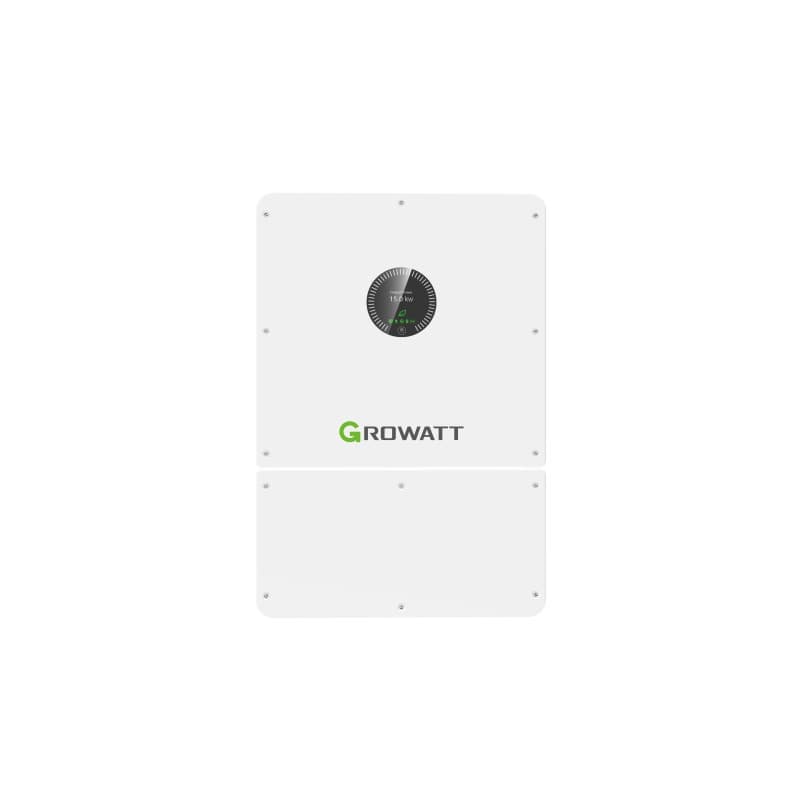
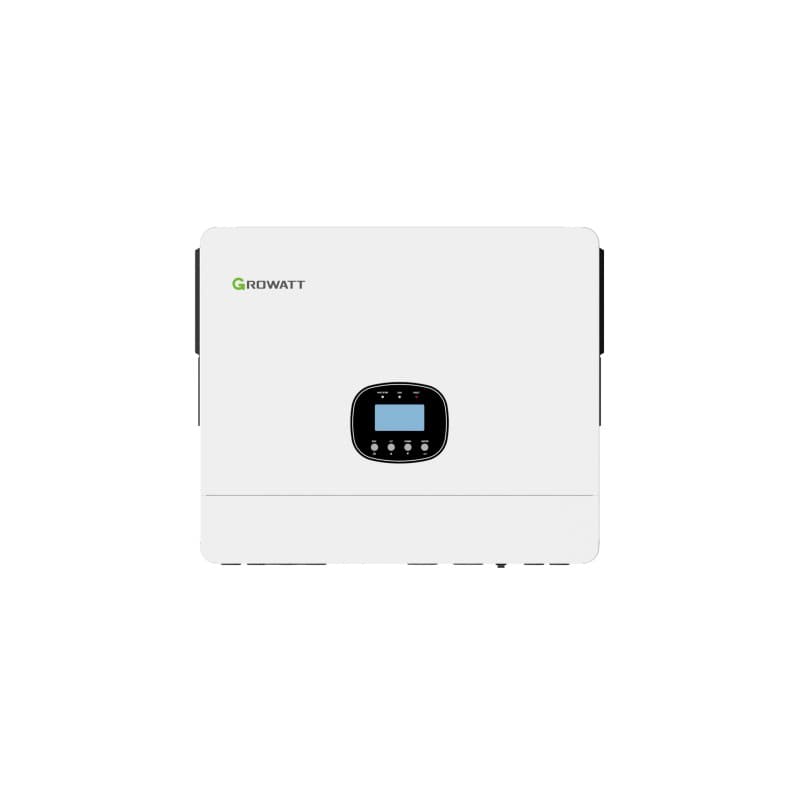
The Growatt MIN-XH and MIN-XA single-phase inverters and the MOD-XH three-phase inverters are widely deployed under Sahim because they meet APSR compliance, ship from regional Dubai stock, and carry the 10-year warranty Omani buyers expect.
Sizing your Growatt system for Sahim 1 residential
Omani villas are typically large by GCC standards, with strong AC load and high domestic hot water demand. Common system sizes under Sahim 1:
| Villa profile | Monthly bill (OMR) | Recommended Growatt | Battery (optional) |
|---|---|---|---|
| Small villa, 2-3 bedrooms, 2 split ACs | 20-40 | MIN 3000TL-XH or MIN 4200TL-XH (3-4.2 kW) | 5-10 kWh LiFePO4 |
| Mid villa, 3-4 bedrooms, 3 ACs | 40-80 | MIN 5000TL-XH (5 kW hybrid) | 10-15 kWh LiFePO4 |
| Large villa, 4-5 bedrooms, 4 ACs, electric water | 80-150 | MIN 6000TL-XH or MOD 8000TL3-XH | 15-20 kWh LiFePO4 |
| Compound / multi-villa | 150+ | MOD 10000TL3-XH or MID 11KTL3-XH | 20-30 kWh LiFePO4 |
| Small business (Sahim 2) | 200-500 | MID 20-25KTL3-XH | optional |
Note that Sahim 1 system sizes are usually capped by your DNO connection. Confirm your maximum approved kWp before sizing the inverter.
Hybrid versus grid-tie: which makes sense under Sahim
Sahim's net-billing structure means exports are credited at a lower tariff than imports. That changes the economics:
- Pure grid-tie (Growatt MIN-XH no-battery, MIN-TL-XA) is cheapest upfront and qualifies fully under Sahim. It exports excess to the grid at the published tariff.
- Hybrid with battery (Growatt MIN-XH or MOD-XH with LiFePO4) costs 30-50% more upfront but captures more of your own solar generation for evening use at the higher import tariff. Payback is typically 6-9 years in Oman, depending on consumption pattern.
- Backup-mode hybrid stores energy for grid outages and AC continuity — useful during summer demand peaks and on coastal sites that occasionally see brownouts.
For most Omani homeowners with strong daytime AC load (work-from-home, daytime cooling, EV charging), grid-tie is sufficient and pays back fastest under Sahim. For homeowners with peak evening load and concern about reliability, hybrid is the better choice.
Oman's climate and what it means for your inverter
Oman has two distinct environments: the hot inland zones (Nizwa, Buraimi, Ibri, parts of the interior) where summer rooftop temperatures hit 55-58 °C, and the humid coastal zones (Muscat, Salalah, Sohar, Sur) where humidity stays high year-round and salt air is corrosive.
- Heat: Growatt MIN-XH and MOD-XH families are rated -25 °C to +60 °C ambient. Derating starts at 45 °C and is gradual. Inland Omani rooftops at 55 °C ambient see typical derating of 8-15% — well within design margin.
- Humidity and salt: IP65 enclosures plus conformal-coated PCBs handle Muscat and Sohar coastal conditions. The Salalah khareef monsoon (June-September) brings sustained humidity above 90% — IP65 plus indoor mounting in a ventilated technical room is the recommended approach for coastal Salalah installs.
- Dust: Inland sites accumulate dust faster than coastal sites. Quarterly external cleaning of the inverter and panels improves yield by 5-12% annually.
- Salalah-specific: The khareef season actually reduces PV yield by 30-40% during June-September because of overcast monsoon conditions. Sahim sizing for Salalah villas should assume reduced summer yield and plan accordingly.
Real installed prices in Oman, 2026
Pricing below is for Sahim-compliant turnkey installations. Includes Growatt inverter, mono PV panels, mounting, wiring, DNO commissioning paperwork, and labor by an APSR-accredited installer. Excludes battery and EV charger.
| System size | Inverter | Installed (OMR) | Payback under Sahim |
|---|---|---|---|
| 3 kWp grid-tie | MIN 3000TL-XH | 1,200 - 1,600 | 5-7 years |
| 5 kWp grid-tie | MIN 5000TL-XH | 1,900 - 2,400 | 5-6 years |
| 5 kWp hybrid + 10 kWh | MIN 5000TL-XH + 10 kWh LiFePO4 | 3,200 - 3,800 | 7-9 years |
| 8 kWp three-phase hybrid | MOD 8000TL3-XH + 15 kWh | 4,800 - 5,800 | 6-8 years |
| 10 kWp three-phase hybrid | MOD 10000TL3-XH + 20 kWh | 6,000 - 7,200 | 6-8 years |
| 25 kWp commercial (Sahim 2) | MID 25KTL3-XH | 9,500 - 12,000 | 4-6 years |
Pricing assumes APSR-approved equipment, full Sahim paperwork, and one of the accredited installer panels. Off-Sahim grey installations may quote lower but are not eligible for net billing.
The Sahim application process: what to expect
- Eligibility check. Confirm your account is in good standing with your DNO. Tenants generally need landlord consent.
- Procurement round. Submit your interest during an active Sahim round. APSR matches you to accredited installers competing on price.
- Site assessment. Your selected installer surveys the roof, confirms orientation, shading, structural capacity, and recommends a Growatt model and panel layout.
- DNO approval. The installer files for connection approval. Equipment must be on the APSR approved list — verify the Growatt model number before contracting.
- Installation. Typical residential install takes 2-4 days including AC/DC wiring, mounting, and commissioning.
- Bidirectional meter. Your DNO replaces the standard meter with a bidirectional one. Allow 1-2 weeks for this step.
- Commissioning. The DNO commissioning team inspects and energizes the system. From this point net billing applies to your monthly invoice.
Why Growatt is a strong Sahim choice in 2026
- APSR compliance. Multiple Growatt MIN-XH and MOD-XH models are on the APSR approved list.
- Regional stock. Growatt MJS holds Dubai inventory with 4-7 working day delivery to Muscat, Sohar and Salalah. Critical when an installer needs a replacement under warranty.
- 10-year warranty. Standard on residential MIN-XH and MOD-XH models — longer than most competitors at the same price point.
- ShinePhone monitoring. Works on Omantel and Ooredoo networks, supports Arabic and English interface, and lets the homeowner monitor production and grid export from anywhere.
- Hybrid pathway. Sahim allows hybrid systems, and the Growatt MIN-XH and MOD-XH are the most cost-effective hybrid path under the programme.
Common Omani installation mistakes
- Oversizing beyond DNO approval. Sahim caps your system kWp. Installing larger forfeits the net-billing credit on the excess.
- Using non-APSR-approved inverters. The system fails commissioning and you cannot legally export.
- Coastal install without proper humidity protection. Use indoor mounting in a ventilated room for Salalah and Sohar coastal sites.
- Ignoring shading. Date palms and adjacent villas cause significant shading in older Muscat neighborhoods. Get a shade study from the installer.
- Skipping the ShinePhone setup. Without monitoring you cannot tell if the system is underperforming until you see the bill.
- Buying battery oversized for grid-tie use. If you have full Sahim export rights and daytime load, a battery may not pay back. Run the math first.
📞 Ready to apply for Sahim? Send your DNO, recent bill in OMR, and roof photo on WhatsApp +971 4 255 0887. We will return a Sahim-compliant Growatt proposal with three sizing options in 24 hours.
Next steps
Growatt is one of the most-installed Sahim inverter brands in Oman, with strong residential penetration in Muscat and Sohar and growing commercial uptake under Sahim 2. The combination of APSR-approved models, 10-year warranty, regional Dubai stock and ShinePhone monitoring makes Growatt the default rooftop choice for 2026.
📞 Talk to a Sahim engineer: WhatsApp +971 4 255 0887 · 📧 sales@growatinverter.com · Dubai-to-Oman delivery in 4-7 working days.
Frequently Asked Questions
Which Growatt inverter is best for Sahim residential in Oman?
Are Growatt inverters approved by APSR for Sahim?
How much does a Sahim-compliant 5 kWp Growatt system cost in Oman?
What is the typical Sahim payback in Oman?
Is the Salalah khareef monsoon a problem for Growatt solar?
Does Growatt work with Mazoon, Majan, Muscat Electricity and Tanweer?
What warranty do Growatt inverters carry in Oman?
Ready for a personalized quote?
WhatsApp us — average reply time under 15 minutes.
Related Products
Related Articles

Growatt Inverter Qatar 2026: The Kahramaa Compliance Buyer's Guide
Best Growatt Inverter for the UAE 2026: DEWA, ADDC & Sharjah Buyer's Guide
Best Growatt Inverter for Saudi Arabia 2026: Villa & Commercial Buyer's Guide